McRae Wins Southern South Island B+LNZ Director Vote
Matt McRae, a farmer from Mokoreta in Southland who runs a sheep, beef and dairy support business alongside a sheep stud, has been elected to the Beef +Lamb NZ Board as a farmer director.
 increase font size
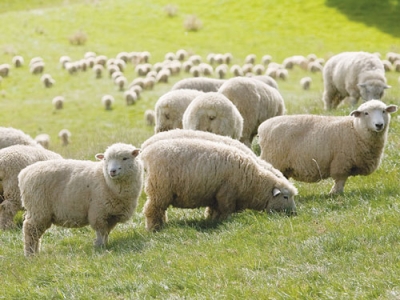 Farmers need to focus more on quality, rather than quantity, of feed grown for grazing.
New Zealand farmers in general know how to grow feed and use it, but need more focus on quality, says San Jolly, an Australian expert in dryland nutrition.
Jolly has been in NZ working on several projects for the Red Meat Profit Partnership. She spoke about feed quality during a Beef + Lamb NZ conference call this month.
Based in South Auckland, Jolly is principal consultant with Productive Nutrition Ltd, working mostly one-on-one with farmers in Victoria, Tasmania and South Australia.
She came here to talk about drought, but hasn't talked about it, she says, because farmers have had good rain. She held a workshop with farmer and other professionals at a Hawkes Bay farm which has extensive planting of a plantain chicory mix on dryland and irrigated land.
Since coming to New Zealand she has focussed on quality.
"NZ farmers in general know how to grow feed and use it, but there is not much conversation about quality," Jolly says. "It is quality that drives production. The amount of dry matter you produce underpins your bottom line; it's a key profit driver, but it's the quality which influences animal productivity."
At this time of year perennials which have had rain or have irrigation are looking great. "But you can't tell what the nutritive value is by looking at a plant."
The green stuff is still better than the dry stuff on the hills. But perennials at this time of year are trying to go reproductive. Even if you are rotational grazing and generating new shoots with every rotation, the nutritive value of those plants is still much lower in December-January.
She said at the Hawkes Bay farm they looked at the neutral detergent fibre (NDF) – the slowly digestible fibre portion of the plant. Using an equation to enable the farmers to send off a feed test, they then get an NDF result and quickly calculate how much of that feed the lambs could eat.
"It doesn't matter whether you're talking lambs or steers or any ruminant, you can predict intake based on the NDF concentration of the pasture," she says. "That blew their minds. It doesn't matter what tonnage of dry matter (DM) in the paddock you have, it is not the amount of DM that influences how much they can eat, it's the quality."
She said they showed that a 40kg lamb growing at 250g/day should be eating about 1.5-1.6kgDM/day. Due to the NDF or the fibre concentration of that pasture they could only eat about 1.1kg.
"If you want your lambs to grow at 400g/day then maybe you can look at some different species choices to drive that before starting to think about supplementary feeding."
Jolly was asked about the value of feeding roughage to ruminants feeding on quality lush green pasture when it is pouring out the other end.
She said it depends what is driving the scours. "If you have eliminated worms – if you visualise a kg of feed and a lot of that lush pasture or crop is only 10-15% DM, the rest is water. Some of that will get absorbed through the rumen wall and be excreted as urine. The rate of passage of the feed is so fast it can't all be absorbed and excreted so a fair proportion of it goes straight through the system.
Matt McRae, a farmer from Mokoreta in Southland who runs a sheep, beef and dairy support business alongside a sheep stud, has been elected to the Beef +Lamb NZ Board as a farmer director.
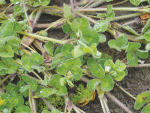
Recent widespread autumn rain will have triggered the germination of subterranean clover seeds, and the resulting seedlings should be allowed to reach the 3–4 trifoliate leaf stage before grazing, says Beef+Lamb NZ.
A hub farm in each of Beef + Lamb NZ’s seven regions and more focus groups are being rolled out for the red meat sector this year.
The red meat sector is poised for a strong rebound this season, with export receipts forecast to top $10 billion and farm profitability to almost double.
Progeny testing at Pāmu’s Kepler farm in Southland as part of Beef + Lamb New Zealand’s Informing New Zealand Beef programme is showing that the benefits of hybrid vigour could have a massive impact on the future of beef breeding.
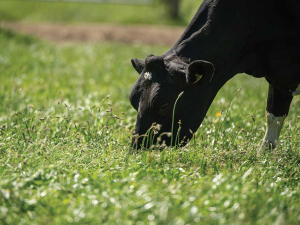
Farms across the upper North Island are trialling different pasture mixes as part of a research programme that aims to build greater resilience into farming systems.
Election years are always a concerning time for farmers, according to DairyNZ chair Tracy Brown.
The Ballance Farm Environment Awards are coming to the West Coast of the South Island.
Most dairy regions around the country have had a pretty good season so far says Tracy Brown.
Rural leader Mark Hooper has been appointed as an independent director to the NZPork board, bringing extensive farming, governance and advocacy experience to the role.