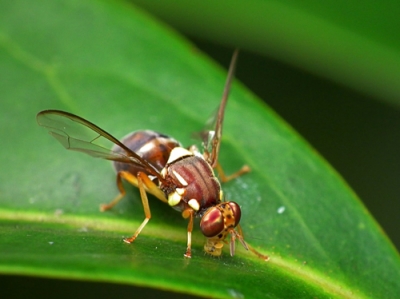
The Ministry for Primary Industries (MPI) says it is relaxing the fruit and vegetable movement controls for some households within Auckland’s fruit fly zone.
Acting chief operations officer Steve Gilbert says MPI is confident about the exact location of the small population of the fruit fly in Grey Lynn.
“Because we are so certain about the location of the infestation, we can now safely reduce the size of the higher risk A Zone. This means some properties are far enough away from the population that they no longer need to adhere to the toughest fruit and vegetable controls.”
“It’s important to note, though, that the restrictions on fruit and vegetable movements do still remain in force.”
Gilbert says it has now been almost two months since any sign of the Queensland fruit fly has been found in Auckland.
“This is good news, but it doesn’t mean the job is done. Fruit flies are not active in cooler weather, so while we expect that our controls have been successful, we won’t know for sure until spring when any flies still present would become active again.”
MPI’s field operations will reduce over winter, but they will not stop.
“Residents may notice some changes in activity such as fewer backyard visits, although some visits will still need to take place to minimise any risk of fruit flies breeding in the area,” Gilbert says.
The baiting programme, where MPI applied insecticide bait to all fruiting trees in the Controlled Area, will cease at the end of May. However, it may need to restart in spring, depending on trapping results.
Wheelie bins for fruit and vegetable waste disposal will be emptied less frequently, although this will still be at least weekly.
“Our surveillance traps will remain out as there may be some days over winter which are warm enough for fruit flies to fly. The traps will be checked less frequently, but any flies caught in the traps will be found,” says Gilbert.
“MPI would like to sincerely thank all residents of the Controlled Area for their help in this important response. We know it’s been inconvenient for many people and the community support is very much appreciated by both the Ministry and New Zealand’s horticultural industry.”
All residents in the former A Zone will receive a letter notifying them of the change and the controls that will apply to them over the winter period. They will be able to check out where their home is on an interactive map on MPI’s website.
www.mpi.govt.nz