Beef + Lamb New Zealand Awards 2026 Winners Announced in Christchurch
Last night saw the winners of the 2026 Beef + Lamb New Zealand (B+LNZ) Awards named at a gala dinner at Te Pae Christchurch Convention Centre.
 increase font size
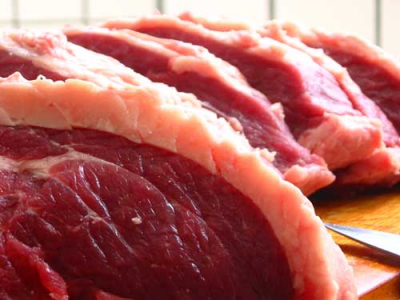 AgResearch has been awarded $4.25m in funding to develop sensors which will accurately measure the quality of export beef, lamb and venison.
AgResearch has been awarded $4.25m in funding to develop sensors which will accurately measure the quality of export beef, lamb and venison in order to enhance consumer confidence in New Zealand’s meat.
The funding comes from the Ministry of Business, Innovation and Enterprise’s Endeavour Round, announced last week.
AgResearch senior scientist Dr Cameron Craigie says the five year research project will create a new measurement system to identify the functional, compositional and structural properties of meat products at the processing point.
“New Zealand has a unique place in the export market because we largely raise our stock on pasture. This point of difference gives our export meat an eating quality advantage that consumers are willing to pay extra for,” he says.
“We want to make it easier for the consumer to recognise and appreciate the premium position of New Zealand meat products, and that depends on being able to measure the quality and prove those measurements are meaningful.”
Dr Craigie says the research project will develop sensor technologies to measure the meat and establish its functional, structural and compositional properties – information directly linked to its eating quality and value.
Marketers of New Zealand meat products can provide the consumer with quality information at the supermarket through packaging on premium meat products.
The sensor platform will also enable detailed meat quality information to be collected routinely for New Zealand producers to use, so the industry can begin to understand the impacts of farm management decisions on meat product quality and value.
“We want to get to a point where the consumer in a supermarket in the United Kingdom or China can pick up a leg of New Zealand lamb and see from the packaging that it has an excellent textural profile, a good level of intramuscular fat to ensure succulence and flavour, and generally an assurance that the product will consistently taste good.
“This level of information will enhance the reputation we already have for producing high quality export meat products, and we want that to translate into significant additional export revenue for New Zealand farmers.”
Dr Craigie says his team at AgResearch will be working closely with the New Zealand Meat Industry and partnering with the Dodd-Walls Centre for Photonic and Quantum Technologies (with researchers from the Universities of Auckland and Otago), Callaghan Innovation, Scott Technology Ltd and KU Leuven in Belgium to research and develop the sensor technology.
“The financial benefits will be captured in New Zealand. The farmer should be able to expect a premium price for producing better quality meat, and processors should be able to attract a premium price in market based on proven objective product quality measurements.
“The reputational benefits will be appreciated right across New Zealand. This research will enable us to stay ahead in the export market as well as boost our reputation for producing excellent quality meat products.”
Last night saw the winners of the 2026 Beef + Lamb New Zealand (B+LNZ) Awards named at a gala dinner at Te Pae Christchurch Convention Centre.
A significant breakthrough in understanding facial eczema (FE) in livestock brings New Zealand closer to reducing the disease’s devastating impact on farmers, animals, and rural communities.
A breakthrough in the understanding of Facial Eczema (FE) in livestock could bring New Zealand closer to reducing the disease’s impact.
An innovative idea for transforming mechanically deboned meat (MDM) into a meat flake for seasoning has taken top honours in the Meat Industry Association’s (MIA) first-ever Dragon’s Den competition.
The Government's plan to merge the seven crown institutes presents exciting possibilities for plant technology company Grasslanz Technology, says chief executive Megan Skiffington.


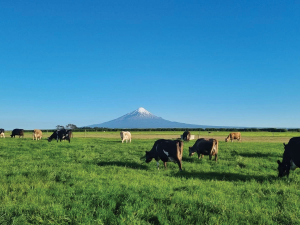
A spate of southerly winds bringing cold temperatures has presented challenges for Taranaki dairy farmers.
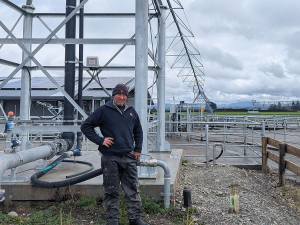
Converting a longstanding cropping farm to dairy was the only way to ensure the land stayed in the family long term, says new dairy farmer Rod May.
As the election heats up, Organics Aotearoa New Zealand (OANZ) has launched its election scorecard designed to help voters wanting to support policies that grow organic and New Zealand's organic sector.
A 'tsunami' of milk from key exporting countries is winding down and this may be good news for New Zealand dairy farmers.
Will the good times last? That's one of the key issues to come out of the latest Federated Farmers confidence survey.
Outgoing Fonterra Co-operative Council chair John Stevenson says that it has been a privilege to represent the co-op's farmer shareholders.