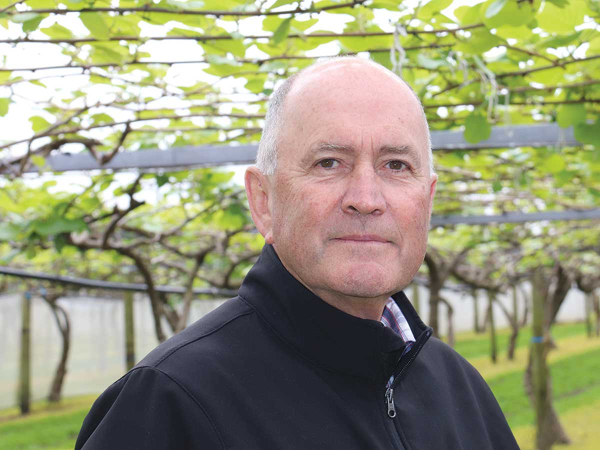
Horticulture NZ Barry O’Neil wants the incoming government to have a greater focus on horticulture.
He says the sector has become a significant part of the NZ economy and will be even more so in the years ahead. O’Neil wants horticulture to be a priority and not to be a subset of a future pastoral- focused agriculture minister.
O’Neil adds that the Ministry for Primary Industries (MPI) also needs to have a specific focus on horticulture, as it does for fisheries and forestry. He believes this will lead to a greater understanding of and ability to work together on the sector’s future opportunities and issues.
“While it may sound appealing for a new government to repeal legislation, like the Natural Built and Environment Act, such actions won’t come without challenges including what replaces it,” O’Neil told Rural News. “Do we go back to the old RMA, which we all know wasn’t working that well?”
He says whatever legislative changes that will occur, these won’t take away the need and responsibility to grow better – whether that is because of the changing climate and poor water quality. O’Neil adds that the sector absolutely needs to maintain its social license to operate with communities.
“We actually don’t need to wait for government direction,” he says. “It’s great to see so many horticultural companies and growing businesses deciding to get on with doing what they believe is needed irrespective of government direction and positioning themselves for future success.”
O’Neill says HortNZ is keen to engage the new government on some key priority issues. These include climate change and adaptation, water allocation and storage and food supply and security.
“In terms of climate, arguably the country has spent too much time focused on mitigation without understanding the need to adapt,” he adds.
“Or we will struggle to survive as Cyclone Gabrielle has unfortunately taught us.”
O’Neil says that covered cropping and even vertical farms will become more important in the future. However, he adds the majority of growing that happens now and in the future will be on flood plains.
“The challenge is to get central and regional government – along with iwi, industry and communities – to agree on flood protection systems working as they need to.”
He also believes that the hort sector also need an ECQ type insurance covering land damaged by significant flood events. While it may not cover the total damage, this will give growers enough money to get back on their feet.
“We need to get serious about large water storage schemes and these need to be a partnership between communities for water supply, industry and Māori, so we all can support and benefit,” O’Neil says.