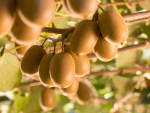
NZKGI Responds to Migrant Worker Exploitation Reports
Where any worker in the kiwifruit industry is mistreated, we expect the authorities to take action.
 increase font size

ANGER AT Zespri marketing mistakes and Government responses to the Psa-V crisis reached boiling point last week with a grower-organised meeting at the Te Puke hall on Friday.
Up to 500 were expected to cram the hall where organiser and grower Rob Thode planned to call for investigations into the biosecurity failure of Psa-V and into Zespri.
While the president of NZ Kiwifruit Growers has defended Zespri, Thode wants an inquiry into what he believes is a "failure to deliver fair returns to growers, failures in the Korean and Chinese markets and failure to properly manage its licensed varieties."
As for the Government's Psa response, Thode says it may cost him about $3m. He was asking growers to back demands that Government admit its responsibility for letting Psa-V into New Zealand, that it compensate growers and declare an adverse event.
The Government knew about Psa but failed to "secure our borders", he maintains.
"What the Government has done must send shivers through everyone else involved in agriculture in New Zealand. If it had been foot-and-mouth disease and MAF had done testing for a little while and then dumped it on the industry, how that would have gone down? We would have ended up with a decimated rural sector."
Meanwhile Thode says Zespri is in an "absolute mess". He points to the company being fined $500,000 last year in Korea for anti-competitive practices and its Chinese agent being arrested on charges of multi-million dollar tax evasion.
"Two of our key markets are in total disarray. Why isn't anything being done? Why are the people still in place who created that mess? Who got the anti-competitive practices? Who appointed a dodgy importer? Why hasn't something happened to them?
"We've also got people running around grafting licensed varieties illegally."
Thode says Zespri has nothing to hold it to account and growers can't go anywhere else.
"Personally I am a strong supporter of Zespri long term; I hope to always sell my fruit to them because they are New Zealand. But when you have such a massive failure by a company also producing incredibly low returns for its growers, there's got to be questions raised."
NZ Kiwifruit Growers Inc president Neil Trebilco says growers are going through a lot of "emotional angst" but should talk to Zespri if they have issues with its performance. Zespri was not an "anonymous corporate" but was owned by growers who elected its directors.
"It is a difficult time for growers, there's a lot of emotional angst out there and growers have to sort through a myriad issues, not easy when you are under pressure."
Trebilco says NZ Kiwifruit Growers and Kiwifruit Vine Health are working with the Government toward some adverse-event type provisions for the kiwifruit industry.
A recommendation on the draft release of G3 as a gold variety replacement for the Psa-V devastated Hort 16A will go to the Zespri board today (February 22); growers will be consulted in the first two weeks of March and a final decision will be made on March 21.
Trebilco notes Zespri has increased sales in the last year by about 35% in China and about 20% in Korea. In Korea New Zealand is paying a 45% tariff on its fruit while Chile pays 13% which is reducing year by year. "So we are under a severe cost price disadvantage because of that. In that situation we would expect Zespri to compete hard but we do expect Zespri to stay within the rules. "
Trebilco says a Zespri scheme to release new varieties which began prior to Psa has been slowed because new releases now must be tested for Psa tolerance. The scheme aimed to get some growers of the green cultivar Hayward into other varieties and, with less Hayward produced, thereby boost its returns.
Where any worker in the kiwifruit industry is mistreated, we expect the authorities to take action.

Kiwifruit growers are watchful but remain optimistic as concerns around the potential effects of the El Niño weather pattern this season.
More signs of a booming kiwifruit sector.
After delivering a strong financial year, rural trader PGG Wrightson says the coming months will depend on customer confidence and weather.
New Zealand growers have always adapted to changing conditions, but one challenge is steadily gaining ground across the horticulture sector: resistance.


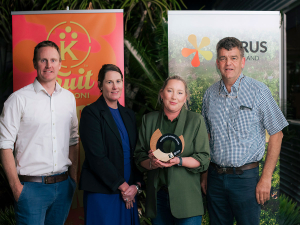
New Zealand's citrus growers were challenged to build their future on the value embedded in their fruit rather than the volume they produce, at Citrus New Zealand's annual gathering in Gisborne on 17 September.

Leading John Deere technicians and apprentices from New Zealand and Australians were recognised at the recent sixth annual JD Technician of the Year Awards, held in Brisbane.
In Dacre, near Invercargill in New Zealand’s South Island, Bruce Dinnington is running a dairy operation unlike any other.
A free online platform aggregating governance vacancies across rural and regional New Zealand has been launched.
Environment Minister Nicola Grigg has announced details of a new rural plastics recycling scheme.
Agricultural drone operators say that a government decision to allow lower-risk drone work without certification won’t lower standards but drive innovation and efficiency.



