Ravensdown Elects Montgomery, Acland to Board
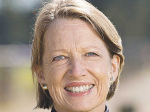
Ravensdown shareholders have elected Jane Montgomery and Kate Acland to the Ravensdown Board for three-year terms, following a closely contested director election.
 increase font size

An programme aiming to develop precision fertiliser application for hill country will get government funding through the Primary Growth Partnership.
The Ministry for Primary Industries (MPI) has approved co-funding of $5.13 million for the seven-year Ravensdown "Transforming Hill Country Farming" PGP programme.
This amount will be matched by the fertiliser co-operative Ravensdown, making the overall base funding for the project $10.26 million.
The new PGP programme will combine remote-sensing of soil fertility on hills with GPS-guided aerial topdressing, to improve hill country productivity and reduce nutrient runoff.
The research partners are Massey University's Precision Agriculture Group and AgResearch. The Ravensdown programme expects to generate $120 million a year in economic benefits to New Zealand by 2030.
"This is an excellent example of harnessing modern technology to transform farming on hill country, which is facing some serious challenges," says Scott Gallacher, MPI deputy director-general.
"This research partnership will help enable hill country farmers to grow more pasture and increase returns, as well as reduce the environmental effects of fertiliser application," Ravensdown CEO Greg Campbell says.
The research will develop remote sensors which can scan for areas that need different amounts of fertiliser to other areas. A fertiliser plan can then be prepared and sent to the GPS-equipped topdressing planes.
"This combination of technology is a world-first. Innovations like these all add up to a great export story for New Zealand farming," says Professor Ian Yule of Massey University.
"New Zealand has been at the forefront of the development of the use of remote sensing in agriculture for the past 10 years and this project provides the opportunity to apply that technology directly to increasing production and farm profitability while improving environmental management in the hill country," says Professor Yule.
AgResearch will play a key role in the development of integrated systems, so the benefits will be captured by including the all-important precision application of nutrient by topdressing aircraft.
Ravensdown shareholders have elected Jane Montgomery and Kate Acland to the Ravensdown Board for three-year terms, following a closely contested director election.
OPINION: It appears to be difficult for people who haven’t tried to run a business to understand the difference between assets and cash.
OPINION: In the 1980s, concern was expressed in West Germany about the falling birth rate. Some simple analysis was performed by Professor Helmut Sies, physician and biochemist at Dusseldorf University. His letter ‘A new parameter for sex education’ was published in Nature in 1988:
When it comes to annual rebates, it's been a long time between drinks for Ravensdown shareholders.
New Zealand needs to make sure that it continues to focus on its own food security, according to HortNZ board member and blueberry grower Dermott Malley.


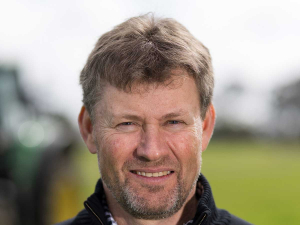
Mark Hooper has been appointed the new chair of NZPork, the industry organisation representing New Zealand pig farmers.
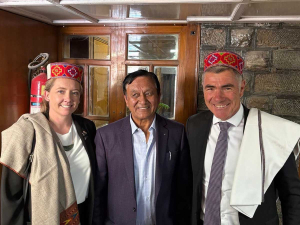
As the India-New Zealand free trade agreement enters into force, New Zealand’s apple industry has reaffirmed its commitment to the long-term development of India’s apple sector.
Fonterra shareholders can begin voting on Tuesday 20 October in the 2026 Board of Directors’ election, a Co-operative Council election in one Ward, and seven Annual Meeting resolutions.
National’s pledge to introduce 19 new national standards shows the party is serious about getting Wellington out of farming, Federated Farmers says.
The National Party’s policies to make it easier to grow fresh vegetables, secure reliable water and energy and simplify farm planning are practical changes that will give growers the confidence to invest, according to Horticulture New Zealand (HortNZ).
Fonterra Co-operative Group chief financial officer Andrew Murray has resigned to take up a role outside the dairy giant.