NZKGI Responds to Migrant Worker Exploitation Reports
Where any worker in the kiwifruit industry is mistreated, we expect the authorities to take action.
 increase font size
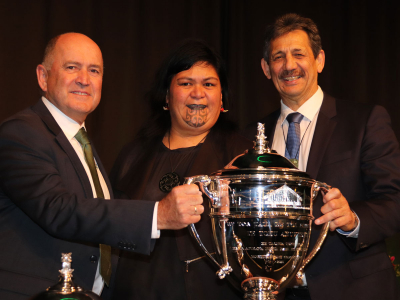 Special horticultural Ahuwhenua trophy with Barry O'Neill, President of Horticulture NZ, Hon Nanaia Mahuta and Kingi Smiler, Chairman of the Ahuwhenua Trophy Management committee
Horticulture has joined the prestigious Ahuwhenua Trophy competition.
The 2020 Ahuwhenua competition will mark the first time horticulture is included.
Maori Development Minister Nanaia Mahuta and Agriculture Minister Damien O’Connor, say bringing horticulture into the prestigious Ahuwhenua Trophy competition is a major milestone for Māori.
Mahuta told delegates at the Horticulture New Zealand conference in Hamilton that next year will see Māori farmers, trusts and incorporations compete for being the top Māori horticulture enterprise in the country.
“Up until now, the competition has only involved sheep and beef and dairy, but with the rapid growth and investment by Māori in horticulture, it is now part of the competition”.
O’Connor announced that government financial support for the event would also increase.
“Māori are significant players across our horticultural sector, both in the fruit and vegetable industries, and across the supply chain. Māori agribusiness will be a big part of New Zealand's future,” he said.
He announced that Te Puni Kōkiri and MPI will be platinum sponsors of the Excellence in Māori Horticulture Award in 2020. Part of this sponsorship will include 12,000 tree seedlings supplied by the Minginui Nursery, and made possible through the One Billion Trees Programme.
The competition is designed to promote excellence in Māori Farming and Horticulture. A special cup, identical to the ones for dairy, and sheep and beef has been crafted especially for next year’s event.
“It is an exact replica of the trophies designed by Goldie, the New Zealand artist renowned for his paintings of Māori leaders and communities,” says Mahuta.
“The creation of the trophy has been an international collaborative effort between The Village Goldsmith in Wellington, Te Puia, the New Zealand Māori Arts and Crafts Institute in Rotorua, and the firm of Ottewill who are based in Ashford in the county of Kent, southeast of London,”.
Mahuta says Māori are now major players in the horticultural sector, producing at least 10% of the annual kiwifruit crop, as well as avocados and berries as rapidly expanding crops.
“Right across the primary sector Māori are excelling. They are taking ownership of their land, forming collaborative partnerships, taking their products directly to world markets and this all adds to the establishment of profitable and sustainable businesses that are guided by Māori values.
“Government is dedicated to improving the economic and social wellbeing of Māori,” says Nanaia Mahuta.
Where any worker in the kiwifruit industry is mistreated, we expect the authorities to take action.

Kiwifruit growers are watchful but remain optimistic as concerns around the potential effects of the El Niño weather pattern this season.
James Blair, an agronomist for AS Wilcox and the Pukekohe regional champion, has won the 2026 Young Grower national title.
Claimed to be the first autonomous robot for New Zealand vegetables growers, the first Kilter AX-1 unit has arrived in the country.
After delivering a strong financial year, rural trader PGG Wrightson says the coming months will depend on customer confidence and weather.


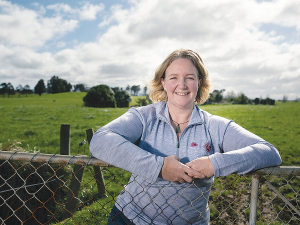
Farmers are being encouraged to rethink how they manage waste on farm with the launch of ruralwastesorted.co.nz, a new website bringing together practical tips, real farmer experiences and resources.

New Zealand Winegrowers (NZW) is celebrating the India-New Zealand Free Trade Agreement (FTA) coming into force today, bringing New Zealand wine improved access to one of the world’s fastest-growing economies.
New Zealand’s red meat sector has welcomed the India-New Zealand Free Trade Agreement taking effect, which removes India’s 33% tariff on New Zealand sheepmeat.
More than 95 per cent of New Zealand’s forestry and wood exports to India can now enter tariff free as the New Zealand-India Free Trade Agreement comes into force today.
Federated Farmers is backing Feilding High School’s call to keep Agriculture and Horticultural Science as a standalone subject in Year 11.
Food and fibre exports have returned a billion- dollar bonus to the country.