India FTA Removes 33% Tariff on NZ Sheepmeat
New Zealand’s red meat sector has welcomed the India-New Zealand Free Trade Agreement taking effect, which removes India’s 33% tariff on New Zealand sheepmeat.
 increase font size
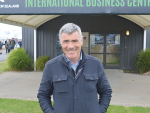
 Prem Maan, executive chairman of Southern Pastures LP.
A New Zealand dairy industry leader believes the free trade deal announced with India delivers wins for the sector.
Prem Maan, executive chairman of Southern Pastures LP, says he takes “a huge positive” from the FTA announced earlier this week.
Southern Pastures owns and operates 20 farms encompassing over 6,600ha in New Zealand and owns Lewis Road Creamery, the maker of awarding-winning dairy products for local and export markets.
Maan thanked Prime Minister Christopher Luxon and Agriculture and Trade Minister Todd McClay for getting the FTA across the line. He also acknowledged the work done by McClay’s predecessor, Labour’s Damien O’Connor.
Not everyone in the dairy sector is celebrating the deal. The organisation representing NZ dairy processors – Dairy Companies of NZ (DCANZ) – has expressed disappointment with the FTA.
DCANZ says negotiations with India have been unable to secure a bigger step towards dairy trade liberalisation and wants a fresh strategy to address the trade challenges faced by New Zealand’s biggest export sector.
Maan, a Fijian of Indian descent, noted that he has never been to India and his view is purely one of economic opportunity.
“As noted elsewhere, demanding full tariff-free access for core dairy was always an impossibility; it would have been political suicide for the Indian government and unfair to hold up other NZ industries by sticking to our guns.
“However, widely overlooked doors have opened for our sector.
“Infant formula and value-added dairy ingredients will now see lowered tariffs, eventually becoming tariff-free.
“Crucially, the deal includes a "re-export" clause, allowing our ingredients to enter India duty-free for processing and export, a massive opportunity to integrate into global value chains. I know from colleagues in Australia that their niche dairy exports to India have mushroomed since signing their own agreement.
“Let’s focus on these wins. The future isn't in bulk commodities; it's in growing our value-add exports. This deal lets us start doing exactly that.”
The Indian FTA allows duty-free access for dairy and other food ingredients for re-export from day one.
It also allows duty-free access for bulk infant formula and other high-value dairy preparations over seven years.
Also included is a 50% tariff cut for high value milk albumins within a NZ-specific quota equal to current export volumes.
McClay says the FTA future-proofs New Zealand’s dairy access by offering a right to negotiate should India give better access to comparable countries, by triggering an automatic consultation process to consult and upgrade.
“New Zealand exporters will enjoy duty-free access for dairy and other food ingredients for re-export through the FTA, opening door to greater collaboration and processing, and offer access to India’s growing number of FTA partners through a dedicated fast-track mechanism,” McClay says.
But DCANZ chairman Guy Roper says that DCANZ is disappointed that India has been unwilling to deliver more than small changes.
However, he does acknowledge that New Zealand trade officials and McClay have worked tirelessly to conclude this agreement in a tight timeframe, and the deal will benefit a range of other New Zealand export sectors.
“Looking forward, and with tariffs now being largely resolved for other sectors, it's time to ramp up focused efforts and creative approaches to bring down trade barriers for dairy,” says Roper.
New Zealand’s red meat sector has welcomed the India-New Zealand Free Trade Agreement taking effect, which removes India’s 33% tariff on New Zealand sheepmeat.
More than 95 per cent of New Zealand’s forestry and wood exports to India can now enter tariff free as the New Zealand-India Free Trade Agreement comes into force today.
Zespri has welcomed the entry into force of the India-New Zealand Free Trade Agreement today, calling it a significant milestone that will support long-term growth in one of the world’s largest and fastest-growing consumer markets.
A seasoned horticulturist has been appointed to deliver the Apple Action Plan, a key initiative of the India-New Zealand Free Trade Agreement.
National’s much-touted free trade deal with India featured in the Rural Issues Debate at Mystery Creek, Hamilton on Wednesday night.



Three men have been sentenced in District Courts after Ministry for Primary Industries prosecutions over animal welfare, food safety and cattle tracing offences.
Fonterra’s 2026 financial year was a year of delivery, with record volumes of milk collected, processed and shipped by the co-op.
OPINION: The Government's decision to reinstate agriculture and horticultural science as a standalone subject from Year 11 is the right one.
Dairy farmers, still holding onto their Fonterra shares despite switching milk supply elsewhere or exiting the industry, now face a stricter share sell-down requirement.
Hamilton-based agritech company Aimer Farming has completed a $3 million capital raise to support its next stage of growth, including a beef farming product due to launch in 2027.
When dairy manager Miriam Lauridsen learned the farm, she was joining held weekly health and safety meetings, she initially thought that was “a bit over the top”. Experiencing that culture changed her mind.