
Ravensdown Elects Montgomery, Acland to Board
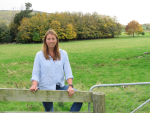
Ravensdown shareholders have elected Jane Montgomery and Kate Acland to the Ravensdown Board for three-year terms, following a closely contested director election.




 increase font size
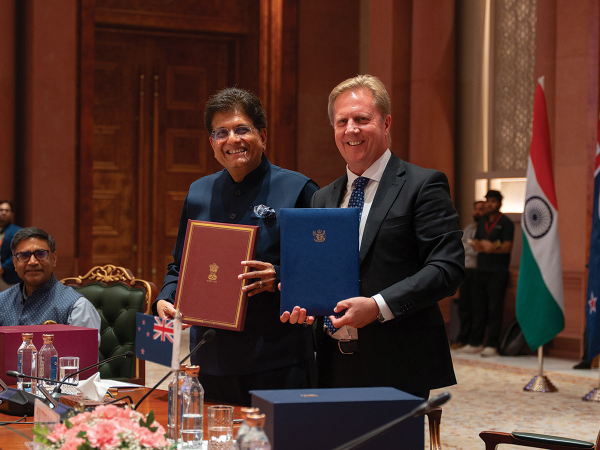 Trade Minister, Todd McClay and the Indian Minister for Commerce and Industry, Piyush Goyal signed the historic FTA.
A lavish signing ceremony in Delhi has cemented in place a deal that will have massive economic benefits for some of NZ's key primary exports - notably forestry, horticulture, sheepmeat and wool.
Trade Minister Todd McClay and the Indian Minister for Commerce and Industry, Piyush Goyal, signed the historic FTA between the two countries in front of a large group of NZ and Indian businesspeople.
Among those present was Labour's spokesperson on Trade, Damien O'Connor. The signing formalises the agreement the two countries reached just before Christmas.
Now that the deal has been signed, it will need to be ratified by Parliament, and while the public will have the opportunity to cfomment on the deal via the select committee process, its passage through Parliament is assured now that Labour has said it will support the deal.
McClay says the deal will deliver thousands of jobs and billions of dollars in additional exports. He says it will create opportunities for our businesses to diversify and create strong trading relationships that provide economic security for New Zealanders.
"That is crucial in these times of global unrest," he says.
The FTA eliminates or reduces tariffs on 95% of NZ exports to India and almost 57% of our exports will be duty-free from day one including lamb, wool, coal, leather, most forestry and industrial products.
The signing was welcomed by New Zealand's red meat sector.
Meat Industry Association (MIA) independent chair Nathan Guy says that once ratified, the FTA will expand New Zealand red meat exporters' trade options in a challenging global environment.
"Exporters are operating in a world of rising protectionism and ongoing volatility. Having a broader mix of markets and expanding our reach will help spread risk and provide more stability for farmers and exporters.
"India is a market with significant long-term potential. While we won't see immediate gains, this FTA charts a path to improve market access and create new opportunities for the red meat sector."
Beef + Lamb New Zealand chair Kate Acland says the agreement positions New Zealand in a market with strong promise.
"India is now the world's most populous country and is expected to become the third-largest economy within the next five years. As incomes rise in India, so will demand for high-quality natural protein.
"Access has been constrained due to a 30% tariff on New Zealand sheepmeat. This FTA will start the process of addressing those barriers and puts us in a stronger position as the market develops.
"The FTA can help build the red meat sector's resilience and enable us to keep delivering for the New Zealand economy," Acland says.
Ravensdown shareholders have elected Jane Montgomery and Kate Acland to the Ravensdown Board for three-year terms, following a closely contested director election.
Beef + Lamb New Zealand (B+LNZ) says it welcomes the passage of the Natural Environment Bill and Planning Bill, calling the bills a positive step for sheep and beef farmers.
If you're thinking about investing in ways to push feed forward, this is the year to do it.
Farmgate lamb prices are down by 8%, beef cattle by 4.5% and farm expenditure up by 4.2%.
It was billed as a chance for all the political parties to woo the rural vote, but question marks hang over just how effective this was.


LIC shareholders have elected a new North Island representative to the co-operative's Board, along with five representatives to its Shareholder Reference Group (SRG), following the company's Annual Meeting held in Invercargill.
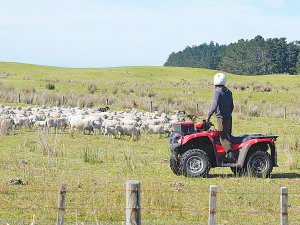
Farmers across parts of Southland and South Otago are continuing to deal with difficult conditions after a prolonged run of wet weather, with pressure building around feed supply, stock management, pasture damage, farm infrastructure and everyday workloads.
Federated Farmers says it welcomes Labour's commitment to reviewing the Sharemilking Agreements Act, calling on other major parties to do the same.
For Canterbury dairy farmers Sian Meijer and Rick Wobben, wearable technology has become one of their most valuable on-farm tools - helping manage 1850 cows across an expansive, high-performing dairy operation while improving efficiency, mating outcomes and day-to-day decision making.
Fonterra has unveiled its annual results for the 2026 financial year, posting $27 billion in revenue and close to $20 billion returned to New Zealand farmer owners and unit holders.
The first major update to the Dairy Cattle Code of Welfare in more than a decade has been released, marking what DairyNZ describes as an important step in ensuring animal welfare standards continue to evolve alongside scientific evidence and on-farm realities.




OPINION: The same mainstream media muppets that brought you Jacindamania in 2017 have been flat out pimping for the Opportunities…
OPINION: Your old mate reckons the atrocious way farmers in the UK are treated by their lords and masters in…




