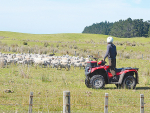
NZ Red Meat Exports Hit $867m in August, Up 23%
Meat Industry Association data, released alongside the Red Meat Sector conference in Wellington, shows export value climbing across the US, China, UK and Canada.
 increase font size
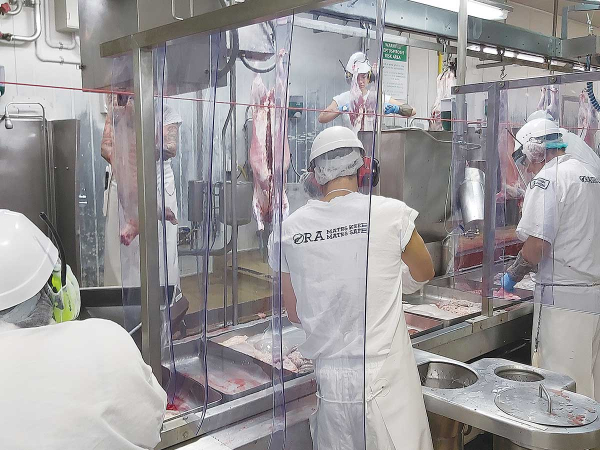 The meat sector believes the Climate Change Commission's assumption that NZ can reduce livestock numbers by 15%, while still maintaining current production volumes, is overly optimistic.
New Zealand's meat processing industry says, while it supports moves away from coal, it has some major concerns about cuts to livestock numbers as proposed in the recent Climate Change Commission’s draft report.
The industry says it is generally supportive of the focus on reducing the use of fossil fuels. However, as the country’s largest manufacturing sector, it is worried about the impacts of the report’s stated 15% reduction in sheep, cattle and dairy numbers.
Meat Industry Association chief executive Sirma Karapeeva says the country’s red meat processors and exporters are committed to reducing and eventually eliminating the use of coal, although achieving the commission’s 2037 target will be difficult.
“We do need a fair and just transition away from coal to ensure jobs and livelihoods are not put at risk. However, our chief concern is that any drop in livestock numbers may jeopardise the viability of some processing plants and jobs in rural communities,” Karapeeva explains.
“Meat processors rely on throughput of livestock to create efficiencies of scale and be profitable.
“The commission estimates that without major on-farm practice change and new technologies, a 15% reduction in livestock numbers will be required to achieve the targets by 2030.
“This would have a serious impact on the ability of many processors to keep operating.”
She adds that the assumption by the commission that we can reduce livestock numbers by 15%, while still maintaining current production volumes, seems optimistic.
“We need to understand why the commission made this assumption to better assess the likely effects for the industry.”
However, Karapeeva says the meat sector agrees with the commission – and sheep and beef farmers – that the widespread planting of exotic pine trees is not a long-term viable solution to addressing climate change.
“We can’t plant our way out of climate change. Wholesale planting of pine trees on sheep and beef farmland is not the answer and it will have significant implications for jobs in regional New Zealand,” she adds.
Currently, NZ’s red meat processing sector generates more than $10 billion in export revenue every year and is also a significant regional employer in New Zealand.
Karapeeva says any changes to this would have a major impact on people’s livelihoods – especially in regional parts of the country.
“For instance, in the Otago/Southland region, the sector employs 7,700 full-time people with more than 10,000 full-time jobs underpinned by the industry. It also contributes 11.5% of household income in the region,” she explains.
“In Taranaki/Manawatu and Whanganui, the sector supports almost 10% of full-time employment in the region with 5,200 directly and it underpins more than 8,300 full-time equivalent jobs.
Meat Industry Association data, released alongside the Red Meat Sector conference in Wellington, shows export value climbing across the US, China, UK and Canada.

Esther Guy-Meakin has been announced as the new chief executive of the New Zealand Meat Board (NZMB).
As expected, the US has launched a safeguard investigation into lamb imports, a move that could impact New Zealand sheepmeat returns.
OPINION: Good governance is critical to the primary sector. Whether it is a rural business, a levy-payer organisation or a research body, we need a pipeline of capable directors with a passion for, and knowledge of, the sector.
New Zealand's red meat sector says it welcomes the Government's focus on trade ahead of the general election in November.


Pāmu has released its FY26 Integrated Annual Report, reporting a Net Operating Profit of $113 million, more than double the $49 million recorded in FY25.

Meat Industry Association data, released alongside the Red Meat Sector conference in Wellington, shows export value climbing across the US, China, UK and Canada.
Applications are set to open for the 2027 Zanda McDonald Award, a trans-Tasman award recognised for identifying and fast-tracking talented young leaders in agriculture and agribusiness.
The Royal New Zealand College of General Practitioners (the College) and Hauora Taiwhenua Rural Health Network are calling for investment in a proposed new training pathway for rural GPs, warning that many rural practices are struggling to recruit while a large share of the existing workforce nears retirement.
Federated Farmers has called on Central Otago District Council (CODC) to drop or vote down a plan to truck sludge from Alexandra and Cromwell to farmland near Lauder, warning it would compound an "outrageous" situation created by a separate council's decision weeks earlier.
Synlait has swung to second-half profit as operations stabilise, but the dairy processor still posted a $75.4m annual loss.