NZKGI Responds to Migrant Worker Exploitation Reports
Where any worker in the kiwifruit industry is mistreated, we expect the authorities to take action.
 increase font size
 KVH’s Barry O’Neil says more Psa has been seen this season than for years.
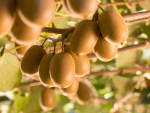
The kiwifruit industry has seen a resurgence of vine-killing disease Psa-V this year, but still expects a bumper crop.
"We have definitely seen more Psa this spring and longer into summer than what we've seen for the last couple of years," says Kiwifruit Vine Health chief executive Barry O'Neil.
"We put that down to a number of factors: a colder wetter winter-spring, windier conditions in spring as well and some growers becoming a little too complacent with their management approaches, believing Psa is no longer a worry for them.
"It is a reminder for all growers that Psa is still here and will definitely rear its ugly head when conditions are favourable – if the growers are not very pro-active."
O'Neil says Psa is still very widespread.
"Parts of lower Waikato have had some very bad problems, especially some of the organic growers in the region.
"Obviously it is more challenging for organic growers. They don't have the tools conventional growers have. There are significant restrictions on what they can put onto their crops.
"But we've seen Psa this year from Kerikeri to Whanganui, Coromandel and Gisborne. Even in the main Bay of Plenty kiwifruit growing area Te Puke they are still seeing in some situations quite widespread Psa."
Normally it is on the more challenged sites, he says.
"The lower lying colder sites are where we are seeing more, but not always. It is certainly more of an issue this year than we have seen for a little while," O'Neil adds.
"To counter that, on the other side of the equation we have had good flowering, pollination and fruit set. So even though there has been more Psa we are still looking at a significantly larger crop.
"Gold will be significantly up on last year as more G3 comes into production and the Green crop may not be dissimilar to the record crop we had last year. So even though Psa has been bad, certainly production continues."
Kiwifruit Vine Health wants growers to ensure they have an effective crop protection programme – their sprays regime – to minimise the impact of Psa. On-orchard hygiene – the cleaning of tools between vines or between days – hasn't been maintained as well as it should, says O'Neil.
Thirdly, growers must cut out infection when they see it so it doesn't spread.
"Those are the three areas I suggest would be the most important in which growers must remain proactive and vigilant.
"Normally at this time of year it's hot and dry and we don't see any Psa at all. We are still seeing it – not as bad as what it was earlier, but it is still there.
"In some orchards on more challenged sites they may have to cut out up to 20% of their canopy because of Psa. Some regions have more susceptible varieties."
The older, more susceptible cultivar Hort16a hasn't gone from all regions of New Zealand. It is still present in the Far North and on the East Coast and those growers are finding it as hard as Bay of Plenty growers found years ago, he says.
"It causes the infection to get established through the vine into the root stock," O'Neil adds. "The sooner it is removed from a region or an orchard that has Psa the better."
Where any worker in the kiwifruit industry is mistreated, we expect the authorities to take action.

Kiwifruit growers are watchful but remain optimistic as concerns around the potential effects of the El Niño weather pattern this season.
More signs of a booming kiwifruit sector.
After delivering a strong financial year, rural trader PGG Wrightson says the coming months will depend on customer confidence and weather.
New Zealand growers have always adapted to changing conditions, but one challenge is steadily gaining ground across the horticulture sector: resistance.


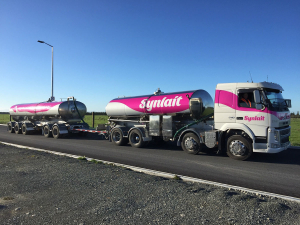
Synlait has swung to second-half profit as operations stabilise, but the dairy processor still posted a $75.4m annual loss.

LIC shareholders have elected a new North Island representative to the co-operative's Board, along with five representatives to its Shareholder Reference Group (SRG), following the company's Annual Meeting held in Invercargill.
Farmers across parts of Southland and South Otago are continuing to deal with difficult conditions after a prolonged run of wet weather, with pressure building around feed supply, stock management, pasture damage, farm infrastructure and everyday workloads.
Federated Farmers says it welcomes Labour's commitment to reviewing the Sharemilking Agreements Act, calling on other major parties to do the same.
For Canterbury dairy farmers Sian Meijer and Rick Wobben, wearable technology has become one of their most valuable on-farm tools - helping manage 1850 cows across an expansive, high-performing dairy operation while improving efficiency, mating outcomes and day-to-day decision making.
Fonterra has unveiled its annual results for the 2026 financial year, posting $27 billion in revenue and close to $20 billion returned to New Zealand farmer owners and unit holders.