Seeka Posts Record $62m Profit as Zespri Lifts 2026 Forecast
More signs of a booming kiwifruit sector.
 increase font size
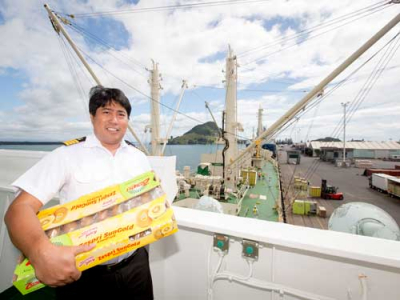 Asian Adonis captain Bernardo D. Ocampo, with part of the first shipment of kiwifruit for the season, due to leave for the Chinese market this weekend. Photo: Jamie Troughton/Dscribe Media.
The 2017 New Zealand kiwifruit season is underway with the first ship, the Asian Adonis, set to sail to Shanghai this week with 840,000 trays of Zespri SunGold Kiwifruit.
Zespri chief operating officer Simon Limmer explains the New Zealand industry is set for another strong season, with continued growth in SunGold volumes as more vines reach full maturity, and Green volumes down somewhat on last year’s record crop due to weather conditions during the 2016 growing season.
“We’re looking at the second-largest crop in our history and fruit is sizing well on the vines heading into harvest, with good taste levels. The NZ kiwifruit industry is coming together to deliver another great season for our customers – the anniversary of 20 years of delivering premium fruit in a Zespri box around the world.
“Over the long-term, our strong volume growth both here in NZ and offshore will continue as SunGold volumes increase to meet consumer demand around the world,” says Limmer.
Zespri President of global sales & marketing Dan Mathieson says that on the market side, Zespri teams around the world are primed to kick off sales and marketing programmes in the 59 countries where premium Zespri Kiwifruit will be sold this year.
“We plan to increase our total marketing investment again this season to reach out and build stronger connections and relationships with our customers and consumers. This is particularly important as we continue to expand our presence into developing markets, introducing more consumers to the great taste and superior quality of our fruit.
“This investment is also vital to achieving the industry’s goal of increasing overall kiwifruit consumption around the world from just a fraction of a percent of the total fruit bowl,” says Mr Mathieson.
The first of the 46 reefer vessels (refrigerated charter ships) from New Zealand will leave for China this year in a break from tradition: the first ship for many years has been to Japan.
“This marks the increasing importance of the China market for the industry, with China and Japan now our two largest markets in the world,” says Mathieson.
In another first for the industry, almost all the North Europe charters will be replaced with Seatrade’s new Colour Class ships this season, specialised reefer container vessels which provide more flexibility and improved performance. In addition to the reefer vessels, around 14,000 FEU containers are planned to be shipped for the 2017 season.
More signs of a booming kiwifruit sector.
Blueberries have the potential to become a major horticultural export, earning up to $150 million within the next three to five years.
Westpac NZ has become the first New Zealand bank to receive approval from the Reserve Bank of New Zealand (RBNZ) to secure and leverage kiwifruit growers' Zespri shares.
New Zealand's kiwifruit industry has welcomed Government co-investment in a new five-year programme designed to help growers produce higher yields of premium fruit, with less water, fewer nutrients and reduced environmental impact.
Zespri's sales of kiwifruit for the 2025 season have broken all past records.


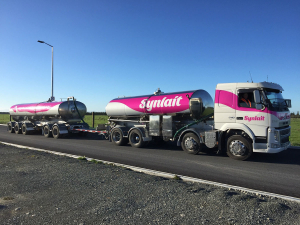
Synlait has swung to second-half profit as operations stabilise, but the dairy processor still posted a $75.4m annual loss.

LIC shareholders have elected a new North Island representative to the co-operative's Board, along with five representatives to its Shareholder Reference Group (SRG), following the company's Annual Meeting held in Invercargill.
Farmers across parts of Southland and South Otago are continuing to deal with difficult conditions after a prolonged run of wet weather, with pressure building around feed supply, stock management, pasture damage, farm infrastructure and everyday workloads.
Federated Farmers says it welcomes Labour's commitment to reviewing the Sharemilking Agreements Act, calling on other major parties to do the same.
For Canterbury dairy farmers Sian Meijer and Rick Wobben, wearable technology has become one of their most valuable on-farm tools - helping manage 1850 cows across an expansive, high-performing dairy operation while improving efficiency, mating outcomes and day-to-day decision making.
Fonterra has unveiled its annual results for the 2026 financial year, posting $27 billion in revenue and close to $20 billion returned to New Zealand farmer owners and unit holders.