NZ Ploughing Team to Use Borrowed Gear After Shipping Mix-Up
The New Zealand ploughing team to the world championship in Croatia next month will be banking on borrowed equipment as they seek glory.
 increase font size
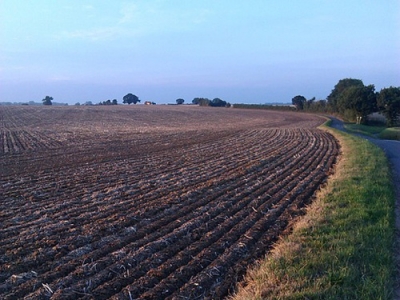
The World Ploughing Championships have just concluded in Denmark and New Zealand entrants acquitted themselves well.
Blenheim’s Ian Woolley in the conventional plough division finished eleventh overall, after finishing fifth in the stubble ploughing on the first day and 16th in the grassland ploughing on the second day. He also gained a special prize for the ploughman who finishes highest in his first World Ploughing Championships.
In the reversible ploughing division, Malcolm Taylor of Putaruru finished eighteenth overall, after finishing twentieth in the stubble and sixteenth in the grassland section.
Both the New Zealanders were competing against ploughmen and women from 30 countries.
They will both again represent NZ in the 2016 World Championships at Coventry in the UK.
Meanwhile, Rotorua’s Colin Millar was appointed president of the World Ploughing Organisation. He has been vice president for three years.
The New Zealand ploughing team to the world championship in Croatia next month will be banking on borrowed equipment as they seek glory.
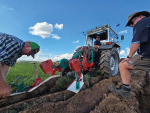
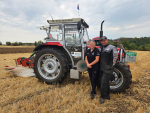
Ploughing champions Mark Dillon and Malcolm Taylor earned the right to represent the country at the World Ploughing Championships in Osijek, Croatia, on 5 and 6 September, after winning their titles at the New Zealand Ploughing Championships in Middlemarch in 2025.
Southland rural contractor and current NZ Ploughing champion Mark Dillon has got his tractor back after it enjoyed some extensive OE.
Sean Leslie and Casey Tilson from Middlemarch, with horses Beau and Dough, took out the Rural News Horse Plough award at the Power Farming NZ Ploughing Championships at Horotiu, near Hamilton, on April 13-14.
The mood is relaxed as father and son ploughmen Paul and Derek Houghton get some practice in, but when the national championship starts this Saturday it will be a different story.


LIC shareholders have elected a new North Island representative to the co-operative's Board, along with five representatives to its Shareholder Reference Group (SRG), following the company's Annual Meeting held in Invercargill.
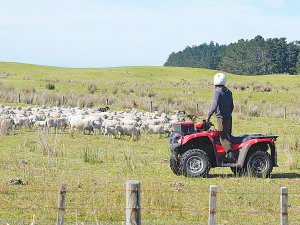
Farmers across parts of Southland and South Otago are continuing to deal with difficult conditions after a prolonged run of wet weather, with pressure building around feed supply, stock management, pasture damage, farm infrastructure and everyday workloads.
Federated Farmers says it welcomes Labour's commitment to reviewing the Sharemilking Agreements Act, calling on other major parties to do the same.
For Canterbury dairy farmers Sian Meijer and Rick Wobben, wearable technology has become one of their most valuable on-farm tools - helping manage 1850 cows across an expansive, high-performing dairy operation while improving efficiency, mating outcomes and day-to-day decision making.
Fonterra has unveiled its annual results for the 2026 financial year, posting $27 billion in revenue and close to $20 billion returned to New Zealand farmer owners and unit holders.
The first major update to the Dairy Cattle Code of Welfare in more than a decade has been released, marking what DairyNZ describes as an important step in ensuring animal welfare standards continue to evolve alongside scientific evidence and on-farm realities.