Rural Vote Debate on Q&A: Substance or Just Platitudes?
It was billed as a chance for all the political parties to woo the rural vote, but question marks hang over just how effective this was.
 increase font size
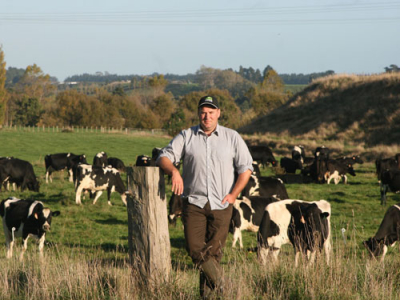 Andrew Hoggard.
Federated Farmers says it generally supports the government’s decision to further restrict the sale of New Zealand farmland to overseas buyers.
Vice-president Andrew Hoggard says the new government policy broadly aligns with that of the Feds.
From December 15 not only will the owners of very large farms proposed for sale to overseas buyers require permission from the Overseas Investment Office (OIO), but any land larger than 5ha will now come under this office’s jurisdiction.
The new directive will not apply to forestry land.
Associate Finance Minister David Parker says the existing directive is too loose. Parker says too often investors buy a NZ farm then use existing systems, technology and management practices which don’t substantially add anything new or create additional value in our economy.
“We want to make it clear that it is a privilege to own or control NZ’s sensitive assets, and this privilege must be earned,” he says.
Hoggard says while the notion of ‘benefits to New Zealand’ in the old policy seemed to be right, in practice it didn’t turn out that way in the decisions of the OIO.
“You’d look at a decision and say ‘really? they view that as a benefit? Somehow a NZ purchaser wouldn’t have done that anyway.”
Hoggard says the new directive will give the OIO a clear message to step up a notch or two in how it assesses the net benefit to NZ.
He says Feds’ concerns, and those of the public, centre on the big trusts which just come to NZ and buy farms but do not contribute to local communities or NZ agriculture in any way.
A big concern is when these people start buying processing facilities, he says. “People are nervous about that.”
But Hoggard hopes the new rules will not prevent people who genuinely come here to farm and to invest in local communities. He gives as examples two prominent members of Federated Farmers -- Anders Crofoot and Willy Leferink -- who he says contributed much; and James Cameron and Julian Robinson – both wealthy individuals – invested in their local communities and brought new benefits to NZ.
“These people have been great for NZ and I would hate to see some blanket guideline that would cut people like that out of the equation.”
Hoggard says farmers and others will watch with interest to see if the new directive is applied fairly.
It was billed as a chance for all the political parties to woo the rural vote, but question marks hang over just how effective this was.
Mid Canterbury Federated Farmers arable chair, Bevan Lill, said Beef + Lamb NZ data indicated that for the last six years, the average arable return on investment was about 0.8% while inflation ran about 4% - so the average arable farm was going backwards at about 3% a year.
For the first time in a quarter of a century, Federated Farmers has something positive to say about the Labour Party’s climate change policy leading into a general election.
Rural leader Mark Hooper has been appointed as an independent director to the NZPork board, bringing extensive farming, governance and advocacy experience to the role.
There's been widespread support from the primary sector for the Government's announcement on changes to freshwater farm plans that come under the Natural Environment Bill, which is now set to replace the existing RMA.


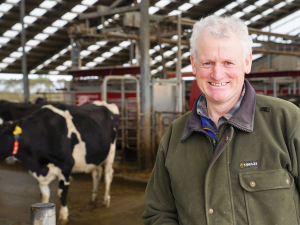
In Dacre, near Invercargill in New Zealand’s South Island, Bruce Dinnington is running a dairy operation unlike any other.

A free online platform aggregating governance vacancies across rural and regional New Zealand has been launched.
Environment Minister Nicola Grigg has announced details of a new rural plastics recycling scheme.
Agricultural drone operators say that a government decision to allow lower-risk drone work without certification won’t lower standards but drive innovation and efficiency.
OPINION: Warning bells are ringing in the arable sector.
Farmgate lamb prices are down by 8%, beef cattle by 4.5% and farm expenditure up by 4.2%.