What Would Synlait Be Worth to Fonterra or a2 Milk?
Speculation of a possible joint move by Fonterra and a2 Milk to buy Synlait raises a much bigger strategic question, says agribusiness expert Dr Nic Lees.
 increase font size
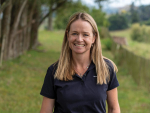
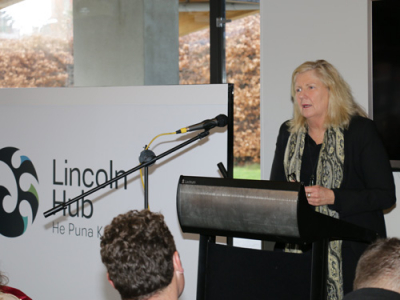 Sue Suckling, chairperson of Lincoln Hub.
Facilitating innovation in the agricultural sector is crucial if the industry is to meet the challenge of safeguarding New Zealand's global competitiveness in the future.
That is the key principle behind Lincoln Hub, the innovation network, education and research precinct based at Lincoln, which unveils its new identity and gifted name today (September 8).
Sue Suckling, who has recently been appointed chairperson of Lincoln Hub, said the Hub is set to deliver value to the Canterbury region and New Zealand, as a specialist network and innovation cluster involving businesses, research and education developing cutting-edge agribusiness solutions.
Lincoln Hub's proposition is strengthened by having a research university at its core, making education a key part of its focus, she says.
"We aim to facilitate sustainable solutions to agricultural problems and opportunities, through growing an innovation precinct at Lincoln and a global agricultural science network. This will enable the commercialisation of new ideas into products and services, while capitalising on New Zealand's world-leading reputation in agriculture.
"Lincoln Hub has grown from the idea that to meet the challenges of the future, the agricultural sector will need to innovate and create new ways of doing things."
The board of Lincoln Hub has formalised the entity's purpose, which is to be a gateway for business and an industry-led organisation driving agricultural solutions, education and collaborations that create value – both tangible and intangible.
It will connect organisations to address the need for sustainable agribusiness solutions through collaborations, partnerships, technology and testing environments, adding value to producers, businesses and scientific expertise, while providing unique education opportunities, Ms Suckling said.
"Over the coming couple of years the Lincoln precinct will grow to a huge concentration of 900-plus agricultural scientists– representing a very significant resource."
The hub will work and collaborate with other similar entities around New Zealand including Te Hono Movement, Callaghan Innovation, Food HQ and other innovation parks around New Zealand. These connections will give Lincoln Hub a place in not only New Zealand's "agri ecosystem" but also connections internationally.
Lincoln Hub, which has five founding shareholders – Lincoln University, AgResearch, Landcare Research, Plant & Food Research and DairyNZ – has engaged actively with local rūnanga Te Taumutu, which has gifted the name He Puna Karikari.
The name is a metaphor for exploration, cultivation and leadership in land, water and natural resources. The word 'puna' is used in the extended sense of a spring of knowledge, a flow of knowledge, and a point of origin. Karikari means to dig, to cultivate– and reflects the fruit of that labour.
Lincoln Hub is in discussions with several international businesses interested in potential research collaborations and educational opportunities, said Ms Suckling.
"We expect such partnerships to directly benefit Canterbury and New Zealand. This will come about through Lincoln Hub assisting organisations to find the best team to develop and commercialise science and research innovations for the benefit of the agricultural sector, improving productivity and competitiveness," says Suckling.
In developing Lincoln Hub's purpose, the board took inspiration from successful examples of innovation clusters overseas including Wageningen University and Research Centre in the Netherlands and Norwich Research Park in the United Kingdom.
"Overseas examples have shown that when you bring industry, research and education together, it creates an ideal environment for innovation. We're creating an ecosystem at Lincoln that will draw on international best practice and help increase New Zealand's global profile as a leader in agribusiness innovation," Suckling says.
Speculation of a possible joint move by Fonterra and a2 Milk to buy Synlait raises a much bigger strategic question, says agribusiness expert Dr Nic Lees.

Lynnette Hudson's 30-year obsession with Pinot Noir was sparked working vintage in Burgundy, seeing how subtle changes in terroir were expressed in the glass. It was, she says, "an elightening moment in every way".
A four year trial has reaffirmed that mixing plantain into dairy pastures can help reduce nitrogen losses to freshwater while maintaining milk production and profitability, say researchers.
Twenty five secondary school students from around New Zealand recently completed a three day residential programme designed to explore career opportunities across the food and fibre production supply chain.
A Lincoln University student is set to become the first person to contest both the Young Viticulturist and the Young Winemaker national titles in one year.


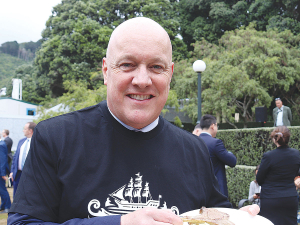
OPINION: In politics, credibility is and should be big. It must surely rank higher than charisma, which is quite trite and superficial. Yet, voters nowadays are often wooed and influenced by how someone looks or talks at a superficial level. TV plays a huge role in this.
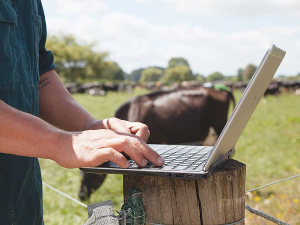
Farmers can spend less time on paperwork, thanks to a new data sharing agreement between DairyNZ’s DairyBase and LIC’s MINDA software.
Kaikōura families affected by July's severe storm have found a practical solution to a problem that's kept some children away from regular schooling for weeks: a washed-out section of Inland Kaikōura Road, which has stopped the local school bus from running its usual route.
Rural New Zealand is welcoming the Government’s recent package of rural healthcare initiatives.
Interest in agritech and production animal systems has prompted Massey University's School of Agriculture and the Environment to new majors to its popular animal science degree.
Ballance Agrinutrients chief executive Kelvin Wickham says despite a tough year, he is pleased the business has returned to profit.