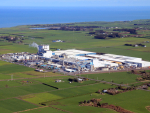
Fonterra's Whareroa Wins Directors Award
Fonterra's Whareroa site took home the prestigious Directors Award at the co-op's 'Oscars of Manufacturing', while Clandeboye led the way with multiple wins at this year's Best Site Cup.
 increase font size
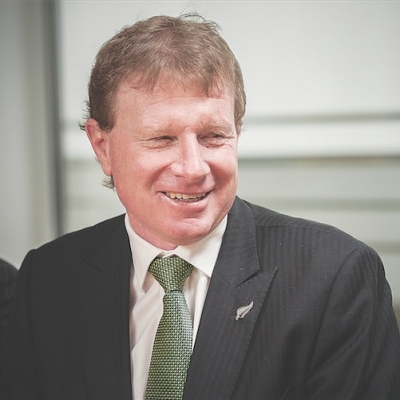 Fonterra chairman John Wilson.
The Global Dairy Trade will still have “to travel a lot of distance” to sustain Fonterra’s current farmgate milk price of $4.70/kgMS, Fonterra’s chairman John Wilson says.
But he also says that NZ production is now dropping at such a rate that it is falling below levels of the 2012-13 drought.
The Fonterra board will update the farmgate milk price forecast again this month under DIRA requirements.
Meanwhile, Wilson told the Northland Dairy Development Trust annual conference last week that the September $5.30/kgMS forecast was based on the view that GDT whole milk powder prices would move up to $3500/t by February, March and April. The $4.70 is based on that happening a lot later in the year.
But he says the $4.70 still requires prices “to continue to lift from where they are today”. Despite the lift in the February 3 auction (WMP was up 19.2% to $2874/t) “we still have to travel a lot of distance before we can support that $4.70/kgMS forecast,” Wilson warned.
The current forecast dividend of 25-35c will be updated when Fonterra announces half year results in March.
Fonterra had a record production year in 2013-14, Wilson says. “What we’re seeing in 2014-15 is a higher peak but now the drought is starting to kick in and it is right across the country.
“We’re now starting to see production moving rapidly below the levels of the drought year of 2012-13.
“I said two weeks ago that we are 6% behind on a daily basis; at the end of January five days after I put out that chairman’s update we were 8% behind on a daily basis; this week we are 10% behind. So we’re starting to see it drop quickly.”
Wilson says analysts agree that about $3500/t for whole milk powder is needed in the marketplace or milk just won’t be produced. “Farmers will stop producing it – that’s what we’re seeing right now. Farmers are making logical decisions. We’re seeing it in Northland right now… your production up here is 5% down on a daily basis.
“Farmers are good business people; you are not going to throw feed in at [prevailing] prices if the economics are not there. We’ve seen that response globally as prices start to come down.
“The key message fundamental to this forum is that we must watch our cost of production. We’re in a global marketplace and we have to ensure we can produce milk and sustain these prices of below $3500/t because above that is where the grain feed guys start to produce a lot of milk.”
Europe has had a good production season, Wilson says. He was there in June and July and has never seen it looking so good.
Farmers were producing a lot of everything. “And they were very confident because the quotas in place since 1983 – [like] farming with a brick on their head – are at last coming off, in May. There was a lot of optimism and they were thinking they could produce more milk. When they produced more milk than their quota they were happy to pay the levy because they were getting a high price and producing cheap milk.
“At that stage milk production in Europe was 4.3% up – that’s 6 billion litres – remember we’re 18 billion litres so a third of our milk production lifted over 2014 out of Europe.”
Russia has since banned imported dairy product from Europe. And Europe has followed the global price down in the last eight weeks so the price at the farmgate has dropped dramatically.
“It is the biggest month-on-month drop in the farmgate milk price ever experienced in Europe – paid by the key cooperatives Arla and Friesland Campina; it’s starting to have a big impact. They’re saying they won’t be producing the milk during the next three months because they can’t afford to pay that levy for extra milk.
“We have had milk production up significantly in Europe. We’re expecting it to come down over the next 2-3 months but once quota comes off it will be based on the economics of producing milk and so we forsee about 2% growth in Europe.”
The New Zealand production forecast is 3.3% down on last year, with a big drop during autumn. Australia is starting to be impacted by dry conditions, but China’s own milk production is up this year and US production is expected to increase.
Fonterra's Whareroa site took home the prestigious Directors Award at the co-op's 'Oscars of Manufacturing', while Clandeboye led the way with multiple wins at this year's Best Site Cup.
After 25 years it is the right time to step away, says Colin Glass, the retiring chief executive of New Zealand's largest private corporate dairying company, Dairy Holdings.
Fonterra is strengthening its foodservice presence in China with the launch of a new cream for professional bakeries at Bakery China 2026 in Shanghai.
OPINION: To a chorus of crying greenies, and not a minute too soon, the Government has moved to put the courts back in their place through proposed amendments to the Climate Change Response Act 2002, intending to limit climate litigation claims such as Smith v Fonterra, in the interests of providing greater certainty for vital industry.
For the third season in a row, Fonterra farmers are in for a farmgate milk price near $10/kgMS.
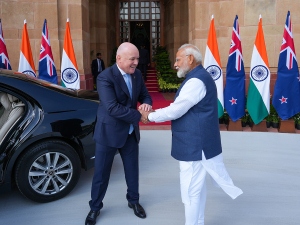
With the New Zealand/India Free Trade Agreement (FTA) dominating political debate here, India Prime Minister Narendra Modi will be visiting New Zealand next week.
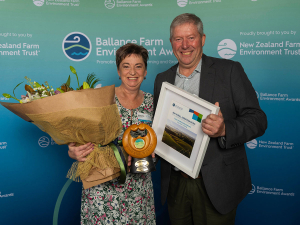
Michelle and Tony Roberts didn't inherit the farming business they have today. They’ve built it from the ground up.
“We’re not normal.” That’s how Jack Walters, executive director of Pungent Pukeko, describes his gin brand, which has just won gold at the World Gin Awards.
Dr Tim Harwood, a seafood food safety research leader, has been awarded the 2026 Significant Contribution Award at the New Zealand Institute of Food Science and Technology (NZIFST) Food Industry Awards.
Today marks the first day of operations for Waikato Waters, a new council-controlled organisation established by six district councils to deliver water and wastewater services for their communities.
The Ministry for Primary Industries (MPI) has announced has opened applications for the 2026/27 funding round of the Greenhouse Gas Inventory Research (GHGIR) fund.