Now it's signed, make it work.
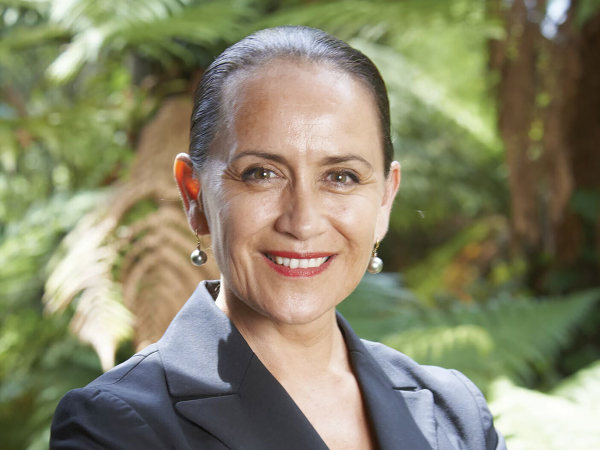
That's the message from the chair of the Federation of Māori Authorities (FOMA), Traci Houpapa.
She was commenting on the recent signing of the NZ/India free trade agreement (FTA).
FOMA members represent assets with diversified interests across mixed livestock, dairy, horticulture, property, retirement villages, seafood and other investments.
FOMA members are the largest network of Māori freehold landowners in the country.
The organisation has been working behind the scenes providing input to MFAT and MPI who've been responsible for negotiating the India/NZ FTA.
Dairy Exclusion Limits Benefits
Houpapa says overall FOMA is in favour of the FTA being ratified, but in saying this, she has reservations.
She says the FTA represents a significant shift in NZ's trade diversification and it's well known that India is one of the world's fastest growing economies and Māori, as intergenerational asset holders Māori know all about that.
"We knew from the start that dairy was always going to be sidestepped in the negotiations, however Māori have significant exposure with assets in the dairy sector with big trusts such as Wairarapa Moana in the central North Island and Parininihi ki Waitōtara in Taranaki," she told Rural News.
"We are big players in this sector so the exclusion of dairy limits the upside for some of us. While the gains are real, they are sector specific and we need to be quite clear about what we are signing up to," she says.
'Sign It and Make It Work'
Houpapa says FOMA is in favour of the FTA being ratified, but does so with its eyes wide open around what it is.
She says it isn't a silver bullet and with India being a tough negotiator, you could argue that there's more upside for India in this FTA than NZ.
"But we are not making a call on that. We are pragmatists and so we are saying sign up and get on with the job," she says.
Māori Partnerships
Houpapa says one of the upsides of the FTA is that India is projected to be a multi-trillion-dollar economy, but she says at the same time NZ also needs to look at the likes of Indonesia, Malaysia and the Philippines.
She says one issue that the FTA may offer Māori is investment partnerships with India. She points out that Māori can offer value in renewable energy, agritech and food innovation, while India could bring scale and technology and therefore potentially position Māori as the preferred indigenous partner, which she says makes sense to FOMA.
"But without coordination, we risk being passive recipients instead of active partners, and that requires an intentional strategy, not only on the Māori side but also on the government side," she says.
It should be noted that the India/NZ FTA, like other recent FTA, includes a Treaty of Waitangi clause which allows NZ to meet its treaty obligations. This was a bottom line in the negotiations for Māori.
Another issue is immigration and Houpapa says there is a need to be mindful of what this might mean for Māori.
She says there are pros and cons.
She says realising the growth opportunities for Māori will require deliberate leadership on the part of government, Māori and industry.
She adds that, at the moment, she can't see that happening.
"To sum up, the NZ/India FTA for Māori is neither a clear win or loss - it's a platform we can build on and it's better we are around the table than not at the table," she says.