
Thanks Chuck!
OPINION: After six years of being passed over for every Arts luvvie in the Queen’s Birthday Honours, agriculture has finally got some overdue recognition with the 2024 King’s Honours list bestowing gongs on some of our finest.
 increase font size
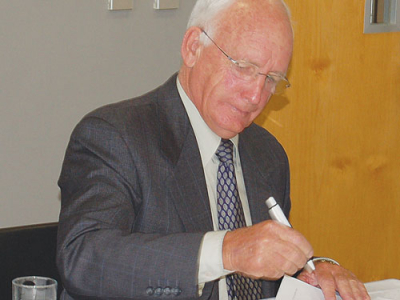 AFFCO chairman Sam Lewis.
AFFCO’S first shipment of chilled meat landed in China last month and will be swiftly followed by many more, says chairman Sam Lewis.
Lewis was in Zhengzhou, China, to celebrate the milestone.
The consignment was part of a trade trial which enables product to be chilled and aged during the 21-day voyage, so it is in prime condition on arrival.
“The speed at which the meat industry has taken up this opportunity is very impressive, considering the Government access agreement was only announced by the Ministry of Primary Industries at the end of March,” says Lewis.
AFFCO’s first 20-foot container of beef will be distributed by Kangyuan to food service and retail outlets throughout the Henan Province in east-central China.
The company’s China sales manager, Clint Bailey, says the shipment has been backed up by significant volumes of sheep meat and beef.
Bailey is surprised at how quickly the Chinese market has adapted for the chilled consignments, and says AFFCO is working with several key customers whom they believe have the cold facilities and infrastructure to deal with large shipped volumes.
“It has blown my mind how well equipped these guys are; they have got up to speed much quicker than anticipated.”
The meat processor had been working with its Chinese partners in the lead-up to the pilot shipment so they could make the most of the trial window. Preparations included visits from Chinese butchers to AFFCO plants to determine the best way to cut the meat to extract the most value for that market.
“We’ve found that for sheep meat in particular, chilled ‘western’ cuts are not the way to go. It’s got to be cut Chinese style to get the most from the carcass.”
To resolve this AFFCO is shipping chilled mutton carcases whole, which will be cut to specification at their destination. Whole carcases are worth almost twice as much to the Chinese as traditional western cuts, which are often underutilised in their market.
“Sending something in carcase form might seem counterintuitive to a value-add offering, but value needs to be assessed through the eyes of the customers and their willingness to pay for it.
“With chilled imports to China now an option, sending a high-quality whole carcase to the right customer means select Chinese consumers can purchase New Zealand product on a ‘cut-to-order’ basis.”
Bailey says the company’s breadth of customer base in China means they can carefully select the appropriate channel to capture the highest value for chilled NZ meat into that market.
“It’s a great example of how AFFCO is adding value from the bottom up, to all our meat products and every part of the carcase – not just from the top down as at the European high end.
“Traditionally mutton has been worth about a third of lamb, so initiatives like this offer us the opportunity to close the gap between those pricings.”
Bailey says another upside to the chilled programme is that it will help maintain frozen volume pricing. With up to 20% of the frozen volume taken away in chilled form, there will be less pressure to move supply.
OPINION: After six years of being passed over for every Arts luvvie in the Queen’s Birthday Honours, agriculture has finally got some overdue recognition with the 2024 King’s Honours list bestowing gongs on some of our finest.

Waikato farming leader Sam Lewis says he’s surprised and delighted at being made a member of the New Zealand Order of Merit for services to business and the community in the latest King’s Birthday Honours list.
Meat processor Affco is urging farmers to sign up again for its Cash for Calves scheme that last year put $90,000 into rural communities.
Call at the Affco Horotiu stockyards any time between 5am and 5pm on any day and the chances are Mike Winikerei will be there.
Meat company Affco has shipped 33,000 consumer packs of premium beef to China -- its first foray into the lucrative value-added market.


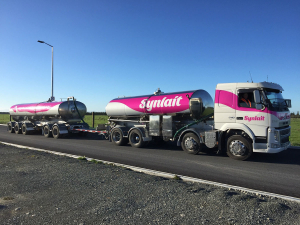
Synlait has swung to second-half profit as operations stabilise, but the dairy processor still posted a $75.4m annual loss.

LIC shareholders have elected a new North Island representative to the co-operative's Board, along with five representatives to its Shareholder Reference Group (SRG), following the company's Annual Meeting held in Invercargill.
Farmers across parts of Southland and South Otago are continuing to deal with difficult conditions after a prolonged run of wet weather, with pressure building around feed supply, stock management, pasture damage, farm infrastructure and everyday workloads.
Federated Farmers says it welcomes Labour's commitment to reviewing the Sharemilking Agreements Act, calling on other major parties to do the same.
For Canterbury dairy farmers Sian Meijer and Rick Wobben, wearable technology has become one of their most valuable on-farm tools - helping manage 1850 cows across an expansive, high-performing dairy operation while improving efficiency, mating outcomes and day-to-day decision making.
Fonterra has unveiled its annual results for the 2026 financial year, posting $27 billion in revenue and close to $20 billion returned to New Zealand farmer owners and unit holders.