Waterway restoration sees return of endangered mudfish
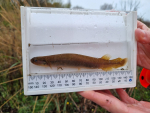
A critically threatened endemic freshwater fish found only in Canterbury has been discovered at a Craigmore Sustainables farm near Timaru.
 increase font size

In a combined effort with Environment Canterbury and Christchurch City Council, DOC is asking local landowners for sightings of Lythrum salicaria, commonly known as purple loosestrife.
Once popular for planting alongside residential ponds and streams, purple loosestrife has jumped the garden fence to invade precious wetland habitats, river margins and has even been found marching into farmland. With a growth of up to two metres, it has potential to override natives and pasture alike.
Biodiversity ranger Craig Alexander has seen this first hand. "Purple loosestrife can be a real issue for farmers, invading pasture and waterways and clogging drains. Once established, you're looking at several years of active control to deal with the problem. Sadly it's not just a matter of digging it out."
"Purple loosestrife is easy to identify—just look out for the bright purple-magenta flower heads that are on show from December to February. By winter, all the foliage dies off to re-emerge in the summer so it is important to nip it in the bud while it is visible."
If you suspect you have seen purple loosestrife on public or private land, contact Craig Alexander on 03 341 9110 or email This email address is being protected from spambots. You need JavaScript enabled to view it.
A critically threatened endemic freshwater fish found only in Canterbury has been discovered at a Craigmore Sustainables farm near Timaru.
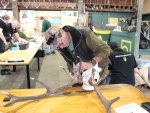
The Department of Conservation (DOC) has announced that its annual Pureora Hunting Competition will open on 16 March.
Wild goats, a growing problem for many farmers and landowners, are in the firing line.
The New Zealand Deerstalkers Association (NZDA) in conjunction with the Department of Conservation (DOC) have launched a new National Wild Goat Hunting competition.
Writing a practical guide on non-chemical weed management had an unexpected result for Dr Charles Merfield, as he delved into the interconnected nature of the vines, groun cover and soils, and the damage done to all three by cultivating.



The primary sector is leading New Zealand's economic recovery, according to economist and researcher Cameron Bagrie.

Dairy industry leader Jim van der Poel didn't make much of the invitation he received to the recent New Zealand Dairy Industry Awards in Rotorua.
Farmers around the country are going public big time, demanding their local district, city and regional councils come up with amalgamation plans that meet the needs of rural communities and don't allow urban councils to dominate.
The battle for the rural vote is on and parties are securing high profile names to try and bolster their chances at the general election.
Horticulture New Zealand says proposed changes to the Plant Variety Rights Act 2022 will drive innovation, investment and long-term productivity.
More than 1200 exhibitors will showcase their products and services at next month’s National Fieldays, with sites nearly sold out.