EU Strengthens NZ Partnerships and Trade Presence at Fieldays
The European Union ramped up its presence at this year's Fieldays.
 increase font size
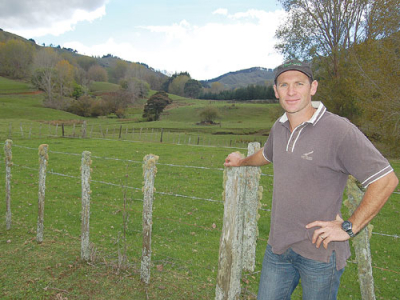 James Parsons.
The European Union ambassador to New Zealand has denied claims by the NZ meat industry that it has done the dirty on this country over access to the UK and EU markets for lamb and mutton when Britain leaves the EU.
Rural News (Oct 24) quoted James Parsons, the chair of Beef + Lamb NZ, as saying that the two (EU and UK) had decided that after Brexit 45% of NZ’s tariff rate quota (TRQ) of 228,000 tonnes of lamb and mutton would go to the UK and the balance to the EU.
Parsons was annoyed that a deal had seemingly been done without consulting NZ.
The quotas come under the jurisdiction of the World Trade Organisation (WTO) in Geneva. Under the present arrangement NZ has the flexibility to sell that 228,000 tonnes anywhere within the EU, but when Britain leaves a deal has to done to split this in some way between the EU and UK.
But Bernard Savage, who heads the EU delegation in NZ, told Rural News that no percentage split of the quota has been decided. All that’s been agreed to is a way to split the quota and how this is done will be up to members of the WTO – including NZ – to decide.
Savage says this was never intended to be a fait accompli, but rather the starting point for negotiations. He says it’s up to the WTO to decide whether a split will be based on historical trade flows and over what period.
“The important thing to understand is that overall market access across these different quotas will remain the same and we will respect the historic commitments to the WTO,” he adds. “The issue of TRQs could not be discussed before it went to the WTO; that is the right place for this to happen. It is simply not feasible to do this beforehand, given the number of products and the number of holders of TRQs.”
Savage says the EU and the UK will honour the underlying principles of the WTO and ensure that NZ retains the same level of market access as it has had historically.
However, he stopped short of saying that NZ could have the same flexibility it has at present. While NZ will be able to move any quota around the 27 EU nations, this will not extend to Britain and this is a sore point with the local meat industry. They point out this inflexibility could prove detrimental to the EU, UK and NZ.
Savage describes this as a “technical” matter that strikes at the heart of the fundamental principles of the European Union and the concept of a single market. He adds that it is likely one of the consequences of Brexit.
“The integrity of the single market is something we are not prepared to discuss; that is an internal matter and will be defended by the 27 members of the EU,” he says.
The challenge now for NZ is to somehow extract some sort of deal via the WTO, but it would appear that by leaving the EU, Britain has removed the option of flexibility from the UK/EU sheepmeat market. This deal has served NZ well for many years.
Other unknowns in this will be how Irish and British sheep producers will react and deal with the idea of a rigid quota in the UK if the market becomes depressed. It could be that the sheepmeat ructions of the 1970s and 80s may resurface. Also in the mix is what access arrangement, and on what terms, NZ may be able to negotiate in the pending FTA with the EU in the coming months.
The European Union ramped up its presence at this year's Fieldays.
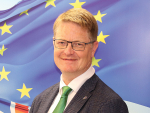
New Zealand and the European Union are closer than ever.
Matt McRae, a farmer from Mokoreta in Southland who runs a sheep, beef and dairy support business alongside a sheep stud, has been elected to the Beef +Lamb NZ Board as a farmer director.
A European Union regulation ensuring that the products its citizens consume do not contribute to deforestation or forest degradation worldwide threatens $200m of New Zealand beef and leather exports.
Recent widespread autumn rain will have triggered the germination of subterranean clover seeds, and the resulting seedlings should be allowed to reach the 3–4 trifoliate leaf stage before grazing, says Beef+Lamb NZ.


Federated Farmers says it welcomes Labour's commitment to reviewing the Sharemilking Agreements Act, calling on other major parties to do the same.
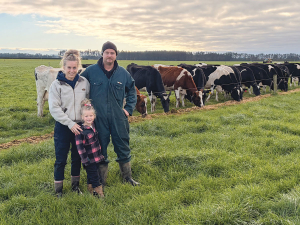
For Canterbury dairy farmers Sian Meijer and Rick Wobben, wearable technology has become one of their most valuable on-farm tools - helping manage 1850 cows across an expansive, high-performing dairy operation while improving efficiency, mating outcomes and day-to-day decision making.
Fonterra has unveiled its annual results for the 2026 financial year, posting $27 billion in revenue and close to $20 billion returned to New Zealand farmer owners and unit holders.
The first major update to the Dairy Cattle Code of Welfare in more than a decade has been released, marking what DairyNZ describes as an important step in ensuring animal welfare standards continue to evolve alongside scientific evidence and on-farm realities.
Ravensdown shareholders have elected Jane Montgomery and Kate Acland to the Ravensdown Board for three-year terms, following a closely contested director election.
Federated Farmers says new legislation replacing the Resource Management Act will cut red tape, unlock investment and help grow New Zealand's export-led economy, after the Planning Bill and Natural Environment Bill passed their third reading in Parliament yesterday.




