NZ Apple Sector Pushes for Japan & Korea Market Access
The apple sector is working with the Government to unlock access to two key markets that could bring millions in revenue for apple growers.
 increase font size
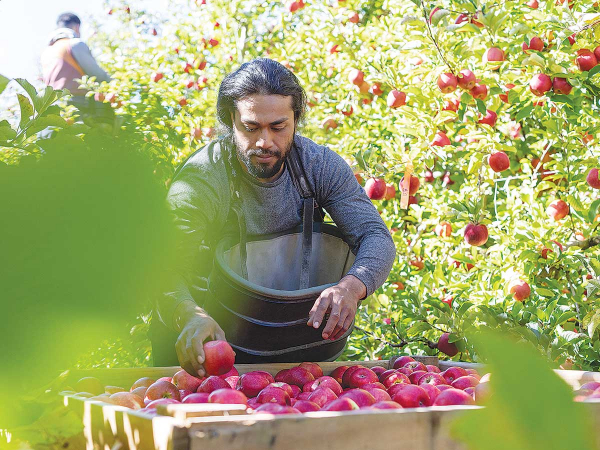 Growers are concerned the Government doesn't understand the labour needs of the industry.
Apple and pear growers around the country have slammed the Government's handling of the overseas workers who pick a substantial amount of NZ's apple crop each year.
Richard Punter, chairman of Apple and Pears NZ, says the Government simply doesn't understand the role performed by these people, who work under the RSE or recognised seasonal employer scheme.
Punter says describing these people as 'unskilled workers' is naïve and uncharitable. He says the real situation is quite the opposite.
"The RSE's are not unskilled labour. The fact is they are skilled animal workers," he told Rural News. "Describing them as cheap and unskilled is offensive. We have multi-generational families that come over from the Pacific Islands and work in NZ year after year."
Hunter says "people in Wellington" don't understand that in the apple industry, at a particular time of the year and in a puff of smoke, thousands of skilled manual workers appear in the country, pick the crop and in six weeks' time they disappear again.
"It's not a job, it's not a career. It's a task that has to be done at particular point in time and with speed and with particular skills," he adds.
Punter believes the problem is not unique to NZ. He says Britain has a similar problem where thousands of dollars has been spent advertitising for local people to take jobs in the primary sector and few have turned up or stayed on.
"As a university professor says that phenomenon should not come as any surprise as the work ethic has been bred out of many people."
He saw this on his own property where two young people "gave up" working after just a matter of hours because "they didn't like the manual work".
Punter says despite the labour shortages, larger apple producers will soldier on - even if their yields and returns are down and some of their fruit is not picked.
"The people who will badly hurt are the small family orchards," he explains. "This government has chucked them under the bus and just don't care. At the same time, the current generation of business leaders have never had to deal with a government that just takes a decision and does it."
Punter says this is placing huge stress on these people.
"The current Labour Government doesn't have to talk to coalition partners, there is no negotiation and they have a specific, ideological position they are determined to implement."
The apple sector is working with the Government to unlock access to two key markets that could bring millions in revenue for apple growers.
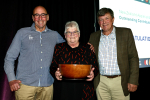
For over 50 years Mel Ewers has been supporting the apple sector navigate through compliance and quality assurance issues.
New Zealand apple and pear industry stakeholders are out in force for the annual conference in Queenstown.
As we move into the late-summer and autumn period, much of the country’s fruit growing regions are entering operationally critical windows of the horticultural calendar. The question on grower’s minds is ‘what is the outlook for the March-April harvest?’
Hawke's Bay apple grower Taylor Corporation says a standout 2026 season, coming after a few difficult years, is boosting optimism among growers.


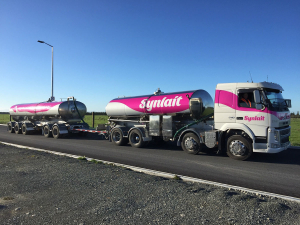
Synlait has swung to second-half profit as operations stabilise, but the dairy processor still posted a $75.4m annual loss.
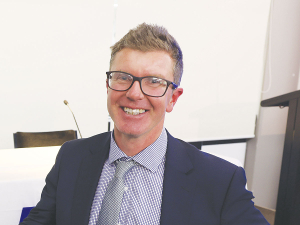
LIC shareholders have elected a new North Island representative to the co-operative's Board, along with five representatives to its Shareholder Reference Group (SRG), following the company's Annual Meeting held in Invercargill.
Farmers across parts of Southland and South Otago are continuing to deal with difficult conditions after a prolonged run of wet weather, with pressure building around feed supply, stock management, pasture damage, farm infrastructure and everyday workloads.
Federated Farmers says it welcomes Labour's commitment to reviewing the Sharemilking Agreements Act, calling on other major parties to do the same.
For Canterbury dairy farmers Sian Meijer and Rick Wobben, wearable technology has become one of their most valuable on-farm tools - helping manage 1850 cows across an expansive, high-performing dairy operation while improving efficiency, mating outcomes and day-to-day decision making.
Fonterra has unveiled its annual results for the 2026 financial year, posting $27 billion in revenue and close to $20 billion returned to New Zealand farmer owners and unit holders.