
Lanaco and Blueair Launch World-First NZ Wool Air Filter
New Zealand wool is reaching new heights as air filtration companies move away from synthetic products to biodegradable alternatives.
 increase font size
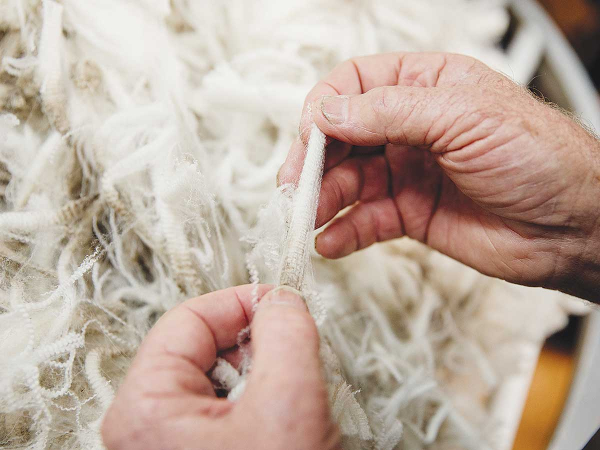 Domestic utilisation of wool is set to double following an edict that government agencies should use wool fibre products in the construction of new and refurbished buildings.
The annual domestic utilisation of wool will double to 30,000 tonnes because of the edict that government agencies should use woollen fibre products in the construction of new and refurbished buildings.
That's the view of Andy Caughey, chief executive of Wool Impact, a partly government-funded advocacy group that says the decision aligns with what is happening overseas and is seen as the new way of driving demand for strong wool.
The move is part of the coalition agreement between National and NZ First. Under the new edict, from 1 July government agencies will be directed to use woollen fibres in the construction and refurbishment of government buildings, where practical and appropriate.
A key driver and advocate of the move is Associate Minister of Agriculture Mark Patterson who says NZ First has been campaigning on this initiative for over a decade. He says way back he brought such a policy to a party convention.
He says the move is not a mandate, but government agencies are expected to commission wool fibre where practical and appropriate.
"If they don't, they have to report back as to why they didn't, so we are putting as much pressure on them as we can. This is about walking the talk and will hopefully inspire the private sector to follow suit," he says.
Patterson says probably more importantly this is a market signal to show the private sector that putting wool into homes is a good thing and hopefully they will follow the example set by government.
He says for too long wool has been left languishing in neutral while the producers of synthetic fibres have invested heavily in innovation and promotion.
Patterson says wool has been synonymous with NZ since the early settlers brought sheep here 200 years ago. And he says it remains the world's third largest wool producer after China and Australia, accounting for about 9% of total world wool production.
"Supporting the NZ wool industry is a key part of the positive steps the Government is taking to add value to the economy," he says.
Patterson says already he's had lots of positive feedback - not only from farmers but also the public who are passionate about wool.
New Zealand wool is reaching new heights as air filtration companies move away from synthetic products to biodegradable alternatives.

Will a stronger, more coordinated voice help rebuild confidence and improve returns in the wool sector?
OPINION: Confidence in the wool sector is rebounding as prices hit levels not seen in more than 15 years.
Rising strong wool prices are finally returning the sector to profitability.
The recently signed free trade agreement with India is an invitation to strengthen relationships between the New Zealand and Indian strong wool industries, says Wool Impact chief executive Andy Caughey.



LIC shareholders have elected a new North Island representative to the co-operative's Board, along with five representatives to its Shareholder Reference Group (SRG), following the company's Annual Meeting held in Invercargill.
Farmers across parts of Southland and South Otago are continuing to deal with difficult conditions after a prolonged run of wet weather, with pressure building around feed supply, stock management, pasture damage, farm infrastructure and everyday workloads.
Federated Farmers says it welcomes Labour's commitment to reviewing the Sharemilking Agreements Act, calling on other major parties to do the same.
For Canterbury dairy farmers Sian Meijer and Rick Wobben, wearable technology has become one of their most valuable on-farm tools - helping manage 1850 cows across an expansive, high-performing dairy operation while improving efficiency, mating outcomes and day-to-day decision making.
Fonterra has unveiled its annual results for the 2026 financial year, posting $27 billion in revenue and close to $20 billion returned to New Zealand farmer owners and unit holders.
The first major update to the Dairy Cattle Code of Welfare in more than a decade has been released, marking what DairyNZ describes as an important step in ensuring animal welfare standards continue to evolve alongside scientific evidence and on-farm realities.




