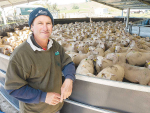
Dairy sheep farms set to boost stock numbers
Stock expansion and management tweaks are on the cards for a couple of Waikato dairy sheep farmers coming to the end of their milking season.
 increase font size
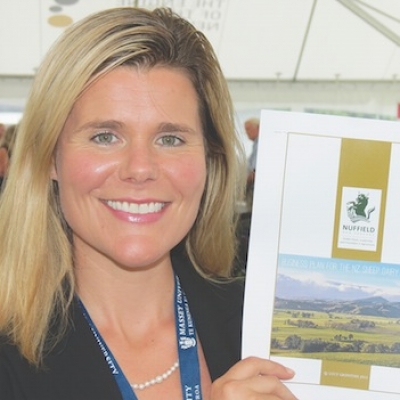 Lucy Griffiths
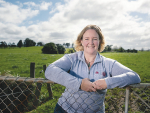
New Zealand could lead the world in sheep milk production, says Nuffield scholar Lucy Griffiths. She told the recent Ewe Milk Products and Sheep Dairying Conference at Massey University the industry is well set up to lead internationally.
Griffiths recently completed her Nuffield scholarship project on the sheep milk industry, travelling three months in the UK, France, Israel, Italy, Switzerland and the USA to compile her report.
She chose this industry because of its potential to help double New Zealand’s exports and because of her marketing work with a sheepmilk cheese maker in Wairarapa.
“We have one of the biggest sheep dairies in the world here – Blue River, with 20,000 ewes. We are leaders in bovine dairy, we are the leaders in sheep farming so why can’t we be the leaders in dairy sheep?’ she told Rural News.
“However, we are competing with traditional sheep milk countries like Spain, Italy and France, producers of sheep milk and cheese for centuries. For example, Roquefort in France, with 1700 suppliers, has produced cheese since 79CE. Today they produce some of the most expensive cheeses in the world.
“So we have competitors in cheese, but there is a lot of opportunity for us in the gourmet food market (butter, yoghurt, milk, fresh milk and ice-cream) and in functional foods, sports nutrition, UHT and infant formula.”
Griffiths notes that worldwide at least 10 million tonnes of sheep milk are produced annually, the largest producers being China and Turkey. And though New Zealand could not reach such volumes it has the capacity to produce for high-value, niche markets.
New Zealand’s many advantages include its world leadership in sheep farming, breeding, technology and research, Griffiths says. Our farmers are good adopters and developers of milking technology and some of the main sheep milking breeds, e.g. East Friesian and Awassi, are here.
She concedes the challenges in developing a large sheep milk industry in New Zealand: the lack of a strong tradition of sheep milk consumption, limited flocks of milking sheep breeds, and few people with experience to run sheep milk operations.
“But sheep dairy has the potential to be a billion dollar industry in 10 years if the right breeding programmes, feed mixes and other technologies are implemented. Demand for sheep milk products is growing worldwide driven by health, tradition and fashion.”
Stock expansion and management tweaks are on the cards for a couple of Waikato dairy sheep farmers coming to the end of their milking season.

Noted animal geneticist Dr Jock Allison is full of praise for the initiative to build a larger sheep milking industry.
Sheep milk products will sell only if the consumer likes the taste.
Plans to expand the sheep milk industry have advanced to the formation of a society to develop and promote the industry, confirmed at the close of a recent two day conference at Massey University.
Lincoln University farm management and agribusiness lecturer Guy Trafford is so convinced about the opportunities sheep milk presents he plans to manufacture his own ice cream from it.


Federated Farmers has welcomed new rural policies released by ACT, saying they align closely with its own election priorities.

Rural Contractors NZ says proposed changes to land transport rules for agricultural vehicles are a welcome response by the Government to out of date regulations which have seen members hit with huge fines.
Alliance is calling for final applications for its 2027 Graduate Programme, with applications closing on Sunday 25 October.
Decades piloting planes has ensured vet and farmer David Hayes is focused on safety. So, after a serious accident while welding on farm, he is sharing his experience so others can learn from it.
Canterbury milk processor, Synlait Milk has confirmed Leon Fung as its chief executive officer.
OPINION: Making it easier to collect rainwater and use it to grow crops and livestock is a no brainer.