Wool Impact and Campaign for Wool NZ Merge to Form Collective
Will a stronger, more coordinated voice help rebuild confidence and improve returns in the wool sector?
 increase font size
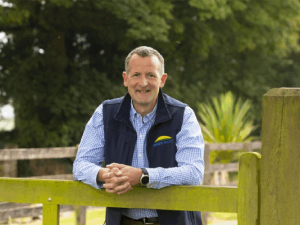
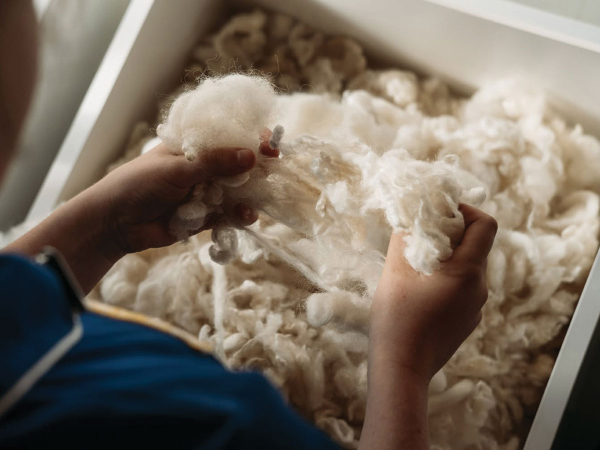 The strong wool price has doubled in the last 12 months, says Ross McIsaac.
Rising strong wool prices are finally returning the sector to profitability.
However, it's important these prices are underpinned by strong demand so they can be sustained, says Ross McIsaac, a sector executive at Wool Impact working on boosting the demand and value for New Zealand strong wool.
The strong wool price has been on the rise, doubling in the last 12 months, giving growers a long-overdue lift in prices.
The Fusca strong wool indicator reached $7.14/kg two weeks ago, up from $3.49/kg one year ago.
McIsaac says they are hearing from farmers that these price lifts are covering shearing costs and returning wool to profitability, but the rapid rise in prices means that some farmers won't have sold wool at these price levels yet.
"The strong wool price, and farmer sentiment toward wool, is in a better position than it has been for at least a decade," he told Rural News.
"It's important these prices are underpinned by strong demand so they can be sustained. That's the work that's happening across the industry now."
Wool Impact is part of the Wool Alliance, a partnership with Campaign for Wool NZ, Wool Research Organisation NZ, and Beef + Lamb NZ, to build the case for one focused wool organisation to do the work needed to improve the profitability of wool long-term.
Achieving this will require a collective effort across the industry and great progress has been made, says McIsaac.
"The important thing now is to keep building collaboration, transparency and investment across the sector," he says.
McIsaac was at Fieldays as part of the Wool Alliance. Wool Impact also partnered with MPI and ASB to showcase wool's possibilities.
He says sentiment among farmers was positive, helped by strong prices across the agri sector, including wool.
"The conversations we were having about wool were broader than price alone; farmers are keen to know the range of innovative uses for their wool, changes that are happening in the industry to improve value-chain efficiencies and brand-grower connectivity, and how things like certifications support brands in market."
Strong wool price increases have been driven by a mix of supply reduction and increased demand.
However, Ross McIsaac says they are focused on doing their bit to keep building demand.
"There has been good work happening on the demand side across the supply and value chains for our wool.
"Globally, brands are seeing opportunities for natural product collections, and the health and performance benefits of wool are being recognised."
There is growth in core products like carpets, bedding and furniture through companies like Godfrey Hirst, Bremworth, Wools of NZ, and Wisewool.
Wool acoustic products produced by companies like Floc and Autex are driving growth for wool in the commercial interiors category.
There are novel products being commercialised and scaled by Keraplast, Lanaco, Wool Source, and Woolchemy for personal care, filtration, biobased ingredients, and hygiene products.
"What was on display with wool at Fieldays showcased why we're confident the right things are happening now that will lead to returns for wool growers continuing to improve - we need to keep it going," McIsaac says.
ANZ agricultural economist Matt Dilly says wool prices have nearly doubled the past year, to the great relief for the wool industry, gaining 90 cents in the past two months alone to reach $6.30/kg clean. It's close to the highs previously seen in 2011 and 2016.
Tight wool supply is a main contributor, but demand has been strong too. Smaller flocks in New Zealand and Australia have tightened supply.
In the wider context, wool will cover its shearing costs in 2025/26 this year for the first time since 2018/19 for the typical North Island hill country farm, Dilly notes.
"Prices aren't yet at the point where wool revenue will influence stocking rate decisions, especially with lamb and beef prices so strong," he says.
Wool accounts for about 3% of sheep and beef revenue and hasn't been above 10% since 2015-16.
Will a stronger, more coordinated voice help rebuild confidence and improve returns in the wool sector?
The recently signed free trade agreement with India is an invitation to strengthen relationships between the New Zealand and Indian strong wool industries, says Wool Impact chief executive Andy Caughey.
Wool Impact and ASB have signed a new partnership with the bank set to provide financial backing to support the revitalisation of New Zealand's strong wool industry.
The world is waking up to the disadvantages of carpets derived from petrochemicals, creating opportunities for New Zealand strong wool.
A new levying body, currently with the working title of NZWool, has been proposed to secure the future of New Zealand's strong wool sector.


When Northland leather worker Vernon Suckling started making horse saddles 50 years ago, quad bikes and side-by-side vehicles were unheard of.
Alliance Group has confirmed that eligible farmer-shareholders who supply and continue to back the business will receive up to $20 million later this year, following the strategic investment partnership with Dawn Meats.
With a general election under five weeks away, Rural News is asking major political parties about their policies and positions on key issues facing the primary sector. We will run their responses to each question over the next four weeks. The ACT Party and the Greens didn't respond in time.
The red meat sector is in great heart.
Dr Scott Champion, Foundation for Arable Research chief executive, says that everyone in the supply chain had a role to play in driving the sector's long-term success.
Entries opened on Monday, 5 October 2026 for the 2027 New Zealand Dairy Industry Awards (NZDIA), which organisers describe as the nation's biggest celebration of excellence in the dairy sector.