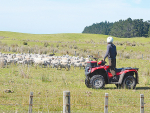
Mark Hooper Joins NZPork Board as Independent Director
Rural leader Mark Hooper has been appointed as an independent director to the NZPork board, bringing extensive farming, governance and advocacy experience to the role.
 increase font size
 David Baines, chief executive of NZPork.
NZPork says it is disappointed at further delays to the introduction of Country of Origin labelling regulations.
The Government has announced that regulations covering fresh/chilled food, including pork and cured pork, have been delayed for three months until February 2022.
“We were eagerly awaiting these regulations to come into force in November,” says David Baines, chief executive of NZPork.
He says that without the new regulations, imported pork can be “hidden” in ham and bacon processed in New Zealand under a ‘Made in New Zealand’ label.
“Our research tells us that many consumers are surprised that the pork in these products may be imported from a number of countries.
“That’s why this three month delay is hugely frustrating for our New Zealand farmers when cheaper pork imports, that don’t have to meet New Zealand’s high welfare or environmental standards, can be presented to consumers without clear labelling.
“While we appreciate the delay is due to the disruption and uncertainty caused by business by the re-emergence of Covid-19, we are particularly disappointed that the regulations will not be in place for the Christmas period like we expected,” Baines says.
He adds that despite the regulatory delay NZPork will be encouraging consumers to look on the label and ask retailers for NZ born and raised pork, especially going into the Christmas ham season.
The regulations would enable consumers to be more informed as to where their food is being imported from and what pork is New Zealand born and raised, Baines says.
However, NZPork remains concerned the regulations are not comprehensive because they will not apply to all imported pork.
“The regulations will only cover fresh, chilled pork and cured pork. Pork processed in other ways will not have to be labelled. That means imported pork would be labelled with its country of origin if presented as ‘fresh’ (chilled), while the same product, if marinated or infused, would sit alongside New Zealand pork and escape the need for labelling as imported.”
Initially, the Government announced a delay to regulations in May 2020 as part of its measures to manage business disruption due to Covid-19.
Rural leader Mark Hooper has been appointed as an independent director to the NZPork board, bringing extensive farming, governance and advocacy experience to the role.

As the cost-of-living crisis continues to put pressure on household grocery budgets, new figures show pork remains one of the most affordable fresh meat options for New Zealand families.
New data shows that pork remains one of the more affordable meat options for New Zealand households at a time when grocery costs continue to put pressure on budgets.
NZPork says the Government needs to strengthen its proposed planning laws to ensure New Zealand's pig farmers can continue to produce pork.
Following a recent director election, Canterbury farmer Sean Molloy has been appointed to the New Zealand Pork Industry Board.


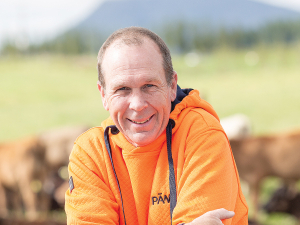
Pāmu has released its FY26 Integrated Annual Report, reporting a Net Operating Profit of $113 million, more than double the $49 million recorded in FY25.

Meat Industry Association data, released alongside the Red Meat Sector conference in Wellington, shows export value climbing across the US, China, UK and Canada.
Applications are set to open for the 2027 Zanda McDonald Award, a trans-Tasman award recognised for identifying and fast-tracking talented young leaders in agriculture and agribusiness.
The Royal New Zealand College of General Practitioners (the College) and Hauora Taiwhenua Rural Health Network are calling for investment in a proposed new training pathway for rural GPs, warning that many rural practices are struggling to recruit while a large share of the existing workforce nears retirement.
Federated Farmers has called on Central Otago District Council (CODC) to drop or vote down a plan to truck sludge from Alexandra and Cromwell to farmland near Lauder, warning it would compound an "outrageous" situation created by a separate council's decision weeks earlier.
Synlait has swung to second-half profit as operations stabilise, but the dairy processor still posted a $75.4m annual loss.