Can Drones Destroy Hornet Nests?
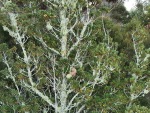
Will drones be the answer to tackling the problem of wasp and hornet nests high up in trees and other inaccessible places?
 increase font size
 Nathan Guy.
The Government has allocated “an extraordinarily small sum” to strengthen Biosecurity, National’s spokesperson for Agriculture Nathan Guy says.
Guy says this is despite the Government insisting that Biosecurity is underfunded prior to the budget announcement.
“Agriculture Minister Damien O’Connor has announced a paltry increase of just $9.3 million for Biosecurity which is half of what National invested in Budget17 at $18.4 million.
“This is a 50% reduction and makes a mockery of the Government’s recent rhetoric.
“If they truly believed in what they’ve been saying lately, they could have injected hundreds of millions of dollars into further strengthening the Biosecurity system - but in yesterday’s Budget they showed this isn’t really a priority.”
Guy points out that farmers and growers haven’t forgotten Labour and NZ First’s track record on Biosecurity – “they voted against National’s border clearance levy a few years ago – which has proved a great success in generating more funding for Biosecurity”.
“Ironically, it seems the Primary sector – which is New Zealand’s biggest export earner – turns out to be the Budget’s biggest loser,” Guy says.
Will drones be the answer to tackling the problem of wasp and hornet nests high up in trees and other inaccessible places?

New Zealand’s red meat sector has welcomed the India-New Zealand Free Trade Agreement taking effect, which removes India’s 33% tariff on New Zealand sheepmeat.
New Zealand's role is not to compete with Indian growers, according to NZ Apples and Pears.
The red meat sector is in great heart.
Bovine Viral Diarrhoea (BVD) is sometimes viewed as a dairy industry issue, but the reality is that the disease can have serious consequences for beef breeding herds as well.


New analysis from DairyNZ highlights the growing importance of efficiency and cost control in maintaining profitability, with a widening gap between New Zealand’s highest and lowest performing dairy farms.
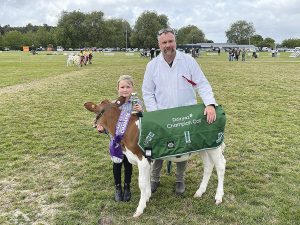
For eight-year-old Myra Smith, weeks of caring for and preparing her Red Holstein Friesian calf, Bell, have paid off, with the young Te Pahu handler taking home the Champion Dairy Type title at the recent Waikato A&P Show held at Claudelands.
A titan of the meat industry but a humble and generous guy.
In line with New Zealand’s strategy to open up new markets, the Ministry for Primary Industries (MPI) his extending its diplomatic footprint.
Demand for dairy products over the next two decades will increasingly be shaped by demographic shifts, rather than population growth alone.
The global dairy industry is fighting back against alternative proteins masquerading as dairy products.