MPI Opens New Canberra Position to Support Exporters
In line with New Zealand’s strategy to open up new markets, the Ministry for Primary Industries (MPI) his extending its diplomatic footprint.
 increase font size

MINISTER FOR Primary Industries Nathan Guy is welcoming a proposal to bring in compulsory screening of palm kernel expeller (PKE) imported into New Zealand.
PKE is imported mainly from Malaysia and Indonesia and is used by the dairy industry as supplementary stock feed.
"The proposal from the Ministry for Primary Industries is that all PKE must be passed through a 4-6mm size screen on entry to New Zealand and before going on sale. There will also be added requirements for record keeping and traceability.
"It's important to note there are already tough conditions in place for imports, including heat treatment, fumigation and inspection. On top of this new standards were introduced in June ensuring that in-market facilities are Government approved.
"Around 70% of PKE imports are already screened in New Zealand. However, this new proposal would give greater reassurances and remove any possible metal contaminants that could harm animals. It will also have biosecurity benefits.
"This would be a practical step to standardise practices within the industry. I'm looking forward to seeing the feedback on the proposal," Mr Guy.
The draft notice is now available for consultation at: http://www.foodsafety.govt.nz/consultation/
Submissions will be received until October 18, 2013.
In line with New Zealand’s strategy to open up new markets, the Ministry for Primary Industries (MPI) his extending its diplomatic footprint.

The head of the Ministry for Primary Industries (MPI) trade and international relations group says New Zealand is well-positioned to secure trade access and compete internationally as the world becomes more complicated, demanding and uncertain.
Three men have been sentenced in District Courts after Ministry for Primary Industries prosecutions over animal welfare, food safety and cattle tracing offences.
New Zealand’s red meat sector has welcomed the India-New Zealand Free Trade Agreement taking effect, which removes India’s 33% tariff on New Zealand sheepmeat.
New Zealand's role is not to compete with Indian growers, according to NZ Apples and Pears.


New analysis from DairyNZ highlights the growing importance of efficiency and cost control in maintaining profitability, with a widening gap between New Zealand’s highest and lowest performing dairy farms.
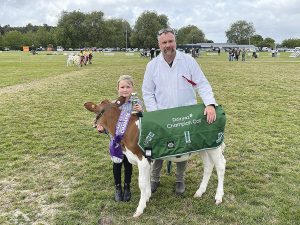
For eight-year-old Myra Smith, weeks of caring for and preparing her Red Holstein Friesian calf, Bell, have paid off, with the young Te Pahu handler taking home the Champion Dairy Type title at the recent Waikato A&P Show held at Claudelands.
A titan of the meat industry but a humble and generous guy.
In line with New Zealand’s strategy to open up new markets, the Ministry for Primary Industries (MPI) his extending its diplomatic footprint.
Demand for dairy products over the next two decades will increasingly be shaped by demographic shifts, rather than population growth alone.
The global dairy industry is fighting back against alternative proteins masquerading as dairy products.