
Pouarua Water Storage Scheme Gets Government Backing
The Government is backing work on a community-led water storage scheme that could irrigate up to 11,000 more hectares of the Poverty Bay flats, Agriculture Minister Todd McClay says.
 increase font size
 Resource Management Minister Chris Bishop and Federated Farmers president Colin Hurst at the farmer meeting in Waikato recently.
A pause on Waikato Regional Council's (WRC) plan change that sets new freshwater rules for farming could be announced in the coming weeks.
All three parties in the coalition government want WRC's Plan Change 1 (PC1) paused until the Resource Management Act is replaced with two new laws: the Planning Bill and the Natural Environment Bill.
A parliamentary select committee reports back on the Natural Environment Bill this week. Rural News understands a pause could be announced after the second reading of the bill in Parliament.
Associate Agriculture Minister Andrew Hoggard says his party wants fewer consents and fewer headaches for farmers.
"We want a much simplified way of doing things, not having farmers to duplicate farm plans at extra cost," he says.
Hoggard says PC1 is not something his party wants.
New Zealand First deputy leader Shane Jones wants PC1 "paused before it becomes a bureaucratic death sentenced for farmers and growers across the region".
"Plan Change 1 is a 14-year-old regulatory taniwha, dragged out of the swamp by the old RMA, and now threatening to strangle the very people who feed this country," says Jones.
"That is not environmental management. That is economic vandalism wearing a hi-vis vest and carrying a clipboard," Jones says.
More than 4,500 farms across the Waikato and Waipā catchments could be affected, with hundreds facing the prospect of needing resource consent simply to continue existing farming operations.
At a meeting organised by Federated Farmers this month, Resource Management Minister Chris Bishop and Agriculture Minister Todd McClay heard from frustrated farmers.
Waikato Federated Farmers meat and fibre group chair Reon Verry told the meeting that farmers aren't happy with the situation.
"A whole lot of farmers that need resource consents which may then become redundant under the replacement for the RMA.
"So, the thinking is that 30-40% of dry stock farms may need consents and 75% of dairy farmers are likely to need controlled activity consents."
Verry says there was huge frustration among farmers.
"A lot of confusion in how these rules are going to line up with the current reforms that are coming.
"There's a real misalignment or collusion between what we're seeing in PC1 and what we've heard."
Bishop told farmers that an "entirely new planning system" is coming, with different rules and a much more permissive and liberal approach.
"It will be easier to do things in this country once the new rules come in."
Bishop says they are thinking deeply and carefully about what to do with PC1.
He hinted that there was a cabinet process to go through and a collective decision was needed at cabinet level.
A WRC spokesperson says that they have not received any director from the Government.
"We are presently responding to the directions of the court," he told Rural News.
"Implementation of PC1 is staged over a five-year period to allow time for council and industry bodies to be able to better support farmers and growers and others in the catchment.
"The adjustments needed will depend on the farm and the associated risks of contaminant loss, with those who have already implemented a range of good management practices generally expected to need fewer adjustments."
The Government is backing work on a community-led water storage scheme that could irrigate up to 11,000 more hectares of the Poverty Bay flats, Agriculture Minister Todd McClay says.

OPINION: Rivers never sit still. They start as snowmelt and rain in the high country, pick up a creek here and a stream there, and carry all of it down to where it's needed.
Mobile phone coverage and reliability are deteriorating in rural areas, and farming families are bearing the cost, according to a Federated Farmers survey.
A Labour-led Government won’t be bringing back the controversial freshwater rules of 2020.
Central Otago District Council (CODC) has voted against a plan to spread treated sewage sludge from Cromwell and Alexandra on farmland near Lauder, a decision Federated Farmers says reflects strong opposition from rural residents.



A major move is about to get underway to improve the quality and viability of dairy beef and cattle in NZ.
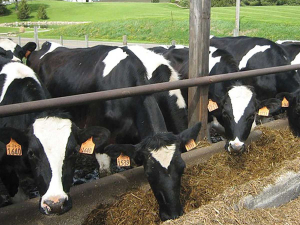
Veterinarians say changes to the code of welfare for dairy cattle provides a positive foundation for improved cattle welfare across the country.
Today, 15 October, is the International Day of Rural Women, which recognises rural women’s contribution to farming, communities and the environment.
Global dairy giant Lactalis has integrated its Australian operations with the Mainland Dairy consumer business it acquired from Fonterra earlier this year.
After almost two decades of sharemilking, saving and building equity, Aaron and Marcia Flay this year realised their long-held dream of settling on their first dairy farm.
Good medium to long term prospects for NZ beef, especially in the US, has heighted the focus on various initiatives to capitalise on this situation.