50 years of experience
PPP Industries Ltd, New Zealand-owned company, has been designing, manufacturing and installing innovative agricultural equipment for at least 50 years.
 increase font size
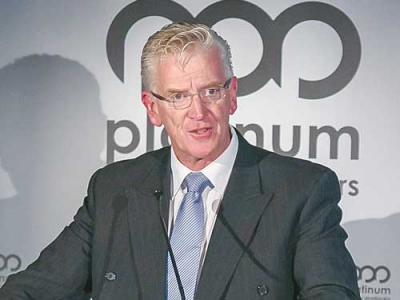 Platinum Primary Producers chairman Shane McManaway.
A ‘Proud to be a Farmer’ campaign is to be launched by a group of influential New Zealand and Australian livestock primary producers.
“We will tell the farmer’s journey, grow a couple of inches taller and be incredibly proud,” says Shane McManaway, chairman of the Platinum Primary Producers (PPP).
The ‘proud’ campaign is a key outcome of the tenth conference of PPP held in Darwin last week.
“As farmers we are inclined to be conservative in nature and take the ‘stay hidden, stay happy approach’,” says McManaway. “We are saying ‘to hell with that, we have been in the chute too long and it is time we opened the gate’, to use a rodeo term, and get out there and start to tell people, especially the urban people.”
PPP was founded by McManaway, a Wairarapa farmer and Allflex Australasia head, and comprises 137 agribusiness men and women in sheep, beef, dairy and deer.
McManaway told Rural News the group will promote and launch the ‘Proud to be a Farmer’ campaign. “It is pretty obvious that across the two countries we share the same challenges and issues. They are environmental sustainability, animal welfare and food safety,” he says.
“There is a divide between the rural sector and the urban sector and we think that is by and large a misunderstanding, so we will see if we can bridge that gap.”
PPP will formulate a plan for what ‘proud to be a farmer’ means. “Then we will build a title that cascades down from under that, of those three pillars, environmental, welfare and safety.”
A media campaign will then be launched aimed at the urban sector and where urban people will be reading it. McManaway says they want urban cafe customers in Sydney, Auckland or Wellington to pick it up and read about “proud to be a farmer”.
A couple of PPP members who are large farmers in both countries will give testimonials on what makes them proud to be a farmer with pictures of their properties.
PPP represents a massive part of farming in two countries and has a strong Anzac spirit, McManaway says.
McManaway says in NZ a lot of people are looking over farmers’ shoulders making sure they do the right thing for the environment.
“More importantly we want to do things right,” he says. “More than 98% of farmers do things by the letter of the law and want the place to be kept in a pristine condition so our future generations can enjoy what we are enjoying today.
“In terms of animal welfare, that goes without saying. If you are a farmer and not looking after your animals you shouldn’t be a farmer. Again we all live and breathe looking after our animals. It is critically important that their welfare is maintained and that goes across both countries and should go across the world.”
In this age of social media it is easy thing to get caught out. “And you should get caught out, so you need to make sure you’ve got all those areas covered off, all our employees understand what it means and we tell the message to the greater world that animals are everything to us.
“Food safety is critically important for Australia and NZ. Speaking for NZ, we have a clean green image and everywhere around the world people know us for that…. We need to maintain that because if we lost that label we would have a difficult job as a nation to sell our produce anywhere.
“Australia is in exactly the same boat. Without question all the people in our group are unanimous we must maintain that aspect of agriculture.”
PPP represents about 20 million livestock and some 12 million hectares (around 25%) of land ownership in Australia and NZ.
PPP Industries Ltd, New Zealand-owned company, has been designing, manufacturing and installing innovative agricultural equipment for at least 50 years.

The role women play in the dairy industry is enormous and women are truly stepping up and demonstrating leadership.
More than 130 of Australasia's leading agribusiness professionals are gathering in Wellington today for the annual Platinum Primary Producers (PPP) Conference.
More than 130 of Australasia's leading agribusiness professionals will visit two farms in Pirinoa, South Wairarapa, next week.
PPP Industries will use the Central Districts Field Days to showcase its new Super Sensor Jetter.
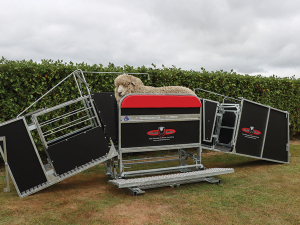
Oamaru-based livestock handling specialist Te Pari has bought Combi Clamp, the New Zealand manufacturer of Combi Clamp manual sheep handlers.
Agriculture Minister Todd McClay has admitted that a scheme bringing workers from Pacific nations to work on orchards has become too hard to navigate but says changes are coming.
A new app designed in New Zealand aims to help sheep, beef and deer farmers capture, analyse and use body condition score data more effectively.
Canterbury farmer Andy Macfarlane has been appointed to the board of AgriZeroNZ, the public-private partnership designed to accelerate the development and deployment of emissions reduction tools for New Zealand farmers.
For over 50 years Mel Ewers has been supporting the apple sector navigate through compliance and quality assurance issues.
The apple sector is enjoying a bumper harvest season.