NZ ETS Settings Hold Steady Amid Shortfall Warning
The Climate Change Commission has recommended maintaining the current New Zealand Emissions Trading System (NZ ETS) settings but warns of a potential unit shortfall as early as 2028.
 increase font size
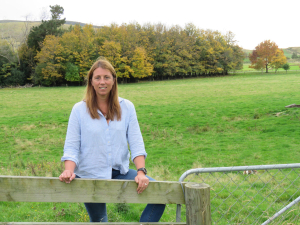
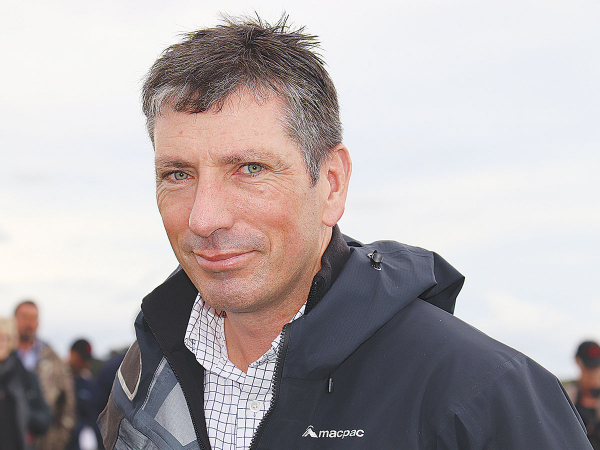 BLNZ chief executive Sam McIvor.
Initial reaction to the Climate Change Commission report has been generally muted, but there are some concerns in the agricultural sector.
Prime Minister Jacinda Ardern claims the commission’s draft advice, released earlier this month, sets out an ‘achievable blueprint’ for New Zealand.
She says the report demonstrates NZ has the tools to achieve our target but calls on us to accelerate our work.
“As a government we are committed to picking up the pace and focusing much more on decarbonisation and reducing emissions rather than overly relying on forestry,” Ardern says.
“The advice also highlights that the cost of action on the economy is not as great as many have previously thought. In fact, action on climate change is an economic opportunity for New Zealand.”
Climate Change Minister James Shaw believes the release of the draft advice is a significant milestone.
“There are two things that stand out from the draft advice – first, that action will be required across all sectors of the economy,” he says. “And second, that meeting our targets is affordable and possible with existing technology.”
Meanwhile, Beef + Lamb New Zealand says the commission’s focus on reducing the country’s fossil fuel emissions and its recognition that large-scale forestry planting is not the long-term solution is encouraging.
However, chief executive Sam McIvor adds that farmers would have liked to have seen greater recognition of the sequestration already happening on sheep and beef farms as a result of their own conservation efforts over the last few decades.
“There are also a number of areas of the report that will be of concern to farmers,” he says. “We need to study these in more detail to understand the assumptions, methodologies and science used by the commission to underpin some of its advice.”
He says this included the commission’s advice of a 15% reduction in sheep, cattle and dairy livestock numbers within the next nine years, analysis of the social and economic impacts of land-use change on communities and the science behind the methane targets.
McIvor says sheep and beef farmers have reduced their greenhouse gas emissions by more than 30% since 1990, while improving productivity and generating export value for the country. He adds that it is the only sector in New Zealand to record this scale of achievement when it comes to reducing emissions.
DairyNZ boss Dr Tim Mackle says it is encouraging to see the commission’s recommendations focus on R&D and rural broadband as solutions to support agriculture to reduce emissions. He says climate policy is incredibly complex and science sits at its core.
Mackle says the commission’s science-based approach is ‘ambitious and challenging’ for all of New Zealand and farming is no exception.
“We will be looking at what this advice could mean for dairy farmers and how the Government will partner to support our sector through this transition,” he adds. “Our farmers have already started making practice changes on-farm, along with introducing Farm Environment Plans. We will continue to push into this and leverage science and technology to support us on the journey,” he says
Mackle says DairyNZ welcomes the acknowledgement of a ‘split gas approach’ and that methane does not need to reduce to net zero. He adds that the commission’s proposals and underlying assumptions will be closely examined over the next few weeks, in particular the biogenic methane targets and advice on reducing stock numbers.
The Climate Change Commission has recommended maintaining the current New Zealand Emissions Trading System (NZ ETS) settings but warns of a potential unit shortfall as early as 2028.

Ospri is reducing TB testing frequencies and movement control measures as the disease risk subsidies in parts of the country.
The Climate Change Commission’s 2025 emissions reduction monitoring report reveals steady progress on the reduction of New Zealand’s climate pollution.
Southland farmer and director Tony Cleland has been named OSPRI New Zealand’s new chair.
Nick Beeby has been appointed as the new chief executive of the New Zealand Meat Board (NZMB).


Farmgate lamb prices are down by 8%, beef cattle by 4.5% and farm expenditure up by 4.2%.
Kiwifruit growers are watchful but remain optimistic as concerns around the potential effects of the El Niño weather pattern this season.
Almond hulls sourced from Australian orchards may have the potential to help New Zealand cows reduce emissions, boost milk yield and lower input costs.
Striking a balance between meeting the needs of industry to speed up approval time for products but on the other hand ensuring that risks are properly assessed.
Surprised, humbled and quite thrilled. That’s the reaction of James Allen, one of the founding partners and now chief executive of AgFirst, on being made a life member of the Institute of Rural Professionals.