
Ravensdown Elects Montgomery, Acland to Board
Ravensdown shareholders have elected Jane Montgomery and Kate Acland to the Ravensdown Board for three-year terms, following a closely contested director election.




 increase font size
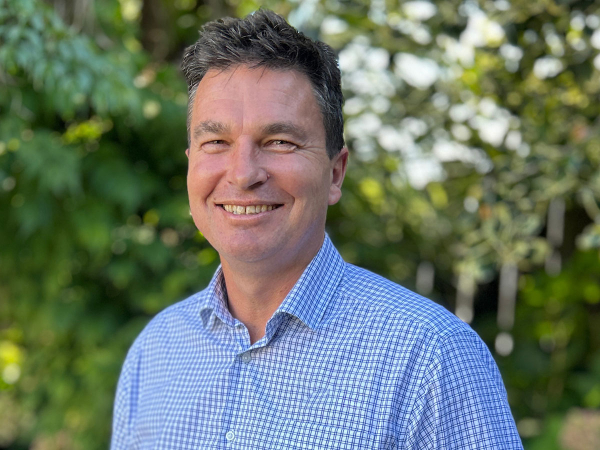 Nick Beeby.
Nick Beeby has been appointed as the new chief executive of the New Zealand Meat Board (NZMB).
In 2021, Beeby was made NZMB’s general manager of quota and information and has been acting chief executive since July 2024, when Sam McIvor departed the role.
Beeby resigned as general manager for market development at Beef + Lamb New Zealand in December 2024.
He is currently chair of New Zealand Farm Assurance Incorporated (NZFAI), which oversees the New Zealand Farm Assurance Programme.
The NZMB is responsible for achieving the best possible ongoing returns from sheepmeat and beef exports to international quota markets.
It currently oversees $2.6 billion of red meat exports to the quota markets of the European, United Kingdom, and United States, representing tariff savings of $934 million a year for the sector.
The board also administers farmer reserves, currently standing at $79m, held as a contingency fund to help New Zealand re-enter export markets in the event of a biosecurity incursion or disruption in quota markets.
It allocates interest and dividends, after reserve expenses from this fund, in consultation with farmers, for industry good projects such as the Eliminating Facial Eczema Impacts (EFEI) programme.
Kate Acland, chair of the NZMB, says the board is “pleased” to appoint Beeby to the role.
“He is highly experienced and respected in the red meat sector and already has significant knowledge about the NZMB and its work in our global markets,” Acland says.
Beeby says the board continues to play a key role in helping the industry navigate uncertainty and volatility.
“Global trading conditions remain challenging, but our sector’s resilience is strengthened by the critical role our quota system plays in securing tariff-free access to key markets like the European Union, the United Kingdom, and the United States,” he says.
“In these challenging times, the Board’s role in supporting preferential access into quota markets, managing contingency reserves and supporting industry innovation through funding critical research is more important than ever.”
Ravensdown shareholders have elected Jane Montgomery and Kate Acland to the Ravensdown Board for three-year terms, following a closely contested director election.

Beef + Lamb New Zealand (B+LNZ) says it welcomes the passage of the Natural Environment Bill and Planning Bill, calling the bills a positive step for sheep and beef farmers.
Farmgate lamb prices are down by 8%, beef cattle by 4.5% and farm expenditure up by 4.2%.
Red meat farmers are welcoming Labour’s plan to review the Emissions Trading Scheme and not to campaign on pricing agricultural emissions.
New Zealand's Emissions Trading Scheme (NZ ETS) encourages afforestation while not achieving climate goals, says a new report released by the Parliamentary Commissioner for the Environment, Simon Upton.


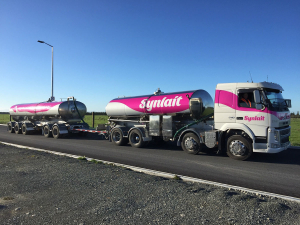
Synlait has swung to second-half profit as operations stabilise, but the dairy processor still posted a $75.4m annual loss.

LIC shareholders have elected a new North Island representative to the co-operative's Board, along with five representatives to its Shareholder Reference Group (SRG), following the company's Annual Meeting held in Invercargill.
Farmers across parts of Southland and South Otago are continuing to deal with difficult conditions after a prolonged run of wet weather, with pressure building around feed supply, stock management, pasture damage, farm infrastructure and everyday workloads.
Federated Farmers says it welcomes Labour's commitment to reviewing the Sharemilking Agreements Act, calling on other major parties to do the same.
For Canterbury dairy farmers Sian Meijer and Rick Wobben, wearable technology has become one of their most valuable on-farm tools - helping manage 1850 cows across an expansive, high-performing dairy operation while improving efficiency, mating outcomes and day-to-day decision making.
Fonterra has unveiled its annual results for the 2026 financial year, posting $27 billion in revenue and close to $20 billion returned to New Zealand farmer owners and unit holders.




OPINION: The same mainstream media muppets that brought you Jacindamania in 2017 have been flat out pimping for the Opportunities…
OPINION: Your old mate reckons the atrocious way farmers in the UK are treated by their lords and masters in…




