Cyclone Gabrielle: Hawke's Bay Orchardists Still Recovering
Three and a half years on from when Cyclone Gabrielle hit Hawke's Bay, some orchardists in the region are still receiving counselling to help them deal with the trauma they suffered.
 increase font size
 Karen Stevens, the Insurance & Financial Services Ombudsman, says that most people contacted the IFSO Scheme about customer service issues and delays.
The Insurance & Financial Services Ombudsman Scheme (IFSO Scheme) received a record number of enquiries in the past year - close to 5,000, a 21% increase on the previous year.
Karen Stevens, the Insurance & Financial Services Ombudsman, says that most people contacted the IFSO Scheme about customer service issues and delays.
The IFSO Scheme has also investigated the highest number of complaints in its 30-year history, with a total of 479 complaints received for investigation in the year from 1 July 2023 – 30 June 2024.
Stevens says the 46% increase in complaints from the previous year was mostly due to the extreme weather events of 2023, which caused a sizeable uptick in insurance claims.
“About 8% of the complaints we received were about insurance claims from the Auckland floods and Cyclone Gabrielle,” says Stevens.
She says the IFSO Scheme also received more complaints relating to business-as-usual insurance claims, which were impacted by the delays caused by approximately 118,000 weather event claims.
“The extensive nature of the weather events obviously impacted the insurers’ abilities to respond quickly and effectively to claims, and consumers have understandably been frustrated by the long time it’s taken to get their claims resolved.”
She says that despite this, insurers have taken less time to process claims than they did after the 2011 Christchurch Earthquakes.
Stevens says the rising cost of insurance, caused in part by the weather events of 2023, is also becoming an issue for people when the cost of living has gone up across the board.
“The increase in the cost of insurance was one of our top five enquiry issues this year,” Stevens says. “This is unsurprising given the ongoing financial pressure on households.”
She says the IFSO Scheme has a limited ability to look at complaints regarding insurance pricing and increases in premiums. However, if people are struggling, she recommends they talk to their insurer about their options, or shop around for quotes from other insurers.
“Sometimes, choosing a higher excess can reduce premiums,” she adds.
Scope of cover was the top issue for complaints investigated by the IFSO Scheme. Stevens says that, in some cases, this issue arises from consumers not understanding what their policy covers.
“For example, most house insurance only covers sudden damage, not gradual damage. If a house already had issues before a weather event, it's unlikely that insurance will cover the cost of fixing those pre-existing problems,” she says.
Stevens says that expert evidence is often key in cases where the scope of cover is disputed.
“Getting an independent builder or engineer’s report is important if you disagree with what your insurer is saying,” she says.
Of the complaints the IFSO Scheme investigated, 68% were about general insurance, which includes house, contents, vehicle and travel insurance. 21% of complaints were about health, life or disability insurance, and 11% were about other financial services such as loans and credit, or financial advice.
Consumers complained about house insurance the most, accounting for 24% of all complaints. This was followed by travel insurance at 18%, and motor vehicle insurance at 17%.
Three and a half years on from when Cyclone Gabrielle hit Hawke's Bay, some orchardists in the region are still receiving counselling to help them deal with the trauma they suffered.
Election years are always a concerning time for farmers, according to DairyNZ chair Tracy Brown.
OPINION: It's a tough pill to swallow that bird flu (avian influenza) has finally arrived in New Zealand. This is a moment many of us have hoped would never come.
Improving health and safety is about incremental gain rather than a sudden decision, says Leeston farmer and Federated Farmers health and safety spokesman David Birkett.
Retiring MP and dairy farmer Mark Cameron is blasting the Green Party for proposing to ban the use of synthetic fertiliser and cutting cow numbers.


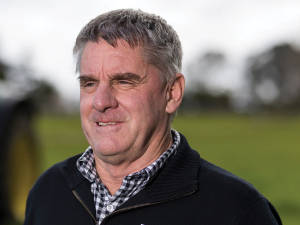
Federated Farmers has welcomed new rural policies released by ACT, saying they align closely with its own election priorities.
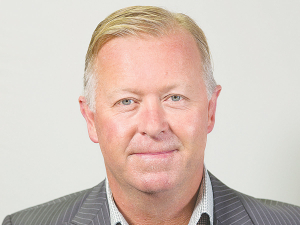
Rural Contractors NZ says proposed changes to land transport rules for agricultural vehicles are a welcome response by the Government to out of date regulations which have seen members hit with huge fines.
Alliance is calling for final applications for its 2027 Graduate Programme, with applications closing on Sunday 25 October.
Decades piloting planes has ensured vet and farmer David Hayes is focused on safety. So, after a serious accident while welding on farm, he is sharing his experience so others can learn from it.
Canterbury milk processor, Synlait Milk has confirmed Leon Fung as its chief executive officer.
OPINION: Making it easier to collect rainwater and use it to grow crops and livestock is a no brainer.