OSPRI Reduces TB Testing and Lifts Movement Controls in Key Regions
Ospri is reducing TB testing frequencies and movement control measures as the disease risk subsidies in parts of the country.
 increase font size
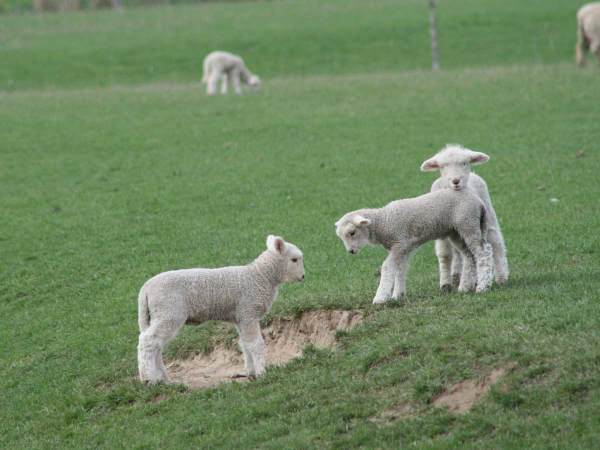 Despite Covid-19 restrictions, farmers achieved a near record lambing percentage according to a B+LNZ report.
Despite Covid-19-related processing restrictions and a widespread drought in the first half of 2020, sheep and beef farmers despite achieved a near record 130.3% lambing percentage, slightly lower than spring 2019 where 131% lambing was achieved.
This is the findings of the Beef + Lamb New Zealand (B+LNZ) Lamb Crop Outlook report for 2020 that measures the lambing performance and forecasts lamb and sheep exports for 2021.
Lamb and sheep export volumes, however, are expected to be more significantly impacted by the follow-on impacts of the drought, due to lower animal weights and the retention of sheep for breeding to rebuild stock numbers.
"Despite the challenges of 2020, including drought and Covid-19, sheep farmers demonstrated why they are the world's best," said B+LNZ chief executive Sam McIvor.
"Their resilience and the agility of their farming systems has meant they've performed outstandingly and this should be a real point of pride for our sector," she said.
B+LNZ's Economic Service estimates the number of lambs tailed in spring 2020 decreased by 1.5% or 357,000 head on the previous spring to 22.9 million head.
Most of the decline occurred in the North Island as a result of drought conditions.
McIvor says that although the average lambing percentage is lower, 2019 was a high performing season.
The number of lambs tailed in the North Island declined 4.8% to 10.8 million head.
Restricted feed supplies at mating resulted in lower pregnancy rates when scanning was completed. The severity of the autumn drought on the lamb crop was partially offset, however, by excellent climatic conditions at lambing.
The most severe impact was in the East Coast, with the total lamb crop for the region down 10%.
In contrast, the total number of lambs in the South Island increased 1.6%. Otago was the major driver of the lift in the South Island, recording an increase in total lamb crop of 3.9%.
The total number of lambs processed for export in the 2020-21 season is expected to decrease 4.5% from 19.1 million head in 2019-20 to 18.2 million head.
The annual amount of lamb produced is expected to decrease 4.7% due to a combination of fewer lambs and a slightly lower average carcase weight.
The number of adult sheep processed in the 2020-21 season is expected to decrease 10.8% from 3.5 million head in 2019-20 to 3.2 million head.
The sharp decline by a 16.3% decline in the North Island as sheep farmers after the number of breeding ewes sold in 2020 was higher than expected because of drought.
Ospri is reducing TB testing frequencies and movement control measures as the disease risk subsidies in parts of the country.

OPINION: The previous government spent too much during the Covid-19 pandemic, despite warnings from officials, according to a briefing released by the Treasury.
OPINION: Labour leader Chris 'Chippy' Hipkins is carrying on the world-class gaslighting of the nation that he and his cohorts started after their disastrous Covid response; now trying to undermine the Covid inquiry to protect his own backside.
OPINION: Did former PM Jacinda Ardern get fawning reviews for her book?
Southland farmer and director Tony Cleland has been named OSPRI New Zealand’s new chair.


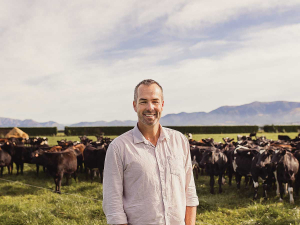
For Canterbury dairy farmer Cameron Henderson, supporting Meet the Need comes down to a simple question: how can the success of New Zealand farming benefit more than just those within the industry?
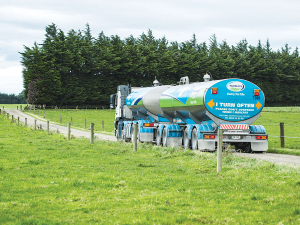
Fonterra board members are in line for a pay rise of around 3%.
Dairy processors are ready to further boost New Zealand’s export earnings but want the incoming government to match their ambition with good policy.
Massey University is best placed to solve the “problems” facing the dairy industry, says vice chancellor, Pierre Venter.
Synlait's longest serving employee – a man who joined the Canterbury-based milk processor even before it began processing milk – is now its newest executive.
A dairy industry leader believes eradicating the common and costly disease, Bovine Viral Diarrhoea (BVD) is within reach.