True Reflection?
A fair question has been raised about how member-funded organisations should conduct themselves when taking a public position on any given issue.
 increase font size
 The Government has announced that an extra $270 million will be spent on improving rural broadband and bridging cellphone blackspots.
Rural Women NZ says faster rollout of broadband and more mobile towers will improve connectivity to rural homes.
The Government has announced that an extra $270 million will be spent on improving rural broadband and bridging cellphone blackspots in regions throughout New Zealand; $130m will be spent on expanding fibre-optic ultrafast broadband (UFB) to another 60,000 homes and businesses in 190 towns.
Another $140m will extend the number of subsidised wireless broadband services to another 74,000 homes and businesses, as well as deliver mobile coverage to approximately 1000km of rural highways and more than 100 tourist areas.
Once completed, UFB will be available to 87% of the population and 99% will have access to high speed internet by 2022.
“The benefits of extra spending to expand connectivity for rural communities are immense. The services will lead to greater economic growth and better access to online education, social services and health information,” says Fiona Gower, national president of Rural Women New Zealand.
“Rural residents will feel safer with better mobile coverage, and the connectivity will reduce the feeling of isolation for those living in remote areas.”
In the past few years, RWNZ has been involved in discussions with nationwide broadband and mobile service providers and government agencies to ensure that rural connectivity remains a top priority.
A fair question has been raised about how member-funded organisations should conduct themselves when taking a public position on any given issue.

Rural Women New Zealand (RWNZ) says it is delighted by the Government’s announcement that it would invest $250,000 in the organisation.
OPINION: About as productive as a politician's taxpayer-funded trip to Hawaii, as cost-effective as an OSPRI IT project, and as smart as the power-company pylon worker, the Hound gives you the NZ Post business strategy:
OPINION: Rural services such as banks, health and postal services have been declining for years, so this mutt was tickled pink to hear Rural Women NZ on national TV slamming the impact of post office closures in rural areas.
Rural Women New Zealand (RWNZ) and Massey University are joining forces to help raise awareness and funds to combat leptospirosis.


Farmgate lamb prices are down by 8%, beef cattle by 4.5% and farm expenditure up by 4.2%.
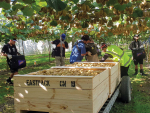
Kiwifruit growers are watchful but remain optimistic as concerns around the potential effects of the El Niño weather pattern this season.
Almond hulls sourced from Australian orchards may have the potential to help New Zealand cows reduce emissions, boost milk yield and lower input costs.
Striking a balance between meeting the needs of industry to speed up approval time for products but on the other hand ensuring that risks are properly assessed.
Surprised, humbled and quite thrilled. That’s the reaction of James Allen, one of the founding partners and now chief executive of AgFirst, on being made a life member of the Institute of Rural Professionals.