New Company ASTEC to Supply Asparagopsis Seaweed for Methane Research
A new company set up to cultivate and supply seaweed for animal methane mitigation studies believes it could be a game changer for the dairy industry.
 increase font size
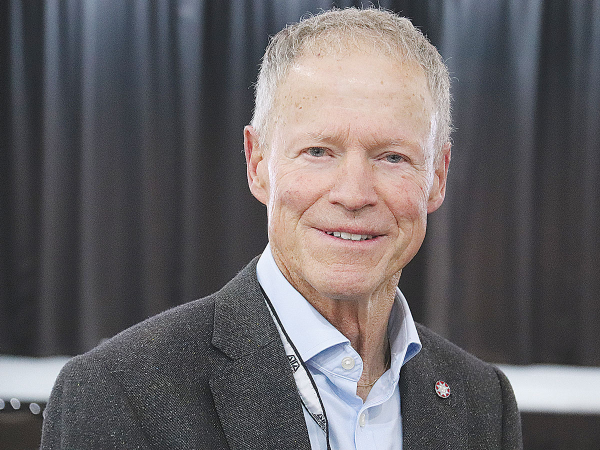 Former Speaker Sir Lockwood Smith.
Treat agricultural emissions differently. That’s the message from the chair of the prestigious Riddet Institute, Sir Lockwood Smith.
He says countries like NZ that produce more food than they consume and who provide food security for other countries are under pressure to reduce agricultural emissions more than is realistic.
Smith, who has a PhD in animal science, has lectured at Massey University and had a long political and diplomatic career, told the recent Agrifood Summit in Wellington that he has concerns that the targets set by the Intergovernmental Panel on Climate Change (IPCC) are unrealistic for countries such as NZ.
He says the IPCC Paris Agreement explicitly recognises the need to protect food security and end hunger while adapting to the impacts of climate change on food systems.
If the IPCC is serious about the need to protect food security, then according to Sir Lockwood, food production should be treated differently in the emissions accounting system.
He says that doesn’t mean it should be let off from the need to produce more nutrition with less emissions, but what is being measured, and how it’s being measured, really matters because it affects outcomes.
“The current measurement and accounting system will constrain the more carbon-efficient producers from increasing supply, while the deficit is filled with food from less carbon efficient countries. This is so typical of the perverse outcomes resulting from poor political decision making that I’ve observed too often during my reasonably lengthy political career,” he says.
Smith says what’s needed is an accurate estimate of emissions linked to a unit of product nutritional value, such as a digestible indispensable amino acid base – possibly picking up the Riddet’s protein quality work.
Global Challenges
Sir Lockwood Smith says the world faces the challenge of feeding a growing global population, possibly reaching 10 billion by 2050, while at the same time improving health outcomes, protecting ecosystems and staying within planetary boundaries.
He says more protein will be demanded and its quality will matter, especially for those over 65, a population expected to double by 2050.
“It’s estimated half of all children and two thirds of young women are deficient in one or more micronutrients, such as calcium, iron and potassium; and vitamins E, A and B12. At the same time, last year, for the first time in human history, more children in the world were obese than underweight. Agri-food systems face the dilemma of dealing with all that, while at the same time trying to comply with the Paris Agreement’s emissions requirements,” he says.
In his address, Smith noted the tremendous contribution of NZ’s early political and farming leaders, in particular those who arranged the first frozen lamb exports to the UK in 1882. He praised the contribution of past NZ scientists and politicians whose far-sighted decisions paved the way for the scientists of today to take the next and important steps.
Among those Smith singled out was the highly acclaimed and politically astute Dr Cambell of Ruakura fame, whom he says inspired him to pursue a career in agriculture, and former Prime Minister and Northland farmer Gordon Coates who set up the DSIR and inspired Smith to embark on a political career and win the seat of Kaipara that Coates once held.
“The need for that ongoing leadership today is now greater than ever,” he says.
The food sector is undergoing a significant transformation and the Riddet Institute is playing an important role in developing the next generation of food products which not only address nutrition and health but also the pressing environmental and ethical issues that now prevail.
These include developing future proteins, turning plant proteins into food products that mimic animal products, precision fermentation and hybrids of animal, plant and other proteins.
“But to me, a major challenge remains, and in many ways it’s what has brought me back to my agricultural science roots. The global food supply system represents just over 30% of greenhouse gas emissions. In two decades time we need to meet the nutritional needs of 25% more people with preferably less emissions,” he says.
A new company set up to cultivate and supply seaweed for animal methane mitigation studies believes it could be a game changer for the dairy industry.
OPINION: Sir Lockwood Smith has clearly and succinctly defined what academic freedom is all about, the boundaries around it and the responsibility that goes with this privilege.
Academic freedom is a privilege and it's put at risk when people abuse it.
Farmer and former politician Sir Lockwood Smith is questioning the way that methane emissions from livestock are measured in NZ.
OPINION: As we wait for the Government to unveil its plan on pricing agricultural emissions, a new report spells out what could be in store for rural New Zealand.



Federated Farmers says it welcomes Labour's commitment to reviewing the Sharemilking Agreements Act, calling on other major parties to do the same.
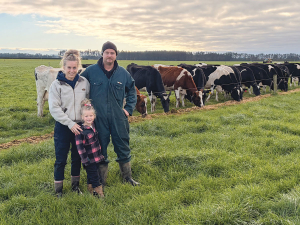
For Canterbury dairy farmers Sian Meijer and Rick Wobben, wearable technology has become one of their most valuable on-farm tools - helping manage 1850 cows across an expansive, high-performing dairy operation while improving efficiency, mating outcomes and day-to-day decision making.
Fonterra has unveiled its annual results for the 2026 financial year, posting $27 billion in revenue and close to $20 billion returned to New Zealand farmer owners and unit holders.
The first major update to the Dairy Cattle Code of Welfare in more than a decade has been released, marking what DairyNZ describes as an important step in ensuring animal welfare standards continue to evolve alongside scientific evidence and on-farm realities.
Ravensdown shareholders have elected Jane Montgomery and Kate Acland to the Ravensdown Board for three-year terms, following a closely contested director election.
Federated Farmers says new legislation replacing the Resource Management Act will cut red tape, unlock investment and help grow New Zealand's export-led economy, after the Planning Bill and Natural Environment Bill passed their third reading in Parliament yesterday.