It's The Margins That Matter
OPINION: It appears to be difficult for people who haven’t tried to run a business to understand the difference between assets and cash.
 increase font size

Increasing yields in all areas of agricultural production have helped farmers to maintain profitability in the face of ever-increasing input costs.
While producers of wheat, milk and other products have seen yields increase by 40% or more, yields for potatoes have remained relatively constant, at around 100 tonne per hectare.
In an attempt to understand reasons behind the lack of increase in tuber yields, potato growers are undertaking a $240,000 research project with Plant and Food to investigate the role soil fertility has played in the current situation.
The yield gap analysis is being co-funded by Potatoes New Zealand, McCain Foods, Ravensdown and Plant & Food Research.
"For some years, the yields for potatoes have not been where you would expect when compared with for example carrots or wheat," says Mike Manning, general manager R&D for Ravensdown.
"Progress has been made in the area of plant genetics and other aspects of production in most areas of agriculture but we've not seen the same positive results in potato production," he says.
"We have a proactive group of farmers in Canterbury who want to learn as much as they can about options to improve growing practice. The implications here would be of interest throughout the country, so we decided to pool our resources."
Nutrient supply and fertiliser practice will be studied as well the incidence of pest and disease and other issues such as seed quality, irrigation management and soil physical conditions.
The fertiliser trial areas consist of large replicated treatment plots, eight rows by 10m, established within existing potato crops.
Growers have applied their usual levels of nitrogen, phosphorous, potassium and calcium – while the research team has varied the amounts of these nutrients on other plots to compare results.
Manning says the project has been a major undertaking, with all parties keen to ensure that sufficient funding and technical resources are available.
The next stage of the research, which could develop into a multi-year project, will be to analyse and review this season's results and then further consult with growers to determine which results require further research and investigation.
OPINION: It appears to be difficult for people who haven’t tried to run a business to understand the difference between assets and cash.
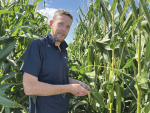
Four years since it was first detected in New Zealand, researchers and growers now know much more about management of maize pest fall armyworm (FAW).
OPINION: In the 1980s, concern was expressed in West Germany about the falling birth rate. Some simple analysis was performed by Professor Helmut Sies, physician and biochemist at Dusseldorf University. His letter ‘A new parameter for sex education’ was published in Nature in 1988:
Generative AI in the workplace, trials in the field, and industry-relevant research took centre stage at this year’s Grape Days events in Central Otago, Hawke’s Bay and Marlborough.
When it comes to annual rebates, it's been a long time between drinks for Ravensdown shareholders.

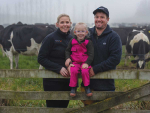
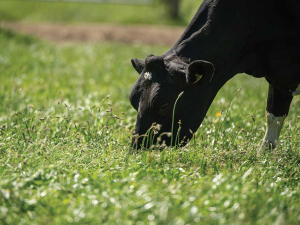
Farms across the upper North Island are trialling different pasture mixes as part of a research programme that aims to build greater resilience into farming systems.
Election years are always a concerning time for farmers, according to DairyNZ chair Tracy Brown.
The Ballance Farm Environment Awards are coming to the West Coast of the South Island.
Most dairy regions around the country have had a pretty good season so far says Tracy Brown.
Rural leader Mark Hooper has been appointed as an independent director to the NZPork board, bringing extensive farming, governance and advocacy experience to the role.