PC1 Pause Looms as Coalition Targets Waikato Farm Rules
A pause on Waikato Regional Council's (WRC) plan change that sets new freshwater rules for farming could be announced in the coming weeks.
 increase font size
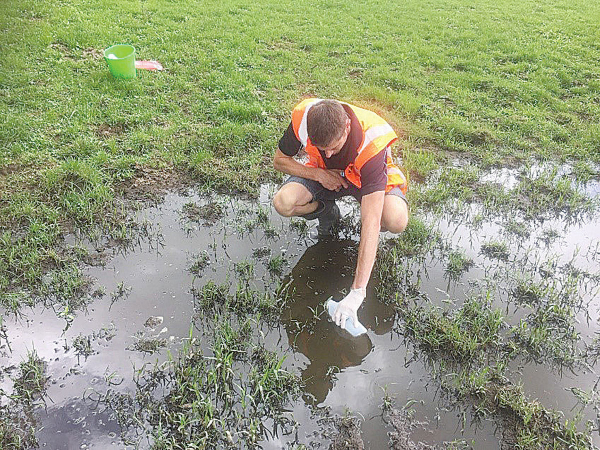 Waikato Regional Council say they made 21 environmental prosecutions in the last 12 months.
Compliance, monitoring and enforcement data released by Waikato Regional Council for 2019/20 show that 21 environmental prosecutions were completed over 12 months, with 42 convictions against 23 polluters.
A total of $1.189 million in fines was imposed against those polluters by specialist judges who heard cases across the Waikato region.
“Prosecutions for the really serious environmental incidents are important, but only form part of our overall compliance strategy,” says the council’s regional compliance manager Patrick Lynch.
“A large part of daily business for our council is to enable the community and businesses to utilise and interact with natural and physical resources – like using water from the Waikato River. But using those resources comes with obligations.
“There is a balance to be struck and we have to ensure people also operate within environmental limits,” Lynch says.
He says there are currently more than 11,400 resource consents across about 5,000 sites in the Waikato, with 62% of the monitored consents compliant in 2020.
“Non-compliance ranges in its seriousness, and for those found to be non-compliant a variety of actions will have been taken, including education. Sometimes, more than one action will be taken if initial directions are not heeded.”
Environmental compliance, enforcement and monitoring data for the last financial year also shows:
“It is essential the community can rely on us to respond and take responsibility as the environmental and maritime safety regulator, and to encourage positive behaviour change through various enforcement tools if needed.”
In addition, regional council maritime officers interacted with more than 2,500 people on coastal and inland waterways over the 2019/20 reporting period, with 86 infringements, 34 formal warnings and 72 verbal warnings.
Kathy White, Taupō constituency councillor and Environmental Performance Committee chair, says she is heartened by the results, but concerned about the seemingly slow rate of behaviour change in some sectors.
“Council staff are working really hard and, as their governors, we continue to support them in their compliance, monitoring and enforcement work. We have a fantastic region, and we need to enjoy it sustainably and safely. But clearly there is still a way to go for some in our community to realise this.”
A pause on Waikato Regional Council's (WRC) plan change that sets new freshwater rules for farming could be announced in the coming weeks.

OPINION: Staying on Plan Change 1, NZ First deputy leader Shane Jones took to social media to gain some political points.
OPINION: All eyes are on the Government as Waikato farmers seek urgent help to fend off the controversial Plan Change 1 (PC1), designed to manage nutrient discharges into waterways in the region.
Waikato farmers have been told that the Government’s new planning system legislation and the region’s Plan Change 1 (PC1) “won’t mesh together very well”.
The Government is looking at intervening on behalf of Waikato farmers who face new regulations around agricultural land use while Resource Management Act (RMA) reforms are underway.



Esther Guy-Meakin has been announced as the new chief executive of the New Zealand Meat Board (NZMB).
According to a progress report on the Aotearoa Horticulture Action Plan (AHAP), New Zealand's horticulture sector is making real progress on the big issues facing growers.
A team effort that is paying dividends for the wider New Zealand economy.
A strong sense of community involvement is what propelled the Federated Farmers' North Canterbury president Bex Green to the honoured title of the Feds' Advocate of the Year 2026.
The country's second largest milk processor is warning against 'complacency' during a review of competition regulations in the dairy sector.
Oamaru-based livestock handling specialist Te Pari has bought Combi Clamp, the New Zealand manufacturer of Combi Clamp manual sheep handlers.