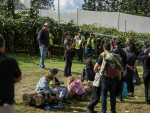
Top Maori Orchard On Show
A large crowd turned out for the last of the field days of the three finalists in this years Ahuwhenua Trophy to determine the top Maori horticulture entity in Aotearoa New Zealand
 increase font size
 The Ahuwhenua Trophy is the most prestigious award for excellence in Māori farming, this year the competition is for sheep and beef.
The finalists in the 2022 Ahuwhenua Trophy competition for the top Māori sheep and beef farm have been announced.
These are Onuku Māori Lands Trust, located at Rerewhakaaitu, Rotorua, Wi Pere Trust, at Te Karaka, Gisborne and Hereheretau Station, located at Wairoa.
The Ahuwhenua Trophy is the most prestigious award for excellence in Māori farming and was inaugurated 89 years ago by Sir Āpirana Ngata and the Governor General at the time, Lord Bledisloe. The objective was, and still is to encourage Māori farmers to improve their land and their overall farming performance with an emphasis on sustainability.
On a three-year rotational basis, the trophy is competed for in the sheep and beef, horticulture and dairy sectors. This year the competition is for sheep and beef. The announcement and judging of the finalists is normally held earlier in the year, but this year the competition was put on hold for several months due to the arrival in NZ of the Omicron variant of Covid-19.
Nukuhia Hadfield, chair of the Ahuwhenua Trophy Management Committee which runs the competition, says it's exciting to see the emergence of such high calibre finalists - given the challenges that Māori farmers are facing. She says the uncertainty created by the Covid-19 pandemic has added to the difficulties farmers have endured with severe adverse weather events, labour shortages in the sector and a whole raft of new regulations.
"This year's finalists, along with the other entrants in this competition show the strength and determination of Māori farmers to successfully overcome adversity and get on with the daily task of farming in a truly sustainable way," Hadfield says.
Field days will be held at the farms during August and September. These are open to the public and provide an opportunity for the finalists to showcase their properties. The winner will be announced at the awards dinner in Hawke's Bay in late October.
About The Finalists
Onuku-Māori Lands Trust
The Onuku dry stock property near lake Rerewhakaaitu, just south of Rotorua, is one of several farms owned by the Trust. These include four dairy farms, three bovine and one ovine, a dry stock farm, forestry, natural reserves and a mānuka plantation for the production of honey.
The farms cover a total area of 2,362 hectares of which 740 hectares is retired. The area being farmed covers 1,542 hectares.
A total of 14,800 lambs are finished on the farm, they trade cattle and carry about 600 yearlings. The farm also provides silage and hay to the dairy farms.
A feature of Onuku's farming operations is its strong environmental focus. It is part of Project Rerewhakaaitu, a voluntary local farming initiative to help project local waterways and lakes.
Another strategy is for Onuku owners to be employed on farm and the Trust endeavours to implement this whenever possible.
Wi Pere Trust
The Wi Pere Trust located at Te Karaka, Gisborne consists of 6,770ha with 4,900ha effective.
The property consists of two blocks, Otara at Whatatutu and Tangihanga at Waituhi. The land blocks carry 51,000 stock units comprising 32,400 sheep and 4,600 cattle. The farm is managed by general manager Tim Rhodes, with 15 full-time staff. Wi Pere Farms are classified as North Island steep, hard hill country.
The Trust has develeoped comprehensive Land Environment Plans to guide how to best utilise the land - including the retirement of erosion prone land, fencing all waterways (approximately 35 kilometres), riparian planting and improving water quality.
Wi Pere produces approximately 1,100,000kg of meat and fiber annually and optimises product returns by selling via a Māori Collective Cluster, Awhina to the Alliance Group.
Hereheretau Station
Hereheretau Station, near Wairoa, runs a 2,000ha sheep and beef farm and is the major asset of the Māori Soldiers Trust.
The land ranges from flat to steep hill country and it carries 25,000 stock units split 55 to 45 - sheep to cattle. It runs 8,600 MA ewes and 1,000 hoggets are also lambed. The station runs 630 MA cows and 170 first-time calvers with all progeny finished as prime.
Hereheretau Station employs six full time staff, with a progressive shepherd growth programme that echoes the purpose of the Māori Soldiers Trust. The Māori Soldiers Trust was set up in 1917 as part of the efforts of Sir Āpirana Ngata among others.
Today earnings from Hereheretau Station are transferred into the Māori Soldiers Trust Scholarship Account for distribution as part of the Sir Āpirana Ngata Memorial Scholarship programme. These scholarships are granted to Māori for higher education.
A large crowd turned out for the last of the field days of the three finalists in this years Ahuwhenua Trophy to determine the top Maori horticulture entity in Aotearoa New Zealand
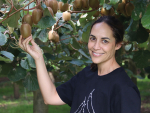
Great weather, a large turnout and positive feedback.
A casualty of the storm that hit the Bay of Plenty recently was the cancelation of a field day at a leading Māori kiwifruit orchard at Te Puke.
Two kiwifruit orchards in the Bay of Plenty and one in Northland are this year's finalists for the Ahuwhenua Trophy competition.
One of the country's top Māori farms has been badly damaged by a severe isolated thunderstorm which hit parts of the east coast of Northland last week.


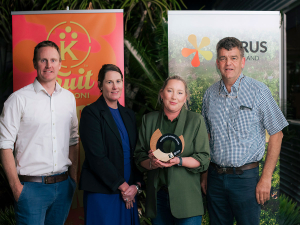
New Zealand's citrus growers were challenged to build their future on the value embedded in their fruit rather than the volume they produce, at Citrus New Zealand's annual gathering in Gisborne on 17 September.
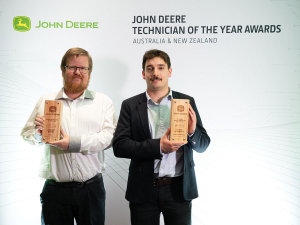
Leading John Deere technicians and apprentices from New Zealand and Australians were recognised at the recent sixth annual JD Technician of the Year Awards, held in Brisbane.
In Dacre, near Invercargill in New Zealand’s South Island, Bruce Dinnington is running a dairy operation unlike any other.
A free online platform aggregating governance vacancies across rural and regional New Zealand has been launched.
Environment Minister Nicola Grigg has announced details of a new rural plastics recycling scheme.
Agricultural drone operators say that a government decision to allow lower-risk drone work without certification won’t lower standards but drive innovation and efficiency.




