Two new awards open to help young farmers progress to farm ownership
Entries have opened for two awards in the New Zealand Dairy Industry Awards (NZDIA) programme, aimed at helping young farmers progress to farm ownership.
 increase font size
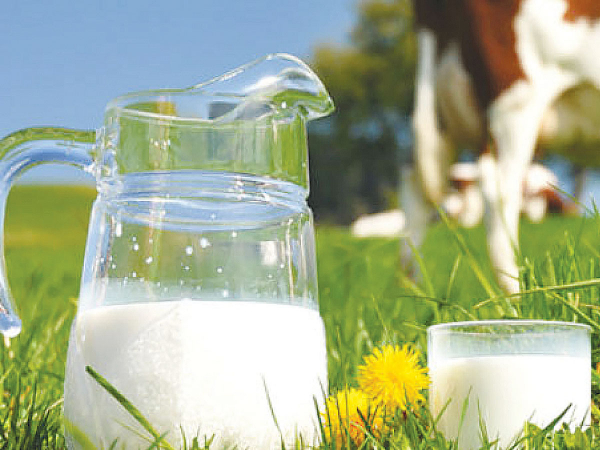 A recent report from ASB claims that, unlike in 2014, troubles on the Ukraine-Russia border aren't likely to cause a drop in dairy prices.
ASB says that, amidst the possibility of an incursion into Ukraine by Russia, it is unlikely the dairy industry will see a repeat of 2014 when conflict between the two countries led to a crash in dairy prices.
“Back then, dairy prices fell more than 40% over the course of the year following Russia’s decision to ban EU agriculture exporters amidst tensions with the west over eastern Ukraine,” the bank’s Commodities Weekly report says.
However, global dairy flows are in a different position this time around.
“EU dairy exports to Russia have collapsed following the previous round of sanctions so another lake of milk won’t be flooding on to the market any time soon,” the report says.
“What’s more, the 2014 conflict took place at a time when global dairy production was ramping up following good weather and the lifting of European production caps, all whilst Chinese purchases were slowing.
“This time around, global dairy supply is looking tight, and the appetite among buyers is ferocious,” it says.
The report also states that any sanctions placed on Russia, as it amasses troops at the Ukrainian border, are unlikely to have a direct impact on other big New Zealand export sectors.
“NZ’s exports to Russia have recovered since their crash in the aftermath of that previous round of tensions (and sanctions) back in 2014, but it remains insignificant as an NZ export partner,” the report states.
The indirect effects of an invasion on global grain prices may be more meaningful, the report states.
It claims that Ukraine and Russia are the world’s second and third largest exporters of cereals, collectively supplying 15% of world exports.
“On its own, Ukraine supplies about 13% of global maize exports with much production taking place in eastern areas which are most vulnerable to conflict.
“The impact on global feed prices will depend on the nature of any conflict and will be difficult to predict, but Kiwi farmers would be prudent to prepare for further volatility over the months ahead.”
Entries have opened for two awards in the New Zealand Dairy Industry Awards (NZDIA) programme, aimed at helping young farmers progress to farm ownership.
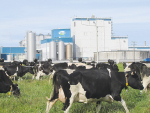
According to ASB, Fonterra's plan to sell it's Anchor and Mainlands brands could inject $4.5 billion in additional spending into the economy.
Sheep and beef farmers are cautiously optimistic as farmgate prices continue to firm.
The 2025-26 season is set to start on a high and a $10/kgMS opening forecast milk price isn't being ruled out.
A global trade war beckons, which is bad news for a small open economy like New Zealand, warns Mark Smith ASB senior economist.



Now in its fourth year, the 2026 Fencing Industry Awards, formed part of the proceedings of the FCANZ Conference, held in Nelson during August.
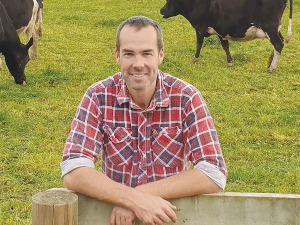
DairyNZ deputy chair Cameron Henderson has been re-appointed unopposed for another term.
OPINION: The stats speak for themselves.
Farms across the upper North Island are trialling different pasture mixes as part of a research programme that aims to build greater resilience into farming systems.
Election years are always a concerning time for farmers, according to DairyNZ chair Tracy Brown.
The Ballance Farm Environment Awards are coming to the West Coast of the South Island.