
Federated Farmers Praises Labour's Emissions Tax Backdown
For the first time in a quarter of a century, Federated Farmers has something positive to say about the Labour Party’s climate change policy leading into a general election.
 increase font size
 Dr Harry Clark.
Farmers are unsure about what they can and should do to reduce greenhouse gas (GHG) emissions, says the director of the NZ Agricultural Greenhouse Gas Centre.
Dr Harry Clark told the Agricultural Climate Change conference last week in Palmerston North that the broader rural professional sector lacks clear information, expertise and knowledge of GHGs.
He attributes this partly to the greater emphasis on water issues in recent years, and now the focus must be on to GHGs.
“Just as when the focus came on water there had to be a lot of up-skilling by rural professionals and knowledge transfer on how to handle water,” he said.
“We are now in the same position with GHGs. We need advice and knowledge, and I think we can catch up relatively quickly.”
Clark says agricultural emissions are an extremely important issue for NZ. But we need to balance any reduction in our emissions with our economic performance and consider what the impact that would be on the farming community.
“How do we grapple with trying to get agriculture to reduce in the context of maintaining a vibrant rural and national economy? That isn’t an easy balance to achieve,” he said. “There are many competing interests. We need to... grasp the opportunities and minimise the threats.”
The dairy sector could reduce stocking rates but still maintain profitability and reduce GHG emissions, Clark says.
“That would be the kind of win-win scenario we are looking for.”
Many at the conference discussed farmers’ needs for financial incentives to enable them to make changes. One delegate claimed the best way to send messages to farmers is to write them on a cheque. But Clark says while financial incentives may be one way of changing farmer behaviour, another is the reality of the demands from discerning customers in some of NZ’s high value markets.
“In international markets you have to meet certain environmental standards just to be in the marketplace – not necessarily to get a reward. But meeting those standards is critical for access to that market,” he told the conference.
Clark says farmers must think carefully about the social licence to farm and must work within the social boundaries people find acceptable. These boundaries change and everyone works within a socially dynamic environment.
“Farmers are under pressure from the broader NZ population to do their bit for climate change, so achieving this transcends just a simple profitability issue. It goes into what is acceptable in the general society,” he said.
For the first time in a quarter of a century, Federated Farmers has something positive to say about the Labour Party’s climate change policy leading into a general election.
Climate, nature and animal wellbeing make up Fonterra's refreshed sustainability roadmap released last week.
A five-year study has found that the cost of reducing emissions without technology may be significant and unsustainable for Northland dairy farmers.
OPINION: With the winter months officially here, I trust all is well at your place.
OPINION: The global crusade against fossil fuel is gaining momentum in some regions.


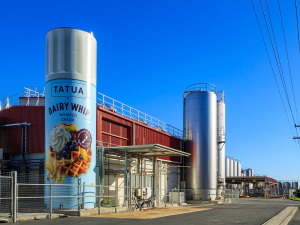
Waikato milk processor Tatua has again declared a record milk payout to farmer shareholders, leaving other processors in the dust.

A Labour-led Government won’t be bringing back the controversial freshwater rules of 2020.
National’s much-touted free trade deal with India featured in the Rural Issues Debate at Mystery Creek, Hamilton on Wednesday night.
New Zealand's 2026-27 freshwater fishing season has opened, with anglers encouraged to head to rivers and lakes over the coming days as conditions look favourable across much of the country.
Central Otago District Council (CODC) has voted against a plan to spread treated sewage sludge from Cromwell and Alexandra on farmland near Lauder, a decision Federated Farmers says reflects strong opposition from rural residents.
Pāmu has released its FY26 Integrated Annual Report, reporting a Net Operating Profit of $113 million, more than double the $49 million recorded in FY25.