Lanaco and Blueair Launch World-First NZ Wool Air Filter
New Zealand wool is reaching new heights as air filtration companies move away from synthetic products to biodegradable alternatives.
 increase font size

Targeted types such as some first lambs fleece and oddments resisted a generally weaker market last week, says New Zealand Wool Services International Ltd's general manager, John Dawson.
Of the 13,230 bales eventually offered as growers continue to resist selling at these lower levels, 67% sold, which is a better result than the past two auctions.
The weighted indicator for the main trading currencies was down 0.6% compared to the last sale on April 19 having minimal impact on prices.
Dawson advises that fine crossbred wools eased up to 3%.
Good colour coarse fleece was 1% softer with poorer styles 2 to 3.5% cheaper. Long coarse shears were 1 to 2% easier with the shorter types 2 to 3.5% down.
First lambs were firm to 2% weaker. Second lambs and long oddments, which are generally better processing wools than comparative North Island types were 8 to 12% stronger.
Good style short oddments were firm with the poorer styles 7 to 12% dearer.
Limited competition with China and Western Europe continuing to dominate, supported by India, Middle East and Australasia.
Next sale on May 3 comprises approximately 7500 bales of North Island wools.
New Zealand wool is reaching new heights as air filtration companies move away from synthetic products to biodegradable alternatives.
Will a stronger, more coordinated voice help rebuild confidence and improve returns in the wool sector?
OPINION: Confidence in the wool sector is rebounding as prices hit levels not seen in more than 15 years.
The recently signed free trade agreement with India is an invitation to strengthen relationships between the New Zealand and Indian strong wool industries, says Wool Impact chief executive Andy Caughey.
Strong competition and tightening supply have seen wool reach its highest prices paid at auction since 2011.


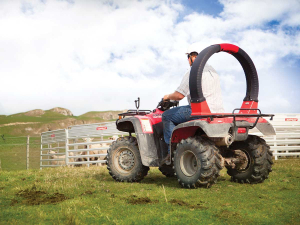
When Northland leather worker Vernon Suckling started making horse saddles 50 years ago, quad bikes and side-by-side vehicles were unheard of.
Alliance Group has confirmed that eligible farmer-shareholders who supply and continue to back the business will receive up to $20 million later this year, following the strategic investment partnership with Dawn Meats.
With a general election under five weeks away, Rural News is asking major political parties about their policies and positions on key issues facing the primary sector. We will run their responses to each question over the next four weeks. The ACT Party and the Greens didn't respond in time.
The red meat sector is in great heart.
Dr Scott Champion, Foundation for Arable Research chief executive, says that everyone in the supply chain had a role to play in driving the sector's long-term success.
Entries opened on Monday, 5 October 2026 for the 2027 New Zealand Dairy Industry Awards (NZDIA), which organisers describe as the nation's biggest celebration of excellence in the dairy sector.