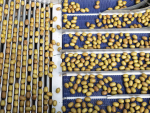
Seeka Posts Record $62m Profit as Zespri Lifts 2026 Forecast
More signs of a booming kiwifruit sector.
 increase font size
 Janice Byrnes (centre) with Zespri marketing team colleagues Lai Kim and Hayden Brewerton.
Along with health, brand is one of the top five drivers of consumer preference, says Janice Byrnes, Zespri marketing manager for Australia, Thailand and Vietnam.
“It makes sense – consumers want consistency, they want quality,” she told the HortConnections conference in Melbourne last week.
“Brand is important around the world and that is why we want to build our brand globally. There are lots of other drivers there in decisionmaking – social image, price and the appearance of the fruit,” she explained.
If it doesn’t look good consumers won’t pick it up, Byrnes added.
“That is a challenge for kiwifruit in particular: it is brown on the outside and not very attractive, but the inside is beautiful. So we like showcasing the inside of our fruit as much as possible.”
She told the conference that a brand needs to be meaningful and relevant to the consumer.
“The most successful brands in the world are different. They are seen as different and unique in the category. They are dynamic and they set the trends.”
In the category, Zespri is looking to innovate for the future with more varieties of kiwifruit.
It has worked on a global brand vision that will be seen as consistent by consumers across the globe. The team has proposed the brand vision ‘making life delicious’. That is the vision of where they want to go as a brand globally in the future.
But they also have existing campaigns that have worked well in many countries that are quite different, Byrnes says.
In some countries Zespri needs to overcome the perception that green kiwifruit is quite sour when, in fact, the ripe fruit is sweet, Byrnes says.
The advertising examples shown differed in tone and mood. She explained that Zespri is on a global journey to see where it could find consistency or where it needs to be locally relevant or individual to a specific market.
More signs of a booming kiwifruit sector.
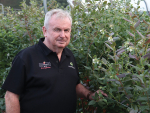
Blueberries have the potential to become a major horticultural export, earning up to $150 million within the next three to five years.
Westpac NZ has become the first New Zealand bank to receive approval from the Reserve Bank of New Zealand (RBNZ) to secure and leverage kiwifruit growers' Zespri shares.
New Zealand's kiwifruit industry has welcomed Government co-investment in a new five-year programme designed to help growers produce higher yields of premium fruit, with less water, fewer nutrients and reduced environmental impact.
Zespri's sales of kiwifruit for the 2025 season have broken all past records.


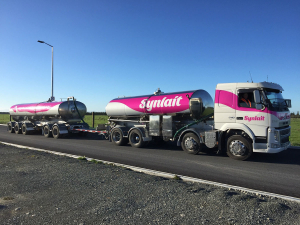
Synlait has swung to second-half profit as operations stabilise, but the dairy processor still posted a $75.4m annual loss.

LIC shareholders have elected a new North Island representative to the co-operative's Board, along with five representatives to its Shareholder Reference Group (SRG), following the company's Annual Meeting held in Invercargill.
Farmers across parts of Southland and South Otago are continuing to deal with difficult conditions after a prolonged run of wet weather, with pressure building around feed supply, stock management, pasture damage, farm infrastructure and everyday workloads.
Federated Farmers says it welcomes Labour's commitment to reviewing the Sharemilking Agreements Act, calling on other major parties to do the same.
For Canterbury dairy farmers Sian Meijer and Rick Wobben, wearable technology has become one of their most valuable on-farm tools - helping manage 1850 cows across an expansive, high-performing dairy operation while improving efficiency, mating outcomes and day-to-day decision making.
Fonterra has unveiled its annual results for the 2026 financial year, posting $27 billion in revenue and close to $20 billion returned to New Zealand farmer owners and unit holders.