All set to go!
Manawatu is gearing up to showcase the country's premier ploughmen and ploughwomen in April.
 increase font size

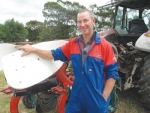
OTAUTAU CONTRACTOR John Wild knew the saying ‘buy your last plough first’.
He put steel to it when he bought a Rata 803 semi-mounted variable-width plough.
Rave reviews from contractors are not unknown to the plough’s maker, Rata Industries Group Ltd, Washdyke, Timaru. And the company says it gets unsolicited testimonials from independent farmers working a wide range of soils and topography.
Rata has since 1981 manufactured “innovative and versatile” front loaders and materials handling attachments, and subsequently began making ploughs and cultivation equipment.
The aim was to match the most exacting standards then set in New Zealand, says group sales manager Glenn Walton. He attributes Rata’s success to “knowing how to make things that make a huge difference to daily chores around a farm”.
John Wild’s operation is large by most measures, Walton says. He ploughs 800-900ha a year and direct drills up to 1500ha. Rolling and steeper country adds challenges, none more so than the abrasive, silty soil he works to a fine tilth.
This demands a plough with special qualities and Wild is said to have tried many ploughs over the years.
Most of the imported ones he has tried, and New Zealand-made ploughs with limited adjustability, have not cut it, Wild says.
The Rata 803 plough range has been designed to suit New Zealand conditions, giving good under-beam clearance and narrow transport width during on-land or in-the-furrow ploughing.
Hydraulic steering and variable width are standard. Options include furrow skimmers, front furrow wheel, spring-loaded rock-jumper coulters, plastic mouldboards and hydraulic draught bar.
The implement never needs to be changed for another when terrain, soil consistency and access to tight paddocks throw up challenges every few hours, Wild says. The Rata 803 offers diversity, with mounting and operating solutions such as no other plough he has tried.
“First, it’s hydraulically mounted to the tractor at the back with a double-acting hydraulically-operated trailing wheel. That’s the good bit about this design.
“By using the depth-adjusting ram to lift the wheel out, you get the whole unit’s weight punching the shares even deeper into the soil.”
Matched mouldboards were a feature found usually on competition ploughs, and a clear advantage on hilly country was the Rata 803’s 850mm spacing between points rather than the usual 1000mm, although both are available.
“This means a more even depth across the full width of the unit in ground with plenty of humps and hollows. The follow-on boys with their power harrows are always commenting on the flat, even top they now have to work with.”
Wild says the semi-trailing design of the Rata 803 allows it to swing longitudinally behind the tractor, easing travel through narrow gateways and along narrow lanes.
And he finds he can tow a ute behind the rig.
Tel. 03 688 2478
Manawatu is gearing up to showcase the country's premier ploughmen and ploughwomen in April.
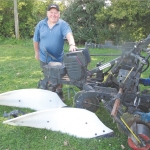
The ploughing season is well underway with various regional associations having qualifying events as ploughmen gather enough points to gain entry to the 60th New Zealand Ploughing Championships.
IN A bid to attract young farmers to ploughing, the Waikato Ploughing Match Association is staging a fun-filled ploughing instruction day for YFC members over the age of 15.


OPINION: Farmers around the country are welcoming the proposed reform of local government.
A move to boost farmer uptake of low methane emitting sheep is underway.
Silver Fern Farms has tackled the ongoing war-induced shipping challenges to mideast markets by airlifting 90 tonnes of chilled New Zealand lamb and beef to the United Arab Emirates.
The primary sector is leading New Zealand's economic recovery, according to economist and researcher Cameron Bagrie.
Dairy industry leader Jim van der Poel didn't make much of the invitation he received to the recent New Zealand Dairy Industry Awards in Rotorua.
Farmers around the country are going public big time, demanding their local district, city and regional councils come up with amalgamation plans that meet the needs of rural communities and don't allow urban councils to dominate.