Focus on more fawns from young hinds
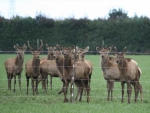
As Autumn days shorten, many deer farmers are paying special attention to their rising two-year-old (R2) hinds – the first fawners.
 increase font size
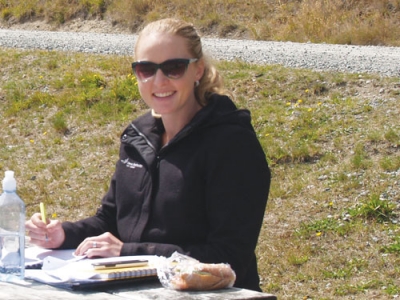 Group co-ordinator Amy Wills.
Deer Industry NZ says it is fielding an upsurge in the number of farmers wanting to join an Advance Party (AP).
These are a concept designed to get deer farmers to encourage and support each other in adopting management practices that will make their farms more profitable.
Nine APs are underway as part of a three-year trial of the concept. One of the nine is developing tools or ‘metrics’ that farmers can use to measure the performance of their deer businesses. The rest are onfarm groups located from Hawkes Bay to Southland.
“One big outcome we want is case studies, detailing what individual farmers have done to change management practices on their farms, along with the results. So we require participants to measure and record performance before and after they make any management changes,” coordinator Amy Wills says.
“The data will come, but as the farmers keep telling me, you make a management change on your farm and it’s normally at least a year before there is a measurable result.”
Nevertheless, the farmer participants, most of whom have now been involved for 12-18 months, are reporting major benefits. Not just in getting insights from other farmers, but in the confidence that comes from being part of a group with like-minded farmers, sharing private business information and exploring new ideas.
John Falconer, Ranfurly, says APs are a huge step up from discussion groups, with a lot of open figures and “nowhere to hide”.
“A few guys in our group, myself included, thought they weren’t bad deer farmers. But realistically when you get other people unpicking your business you find there’s a lot of room for improvement. We had a gaping hole in the middle of our business that I never saw and I don’t think I would have seen if I hadn’t been involved.”
APs were developed following a 2012 review of onfarm productivity, which noted that average fawning rates and carcase weights had been static for two decades or more. There was also a growing gap between average and top performers, which indicated that the problem was not a lack of technology, but enabling farmers to adopt it.
“Advance Parties are only one element of the deer industry’s Passion2Profit strategy, but they are a very important one. Each AP project is tailored to an individual farmer’s objectives and business goals. So we are seeing farm system changes being made at a faster rate than if people were to simply read about it in a magazine, mainly because they have a higher level of trust in their fellow farmers who are offering the advice,” Wills says.
The consensus among AP participants is that expansion of the initiative would need to come via the establishment of new groups, rather than trying to bring new participants into established groups.
Wills says she has requests for groups in South Otago, North Canterbury, Waikato and two or more south and east of the Volcanic Plateau. There is also a proposal for an elk/wapiti group in Canterbury.
She asks farmers in these regions to get in contact if they are interested in hearing more about the programme so meetings can be organised.
“Outside those areas I also urge farmers to get in contact, as we will work through the regions where there is demand and establish more APs throughout the year.”
As Autumn days shorten, many deer farmers are paying special attention to their rising two-year-old (R2) hinds – the first fawners.
Silver Fern Farms chief executive Dean Hamilton has been appointed to the Deer Industry New Zealand (DINZ) board for a three-year term.
Deer Industry NZ is fielding an upsurge in the number of farmers wanting to join an Advance Party (AP).
New Zealand venison exporters have started a trial to test the appetite of European consumers for Cervena venison in the summer grilling season.



Healthy snacking company Rockit has announced Wang Yibo, one of China's most influential celebrities, as its new brand ambassador.
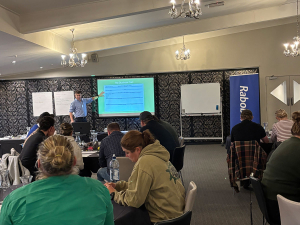
Rabobank has celebrated the tenth anniversary of its AgPathways Programme, with 23 farmers from Otago and Southland gathering for two-and-a-half days to learn new business management and planning skills.
Adopting strategies to reduce worm burden on farm goes hand-in--hand with best practice farm management practices to optimise stock production and performance, veterinarian Andrew Roe says.
Last night saw the winners of the 2026 Beef + Lamb New Zealand (B+LNZ) Awards named at a gala dinner at Te Pae Christchurch Convention Centre.
A 12-month pathway programme has helped kickstart a career in dairy for an 18-year-old student-turned-farmer.
Zespri says its global fruit sales revenue has reached a record NZ$5.9 billion from sales of 248.1 million trays.