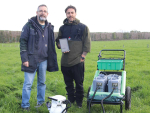
Massey Uses Portable Analyser to Measure Pasture Soil GHGs
Researchers at Massey University are using a special piece of scientific equipment to improve the measurement of greenhouse gas emissions from pasture soils.
 increase font size
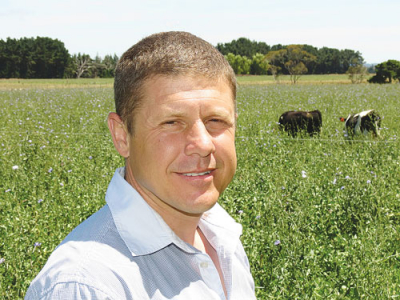 Massey University’s Professor Paul Kenyon.
Ram harnesses are a useful tool for feed allocation, and they can also help identify unmated hoggets that will then have higher lifetime performance.
In a recent Beef + Lamb New Zealand podcast, Massey University’s Dr Paul Kenyon describes how ram harnesses can be used to identify ewe lambs that ovulate early in flocks where hogget lambing is not practised.
Studies have shown that these early-cycling animals will be more fertile and fecund during their lifetime. “There is a genetic link there,” he says.
In a bid to increase the productivity of their ewe flocks, some farmers are keeping back more ewe lambs than they need as replacements, then running a harnessed teaser (vasectomised) ram with them in late April and May.
The marked lambs are retained as replacements as these are likely to be the most fertile as adult ewes. “It’s an early screening tool and it works,” Kenyon explains.
Used on mixed-age ewes, ram harnesses enable farmers to identify ewes that have been mated and put them back onto maintenance rations – with a back-up ram.
During a Red Meat Profit Partnership exercise, the Hodgen family, who farm in North Canterbury, found the use of ram harnesses gave surprising results: 93% of the ewes were mated in their first cycle and so could be put straight back onto maintenance feed with a follow-up ram.
“It’s phenomenal how much feed we have saved for the price of a ram harness and crayon,” says Dan Hodgen.
The ewes remain marked and at set-stocking were run in mobs according to their mating dates. This meant the Hodgens were not set-stocking earlier than they needed to and management during lambing was much more targeted.
Canterbury farm consultant Wayne Allan says there are pluses and minuses to using ram harnesses but they can provide valuable information that can help in the allocation of feed resources and management at mating and lambing.
He says today’s ewes tend to be heavier and more fecund, so a higher proportion of a flock can be mated within the first cycle (80-90%). If marked, these ewes can be put back onto maintenance, although Hodgen cautions against under-feeding ewes at that stage.
At lambing, the marked ewes can then be managed according to their lambing date, so later-lambing ewes can be set-stocked later which again allows more strategising of feed resources.
Hodgen says foetal aging at scanning provides this same information, but it is slightly more expensive and doesn’t allow for feed management over mating.
He says the downside of ram harnesses is the work involved in changing crayons and, on properties with a lot of scrub, there is always a danger of the harnessed ram getting caught up, or losing crayons
On larger, extensive properties with many rams the logistics of finding rams and changing crayons can make them a less impractical option.
Where the focus is on determining when rather than whether the ewes have been mated, Hodgen suggests not putting the harnesses on until 10 – 17 days into mating. This reduces the workload and means unmarked ewes will be early lambing or are dry.
Researchers at Massey University are using a special piece of scientific equipment to improve the measurement of greenhouse gas emissions from pasture soils.

Interest in agritech and production animal systems has prompted Massey University's School of Agriculture and the Environment to new majors to its popular animal science degree.
The industry is crying out for graduates with agricultural related degrees.
A four year trial has reaffirmed that mixing plantain into dairy pastures can help reduce nitrogen losses to freshwater while maintaining milk production and profitability, say researchers.
Special courses for secondary school teachers to help excite kids about agriculture and horticulture are now being run at Massey University.

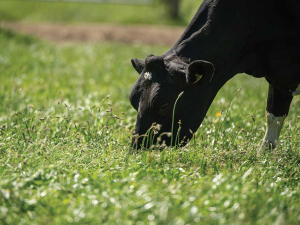
Farms across the upper North Island are trialling different pasture mixes as part of a research programme that aims to build greater resilience into farming systems.
Election years are always a concerning time for farmers, according to DairyNZ chair Tracy Brown.
The Ballance Farm Environment Awards are coming to the West Coast of the South Island.
Most dairy regions around the country have had a pretty good season so far says Tracy Brown.
Rural leader Mark Hooper has been appointed as an independent director to the NZPork board, bringing extensive farming, governance and advocacy experience to the role.