New Mates
OPINION: Proponents of regenerative agriculture tend to be naturally aligned with a 'green mindset', so they will be nonplussed with their new mates in the US of A.
 increase font size
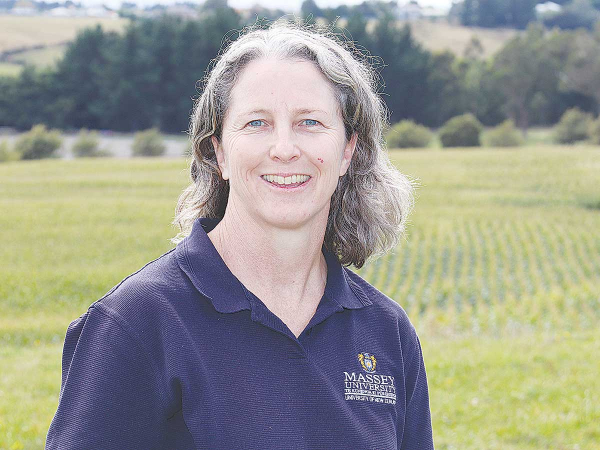 Associate Professor Lucy Burkitt is leading the soil component of the project with a large team of technicians, scientists and Massey ag students all working on different aspects of the trial.
Some interesting and positive insights into the value of regenerative agricultural practices seem to be emerging from the early stages of a seven year science-based study comparing conventional farming and regen agriculture. Peter Burke reports...
Led by Professor Danny Donaghy at Massey University and funded by MPI, Whenua Haumanu is NZ’s most comprehensive programme to compare contemporary and regenerative pastoral practices, with research sites at Massey University and Lincoln University.
It brings together universities, Crown Research Institutes and industry partners to assess the suitability and relevance of regenerative agriculture in this country. In essence, it’s about gathering quality scientific data to measure multiple aspects throughout the farm system, exploring how different pasture mixes and management practices impact.
Until now there has been no hard data available to prove one way or the other the comparative merits.
The Massey University trials involve sheep and dairy farmlets at the Palmerston North campus, comparing standard and diverse pastures under contemporary and regenerative management treatments.
On the dairy farmlet, cows are being run at 2.5 cows per hectare, while on the sheep farmlet, stocking rate varies between 12 and 14 ewes per hectare, depending on the pasture and management treatment. The farmlets also have contrasting soil types with the sheep on a poorly drained soil and the dairy cows on well-drained soils.
Associate Professor Lucy Burkitt is leading the soil component of the project with a large team of technicians, scientists and Massey ag students who are all working on different aspects of the trial. The farmlets are being run in different ways or given different treatments to measure changes in soil, pasture, animal production and environmental losses.
“For example, regenerative management involves longer grazing intervals, more pasture left behind after grazing and application of different soil amendments,” she says.
Whenua Haumanu has just been running for two years and Burkitt says it’s far too early to draw any significant conclusions.
But on the dairy regen pastures they have seen some evidence of higher worm numbers and a decreased presence of some mesofauna species. These are tiny, barely visible microorganisms, which have an important role in regulating ecosystem production and ultimately improving soil health.
“Given this, we are keen to see more data on how the pastures and management treatments may affect soil compaction and water infiltration,” Burkitt told Rural News.
“So far, however, we have found no difference between the different treatments in terms of nitrogen leaching.”
Apart from the obvious focus on soil biology, diversity and structure, Whenua Haumanu is also looking at animal production, health and welfare, quality of milk, meat and wool products, nutrient leaching, methane and nitrous oxide emissions and carbon capture and storage.
What in Seven Years' Time?
The end game of this research project is to look for benefits for farmers and consumers.
Consumers are becoming extremely influential in terms of how they want their food produced.
From the dairy side of the programme, the goal is to get an accurate handle on milk production, its quality and even the taste of milk produced by cows in the different treatments.
It should be noted, however, that if and when cows from the trial are culled, no research will be carried out on the meat quality. But researchers will be looking at all aspects of the lamb carcasses when these animals go for processing.
Burkitt says the trial will go beyond Massey and they are working with a group of farmers in Taranaki as part of a separately funded Pivot project, as well as with Dairy Trust Taranaki, Northland Dairy Demonstration Farm and On Farm Research in Hawke’s Bay.
“We are working with other regenerative farms and applying some of the things that we have learned from them,” she adds. “We have already had lots of local groups of farmers, both regen and contemporary, as well as some from outside the district coming to find out what we are doing.”
Late last year they held an open day which attracted more than 200 people.
Burkitt adds that applying some robust science and gathering quality data for seven years will help them understand the merits of conventional and regenerative agriculture practices.
OPINION: Proponents of regenerative agriculture tend to be naturally aligned with a 'green mindset', so they will be nonplussed with their new mates in the US of A.
Wayne and Ange Moxham of Horowhenua have just been named as Fonterra's top organic performer for milksolids. As well as providing organic milk to Fonterra, the couple also sell Udderly Organic milk to more than 100 outlets in the region and are embarking on another exciting venture producing organic gelato. Reporter Peter Burke went along to see their farming operation.
How to save soil, living with kikuyu grass and retaining nutrients on farm.
A new publication has been launched that offers a comprehensive and up-to-date resource on commercially available grazing pasture species in New Zealand.
More than 200 people turned out on Thursday, November 21 to see what progress has been made on one of NZ's biggest and most comprehensive agriculture research programmes on regenerative agriculture.


LIC shareholders have elected a new North Island representative to the co-operative's Board, along with five representatives to its Shareholder Reference Group (SRG), following the company's Annual Meeting held in Invercargill.
Farmers across parts of Southland and South Otago are continuing to deal with difficult conditions after a prolonged run of wet weather, with pressure building around feed supply, stock management, pasture damage, farm infrastructure and everyday workloads.
Federated Farmers says it welcomes Labour's commitment to reviewing the Sharemilking Agreements Act, calling on other major parties to do the same.
For Canterbury dairy farmers Sian Meijer and Rick Wobben, wearable technology has become one of their most valuable on-farm tools - helping manage 1850 cows across an expansive, high-performing dairy operation while improving efficiency, mating outcomes and day-to-day decision making.
Fonterra has unveiled its annual results for the 2026 financial year, posting $27 billion in revenue and close to $20 billion returned to New Zealand farmer owners and unit holders.
The first major update to the Dairy Cattle Code of Welfare in more than a decade has been released, marking what DairyNZ describes as an important step in ensuring animal welfare standards continue to evolve alongside scientific evidence and on-farm realities.