AgFirst Warns Dairy Farmers Not to Expect Repeat Season
A warning to dairy farmers not to expect the same good conditions that they experienced last season, has been issued by a leading farm consultant.
 increase font size
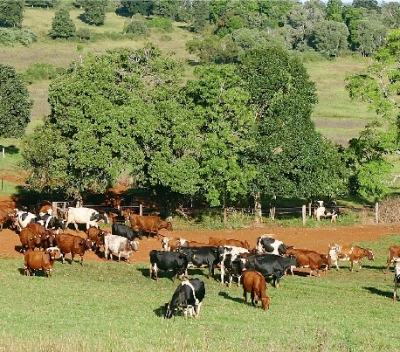
A Northland Partner Farm increased milk production by 34% over three years and cut farm working expenses by 27%.
People ask how you cut a dollar per kilo out of your farm working expenses, AgFirst consultant Gareth Baynham told the Northland Dairy Development Trust annual conference.
The partner farm joint project with DairyNZ and the trust started in September 2011 on the farm of Alister and Lyn Candy who farm with daughter Christine at Okaihau, near Kaikohe, milking about 315 cows on 103ha.
Baynham says a great group of farmers came together as a management team, meeting monthly on the farm. There were three focus areas: improving reproductive performance, getting more out of the grass and managing spending.
The result was a a 34% increase in milk production over the three years from a three year average of 73,000kg to about 112,000kg last season. Pasture eaten went up – “we got that lift despite growing less grass last year then we had in previous years” – and they achieved a 27% drop in farm working expenses.
“That extra milk came at the same cost the farm had been running at. At $6/kgMS that would have been an extra $190,000 in revenue.”
The results were achieved firstly through benchmarking: Alister and Lyn used Dairy Base to look at what they had achieved relative to other farms.
“In the areas they were higher they used the rural professionals around them to make some of those changes and that worked well; there was also animal health shearing the budget.”
He says Alister and Lyn firstly sliced the budget themselves then the management team helped get another 50c/kg out of the budget. Then they monitored actual expenditures against the budget to ensure they were on track and “if you’re not, what are you going to do about it?”
Where to next? “We are in the final year of the Focus Farm so we’ve gone from monthly meetings to quarterly meetings. “I think the team has been pleased with how Alister and Lyn have made their decisions on the farm. We’re just there to drink the coffee these days, so it has been a real win,” says Baynham.
“We’ve had a few challenges with a wet spring this year; it has put the farm under a bit of pressure. So to the end of January production is about 2.6% behind last year but we are hopeful that, depending on the season, we might catch up on some of that.”
They have had 170 people at field days and the final event is Tuesday, May 26.
Northland Dairy Development Trust and DairyNZ are taking what was done at this farm out to others. Another Far North farm has been operating since about May with a “fantastic” management team. They are working with Tony Lunjevich who is 50/50 milking with his parents at Takahue, just south of Kaitaia.
“It is a great farm because it is a really tough bit of dirt, it’s got a lot of hills. It’s neat to see how people can tackle those challenges,” Baynham says. A field day will be held there on Tuesday, April 21.
A warning to dairy farmers not to expect the same good conditions that they experienced last season, has been issued by a leading farm consultant.
As fuel and fertiliser prices rise and with uncertainty in the future, farmers are being urged to go over their budgets with a fine-tooth comb.
For the most part, dairy farmers in the Waikato, Bay of Plenty, Tairawhiti and the Manawatu appear to have not been too badly affected by recent storms across the upper North Island.
South Island dairy production is up on last year despite an unusually wet, dull and stormy summer, says DairyNZ lower South Island regional manager Jared Stockman.
Fears of a serious early drought in Hawke’s Bay have been allayed – for the moment at least.
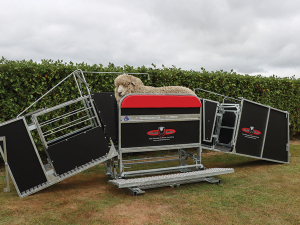
Oamaru-based livestock handling specialist Te Pari has bought Combi Clamp, the New Zealand manufacturer of Combi Clamp manual sheep handlers.
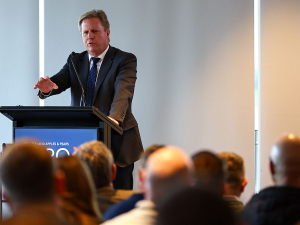
Agriculture Minister Todd McClay has admitted that a scheme bringing workers from Pacific nations to work on orchards has become too hard to navigate but says changes are coming.
A new app designed in New Zealand aims to help sheep, beef and deer farmers capture, analyse and use body condition score data more effectively.
Canterbury farmer Andy Macfarlane has been appointed to the board of AgriZeroNZ, the public-private partnership designed to accelerate the development and deployment of emissions reduction tools for New Zealand farmers.
For over 50 years Mel Ewers has been supporting the apple sector navigate through compliance and quality assurance issues.
The apple sector is enjoying a bumper harvest season.