Synlait’s Longest-Serving Employee Joins Executive Team
Synlait's longest serving employee – a man who joined the Canterbury-based milk processor even before it began processing milk – is now its newest executive.
 increase font size
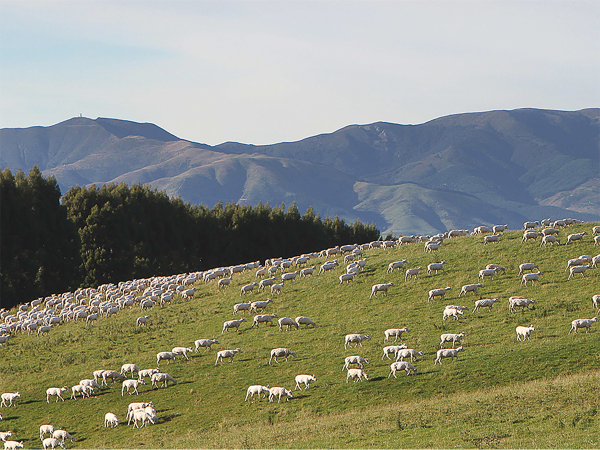 When nutrients are removed from the land in harvested material (plant or animal) the soil has a limited capacity to replace those nutrients.
OPINION: Eight point two billion people on the planet. Ten point three billion exported by 2084 (according to the latest United Nations' projections). And it is our role as farmers and growers in the food system to feed them. We need to do this as sustainably as possible, but the primary goal must be food production.
That is the message in the 2015 Paris Agreement.
It was also the closing message at the United Nations Food and Agriculture Organization's (UN-FAO) conference on Sustainable Livestock Transformation held in Rome at the beginning of October.
Food Production
Increasing food supply from existing land is not easy for developed countries already using precision technology to assist with animal management and application of agrichemicals. The advances we make can, however, be of assistance in developing countries, as long as the context is known and is appropriate.
In developing countries, smallholders who have access to fertilisers are likely to overapply them disproportionately as a strategy to avoid risk. This is in the recent UN-FAO report ‘2025 The State of Food and Agriculture: addressing land degradation across landholding scales’. The report also states that smallholders without access to resources such as fertiliser are likely to continue farming and in doing so will degrade their land while experiencing ever lower yields.
This problem is ever present. When nutrients are removed from the land in harvested material (plant or animal) the soil has a limited capacity to replace those nutrients. Some are present in organic material, but as soil micro-organisms use the organic matter for energy and nutrients, the larder is depleted, and the flow of plant-available nutrients decreases.
Ukraine, once known as the breadbasket of the world because it was a world-leading exporter of wheat, maize and oilseed products, is in strife. The Russian invasion of Ukraine in 2022 disrupted the exports of grain and vegetable oil and increased the prices for fertilisers, energy and shipping, affecting global food insecurity. Researchers have found that Ukraine is exporting more nutrients than farmers are applying. “The increased asymmetry between nutrient inputs and outputs, and between nitrogen, phosphorus, and potassium, is reducing the sustainability of crop production, while also jeopardising the economy, environment, and future global food security.”
The nine authors of the paper analysing the situation (and published this month in the Nature Portfolio Journal ‘Communications earth & environment’) were from universities and research organisations from the UK, Netherlands and Ukraine. No commercial funding was declared – they were investigating important issues as part of their government employment. The authors recommended urgent adoption of the precision fertilisation principles for crop nutrition based on crop requirements. “The ‘5R approach’ (right source, rate, application time, application place, and application method) at the field-to-farm scale is the foundational measure underpinning all sustainable practices.”
The 5R (initially 4R) approach was developed in North America and rapidly spread to other developed countries.
In Ireland, researchers from Teagasc (the Government-funded research organisation for agriculture and food research) reported this year on the potential outcome of further nitrogen restrictions on dairy farms, noting that nitrogen fertiliser use had already reduced 24% between 2018 and 2024. The report stated that 49% of dairy farms and 65% of national milk production would be affected. Teagasc calculated that a 14% reduction in cows would reduce family farm income by 39% and national milk production by 15% (1.2 billion litres).
Just as in the Ukraine, food production is at risk.
Teagasc receives the majority of its budget from a state grant-in-aid from the Irish Department of Agriculture, Food and the Marine (DAFM) (public funding is just under 80% of the total) and competitive funding from EU research programs (just under 16%). The remainder comes from industry contracts, farmer levies, and commercial services.
In New Zealand when the point about food production is made, there tends to be push back from environmentalists, suggesting that researchers are not independent and that cow numbers should be reduced and fertiliser nitrogen cut.
The data say that farmers have made reductions. Further, they already use the 5Rs of nutrient management. Trying to reduce even more, just as in Ireland, could mean a breach of the Paris Agreement.
Globally the implications of reducing production from existing land are clear. We would need more land to feed the same number of people – let alone the extra people that are forecast.
The major concern about area expansion should be loss of biodiversity. A paper published by the Royal Society in September explains that “habitat loss was the most important cause (and current threat) in continental regions”. The senior author was funded by a National Science Foundation Graduate Research Fellowship – it was independent research supported by public funding.
The New Zealand continues to have low public funding for agriculture. The country shouldn’t have to rely on overseas research to make the message clear – a nutrient imbalance will jeopardise food supply, which will have ramifications for biodiversity and global economics. QED.
Dr Jacqueline Rowarth, Adjunct Professor Lincoln University, is a farmer-elected director of DairyNZ and Ravensdown. She is also a member of the Scientific Council of the World Farmers’ Organisation. This email address is being protected from spambots. You need JavaScript enabled to view it.
Synlait's longest serving employee – a man who joined the Canterbury-based milk processor even before it began processing milk – is now its newest executive.
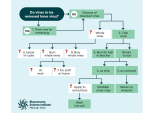
I am often asked by industry people, what are the options for removing a grapevine without producing a phytosanitary problem? Can it be done sustainably? What will it cost me?
OPINION: New British Prime Minister Andy Burnham has said that farming and food production is a matter of ‘core national resilience’ and must be spoken about in Whitehall at the same level as issues with ‘defence, energy, water and steel’.
Pāmu has released its FY26 Integrated Annual Report, reporting a Net Operating Profit of $113 million, more than double the $49 million recorded in FY25.
Environment Minister Nicola Grigg has announced details of a new rural plastics recycling scheme.


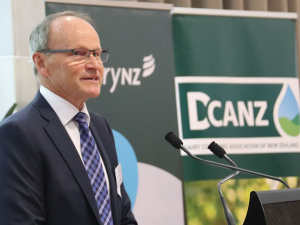
Dairy processors are ready to further boost New Zealand’s export earnings but want the incoming government to match their ambition with good policy.
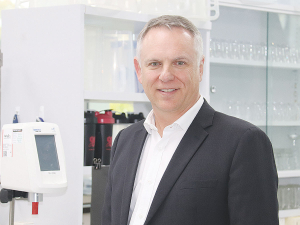
Massey University is best placed to solve the “problems” facing the dairy industry, says vice chancellor, Pierre Venter.
Synlait's longest serving employee – a man who joined the Canterbury-based milk processor even before it began processing milk – is now its newest executive.
A dairy industry leader believes eradicating the common and costly disease, Bovine Viral Diarrhoea (BVD) is within reach.
A farmgate milk price of $10/kgMS this season is firming up as milk powder prices soar and the New Zealand dollar weakens.
Federated Farmers has welcomed new rural policies released by ACT, saying they align closely with its own election priorities.