DairyBase and MINDA Link Up to Cut Farmer Paperwork
Farmers can spend less time on paperwork, thanks to a new data sharing agreement between DairyNZ’s DairyBase and LIC’s MINDA software.
 increase font size
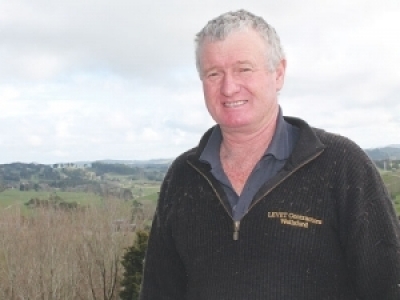 Rural Contractors NZ president Steve Levet.
It is easy to talk ourselves into doom and gloom nowadays, given a push by ill-informed media reporting and commentary on the agricultural sector.
There is no doubt the past 12 months or so have been tough for farming and its related industries. However, those of us who have been around long enough know that, unfortunately, farming has always been cyclical. Much like the climate, ups and downs in commodity prices are a reality in the agri sector.
While the dairy sector's struggles continue, there are bright spots in other sectors; some are very bright.
According to ASB rural economist Nathan Penny, agriculture as a whole remains strong, non-dairy sectors and horticulture performing well. Penny says beef prices remain excellent, and kiwifruit and wine exports are buoyant. Meanwhile, other sectors such as wool, pipfruit, venison and forestry are also faring well.
Penny admits that dairy and to a lesser degree lamb are both doing it tough. However, he and the ASB expect prices for these will lift and come back over time. Meanwhile, the ASB also expects short-term interest rates to fall over the next six months, helping to bring the NZ dollar lower this year.
As said often in this column, even given the current lull in commodity prices, farmers and contractors need to keep planning and farming for the year ahead. Crops will need to be sown, pastures renewed and sprayed, and supplementary feed made and stored away for the next inevitable dry spell.
One thing we know about rural contractors and farmers is that they are always looking after their machinery and gear, keeping it in top working condition so they can do the best job possible. But what about the most important asset in their business – themselves?
It is all very well for contractors to have their tractors and machines in great working order, but these are not much good, either to a business or family, if they are not taking care of themselves.
Too often we hear stories about those in the rural sector letting things get on top of them – not asking for help or reaching out for support. We need to change this mindset and let rural contractors and others in the rural community know that it is much better to get the necessary support and advice when they are not feeling well physically or mentally.
That's why Rural Contractors NZ believes it is important our organisation is a member of the Rural Health Alliance of NZ (RHANZ), along with Fed Farmers, Rural Women, DairyNZ, Beef + Lamb NZ and some rural councils. RCNZ is fully behind the main objective of RHANZ which is to bring a united voice from multiple rural sector organisations, to develop solutions and influence policy affecting the health and wellbeing of rural communities. Also our RCNZ chief executive Roger Parton is on the board of RHANZ.
RHANZ is now working with the Ministry of Health to get more training for health professionals, business networks and communities to tackle depression in rural communities. The extra training is funded by a $500,000 boost for mental health initiatives in rural NZ, announced by the Ministers of Health and Primary Industries at last year's Fieldays.
RHANZ is spending this money to co-ordinate the upskilling of rural health professionals, rural business networks and rural communities in suicide prevention strategies and increasing access to skilled healthcare in the regions of highest need.
To that end, RCNZ board member Helen Slattery and our executive officer Roger Parton will attend the National Rural Health Conference in Dunedin late March and early April. They will observe and speak into the rural health debate on behalf of rural contractors. We see our involvement with RHANZ as important to our contribution to the rural community.
Farmers can spend less time on paperwork, thanks to a new data sharing agreement between DairyNZ’s DairyBase and LIC’s MINDA software.
OPINION: In the 1980s, concern was expressed in West Germany about the falling birth rate. Some simple analysis was performed by Professor Helmut Sies, physician and biochemist at Dusseldorf University. His letter ‘A new parameter for sex education’ was published in Nature in 1988:
OPINION: Dairy farmers know better than anyone that change is constant.
A four year trial has reaffirmed that mixing plantain into dairy pastures can help reduce nitrogen losses to freshwater while maintaining milk production and profitability, say researchers.
OPINION: Today marks Farm Worker Appreciation Day – a day we’re proud to recognise here in New Zealand.



OPINION: In politics, credibility is and should be big. It must surely rank higher than charisma, which is quite trite and superficial. Yet, voters nowadays are often wooed and influenced by how someone looks or talks at a superficial level. TV plays a huge role in this.

Farmers can spend less time on paperwork, thanks to a new data sharing agreement between DairyNZ’s DairyBase and LIC’s MINDA software.
Kaikōura families affected by July's severe storm have found a practical solution to a problem that's kept some children away from regular schooling for weeks: a washed-out section of Inland Kaikōura Road, which has stopped the local school bus from running its usual route.
Rural New Zealand is welcoming the Government’s recent package of rural healthcare initiatives.
Interest in agritech and production animal systems has prompted Massey University's School of Agriculture and the Environment to new majors to its popular animal science degree.
Ballance Agrinutrients chief executive Kelvin Wickham says despite a tough year, he is pleased the business has returned to profit.