McRae Wins Southern South Island B+LNZ Director Vote
Matt McRae, a farmer from Mokoreta in Southland who runs a sheep, beef and dairy support business alongside a sheep stud, has been elected to the Beef +Lamb NZ Board as a farmer director.
 increase font size
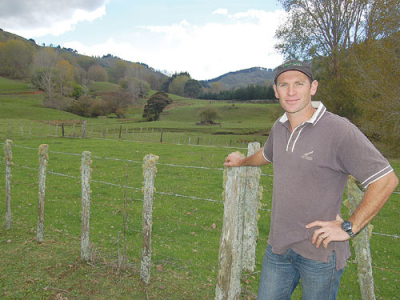 Beef + Lamb chair James Parsons.
The New Zealand meat industry could be hit by fallout from the tense and divisive Brexit negotiations.
It seems that the UK and the EU, in a desperate attempt to reach agreement, are poised to breach World Trade Organisation (WTO) rules over a long-standing agreement NZ has for sheepmeat access to the EU which includes – at this stage – the UK.
The NZ meat industry had become aware that the UK and EU have reached a deal to arbitrarily split the 228,000 quota to the EU, with 45% going to the UK and the rest to Europe. However, the original agreement has been ratified by the WTO and needs the approval of all parties to the agreement and the WTO to make changes.
What has annoyed the the Meat Industry Association and Beef + Lamb NZ is that the UK and EU have seemingly done this deal without consulting NZ, which is illegal under WTO rules.
“Taken at face value this is not a positive sign,” says BLNZ chairman James Parsons. “We want to put our views on the table.”
He says NZ is not trying to make any specific gains out of Brexit, but NZ cannot stand by and allow the UK and the EU to breach a longstanding legal agreement. He says as a last resort the NZ Government may have to seek redress from the WTO itself.
Parsons says he realises that the whole Brexit issue is complex and the negotiations for both parties are difficult. But he says NZ is prepared to try to find quick and creative ways of sorting out this matter.
Parsons says he’s deeply disappointed that NZ, along with other third parties to the UK/EU agreement, have not been consulted before word leaked out about the proposed quota split.
Under the present arrangement, there is flexibility for the 228,000 tonnes of sheep and goat meat NZ exports there to be moved around the EU, which avoids individual markets being flooded with product when times are bad. Parsons says this works to everyone’s advantage and to remove that flexibility could hurt producers in the UK, Europe and NZ if there was an oversupply of lamb or a price slump at any time.
“What they are proposing is that we wouldn’t have that flexibility and so it would be a backward step. We’d be worse off and according to the WTO principles no country should be worse off. The quota is enshrined in the WTO and it’s a legal right – not something the EU and the UK can just change.”
Parsons says normally any change in an agreement has to go before all 164 WTO members for approval. But he says there are ways around this and NZ would be happy to strike a deal provided it was not detrimental to our meat industry.
Parsons says NZ is following developments in Europe closely. Our special trade envoy (and former BLNZ chairman) Mike Petersen is now in Europe and Parsons says he may go there himself in the new year.
Matt McRae, a farmer from Mokoreta in Southland who runs a sheep, beef and dairy support business alongside a sheep stud, has been elected to the Beef +Lamb NZ Board as a farmer director.
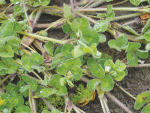
Recent widespread autumn rain will have triggered the germination of subterranean clover seeds, and the resulting seedlings should be allowed to reach the 3–4 trifoliate leaf stage before grazing, says Beef+Lamb NZ.
A hub farm in each of Beef + Lamb NZ’s seven regions and more focus groups are being rolled out for the red meat sector this year.
The red meat sector is poised for a strong rebound this season, with export receipts forecast to top $10 billion and farm profitability to almost double.
Progeny testing at Pāmu’s Kepler farm in Southland as part of Beef + Lamb New Zealand’s Informing New Zealand Beef programme is showing that the benefits of hybrid vigour could have a massive impact on the future of beef breeding.


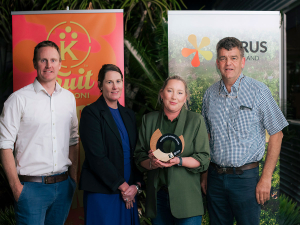
New Zealand's citrus growers were challenged to build their future on the value embedded in their fruit rather than the volume they produce, at Citrus New Zealand's annual gathering in Gisborne on 17 September.
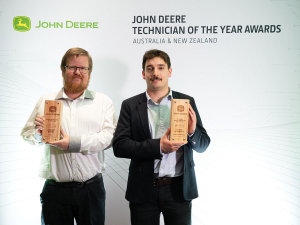
Leading John Deere technicians and apprentices from New Zealand and Australians were recognised at the recent sixth annual JD Technician of the Year Awards, held in Brisbane.
In Dacre, near Invercargill in New Zealand’s South Island, Bruce Dinnington is running a dairy operation unlike any other.
A free online platform aggregating governance vacancies across rural and regional New Zealand has been launched.
Environment Minister Nicola Grigg has announced details of a new rural plastics recycling scheme.
Agricultural drone operators say that a government decision to allow lower-risk drone work without certification won’t lower standards but drive innovation and efficiency.




